


















NASA Joins Artemis III Orion Modules; Rocket Hardware Update
NASA is advancing toward Artemis III’s crewed demonstration mission with accelerated, measurable progress across all fronts, outpacing Artemis II integration timelines as teams ready the Orion spacecraft and SLS (Space Launch System) rocket for next year’s mission in low Earth orbit.
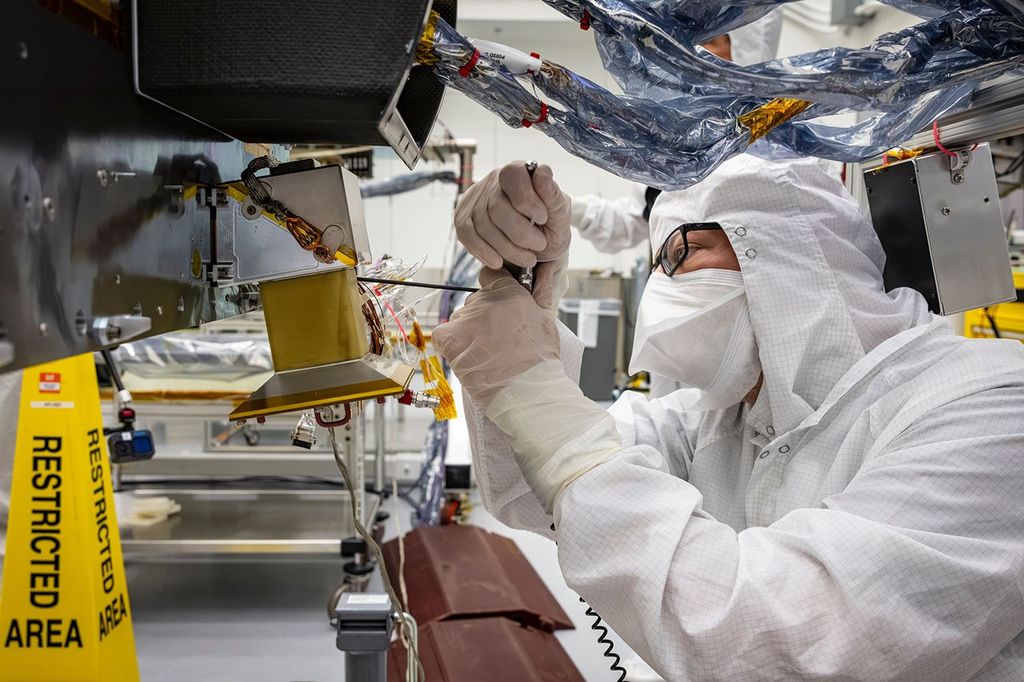
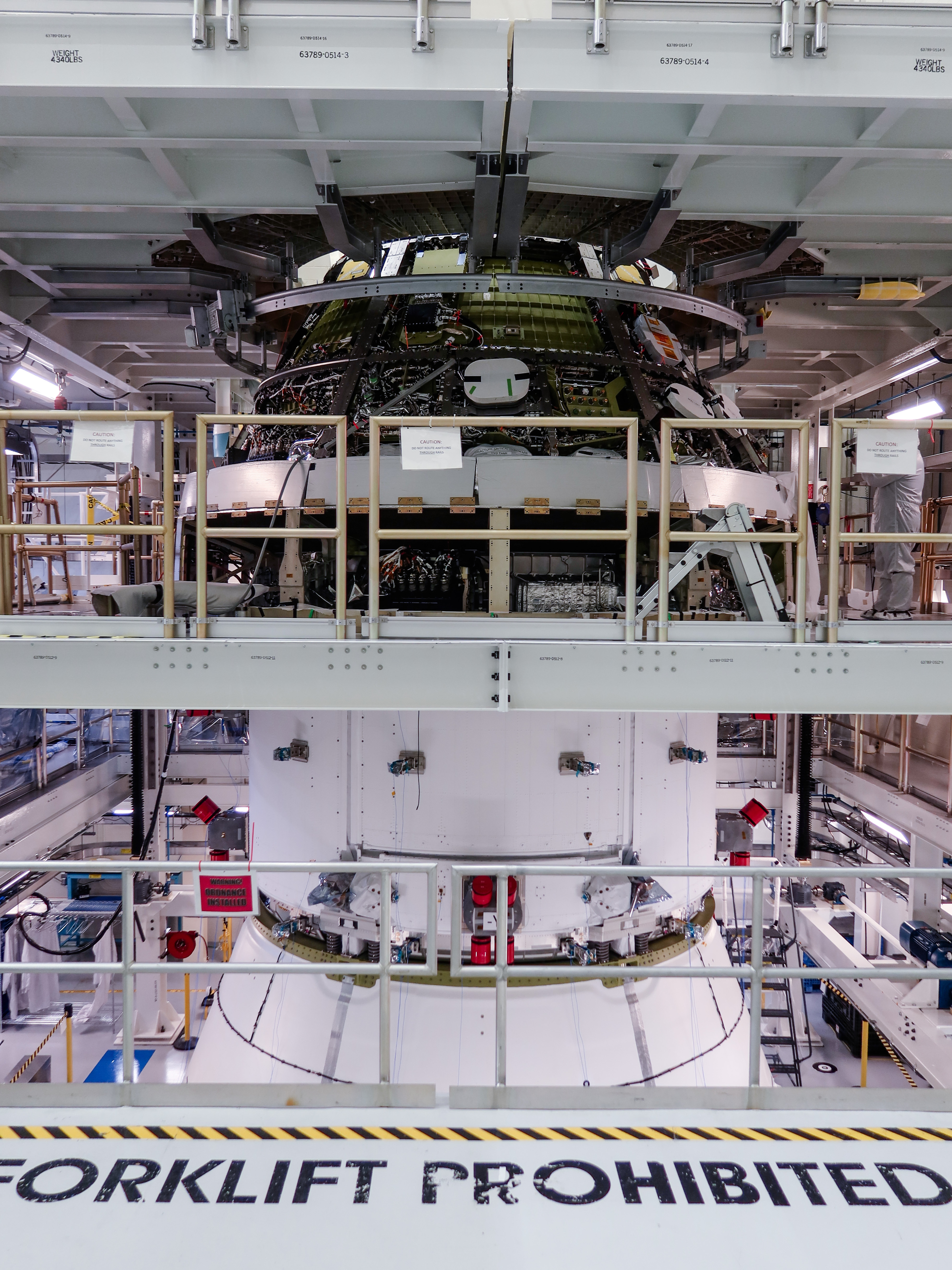
The Orion crew and service modules were joined together on July 30 inside the Neil Armstrong Operations and Checkout Building at the agency’s Kennedy Space Center in Florida.
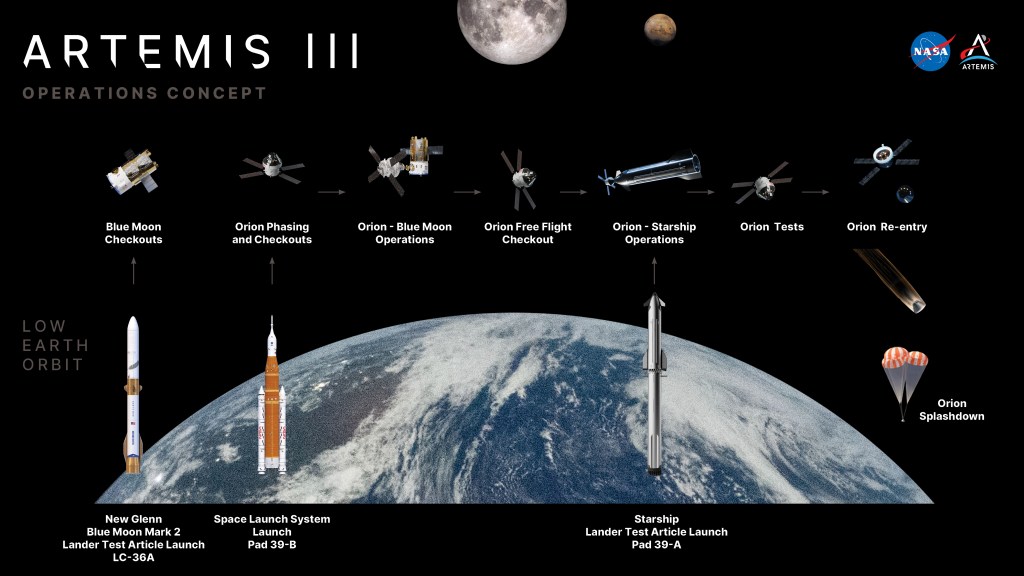
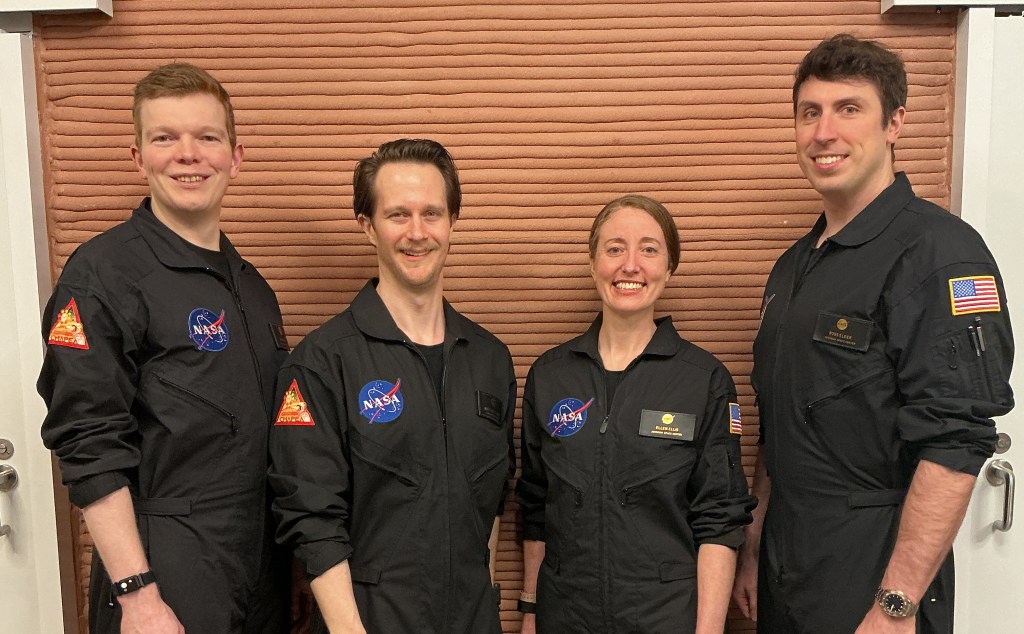
After successfully completing hardware installations and testing in the Operations and Checkout Building, engineers connected the two major components of Orion that will fly NASA astronauts Randy Bresnik, Andre Douglas, and Frank Rubio and ESA (European Space Agency) astronaut Luca Parmitano on Artemis III. The crew module will carry and sustain astronauts, while the service module will power and propel Orion during the mission to test rendezvous and docking capabilities with test versions, or test articles, of commercial human landing systems from Blue Origin and SpaceX.
With the crew and service modules integrated, the team will soon power up the combined spacecraft for the first time. After power on tests are complete, the team will continue integrated testing of Orion and complete final hardware installations.
SLS Hardware Processing
Also at NASA Kennedy, SLS integration preparations are advancing as NASA’s Exploration Ground System teams completed inspections and checkouts on the solid rocket booster motor segments inside the center’s Rotation, Processing, and Surge Facility. Teams began stacking the twin SLS solid rocket booster segments inside Kennedy’s Vehicle Assembly Building in early July, beginning with the left-hand aft assembly.
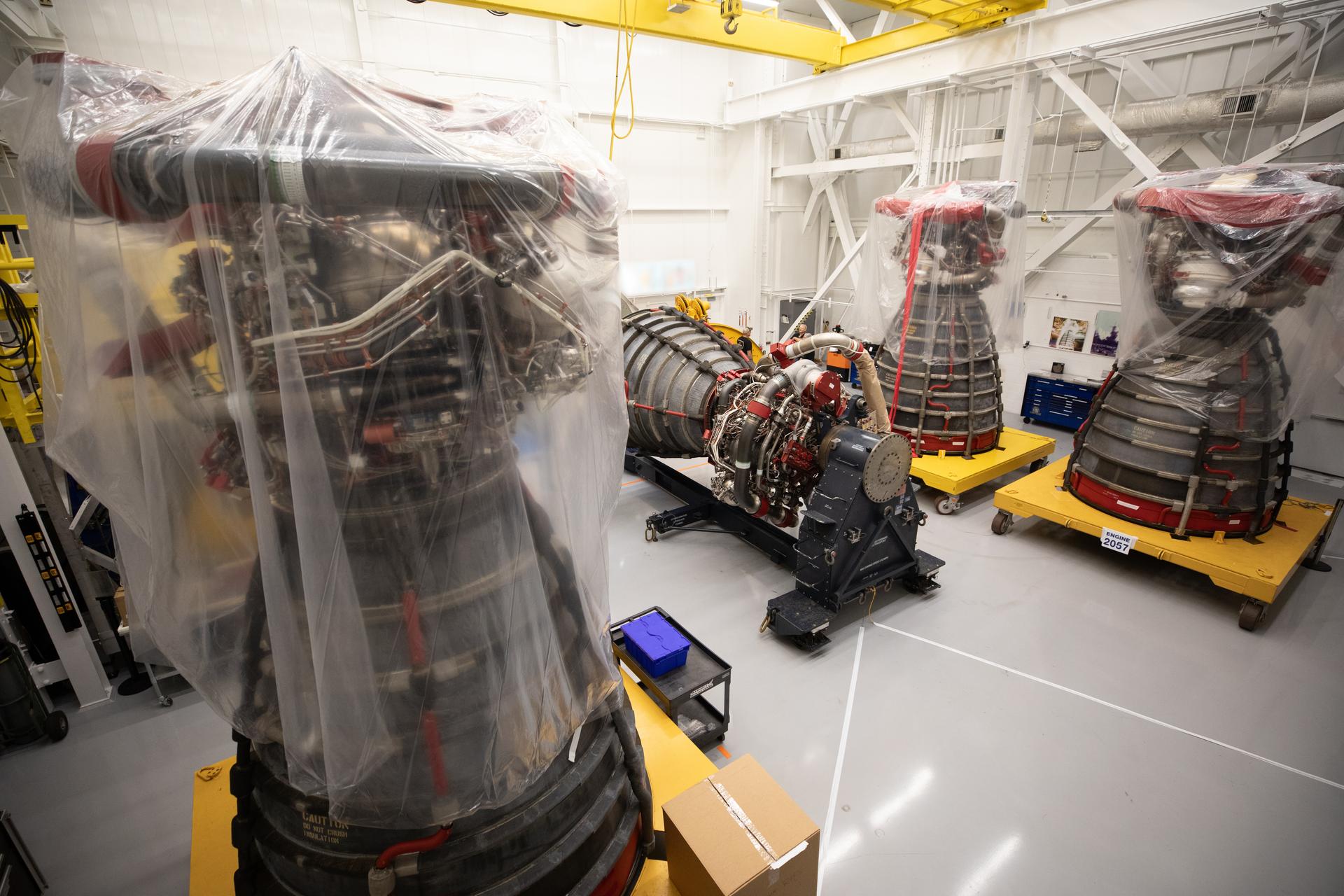
The final RS-25 engine was delivered on July 21 from NASA’s Stennis Space Center near Bay St. Louis, Mississippi, and technicians will work to integrate the engine with the core stage this summer.
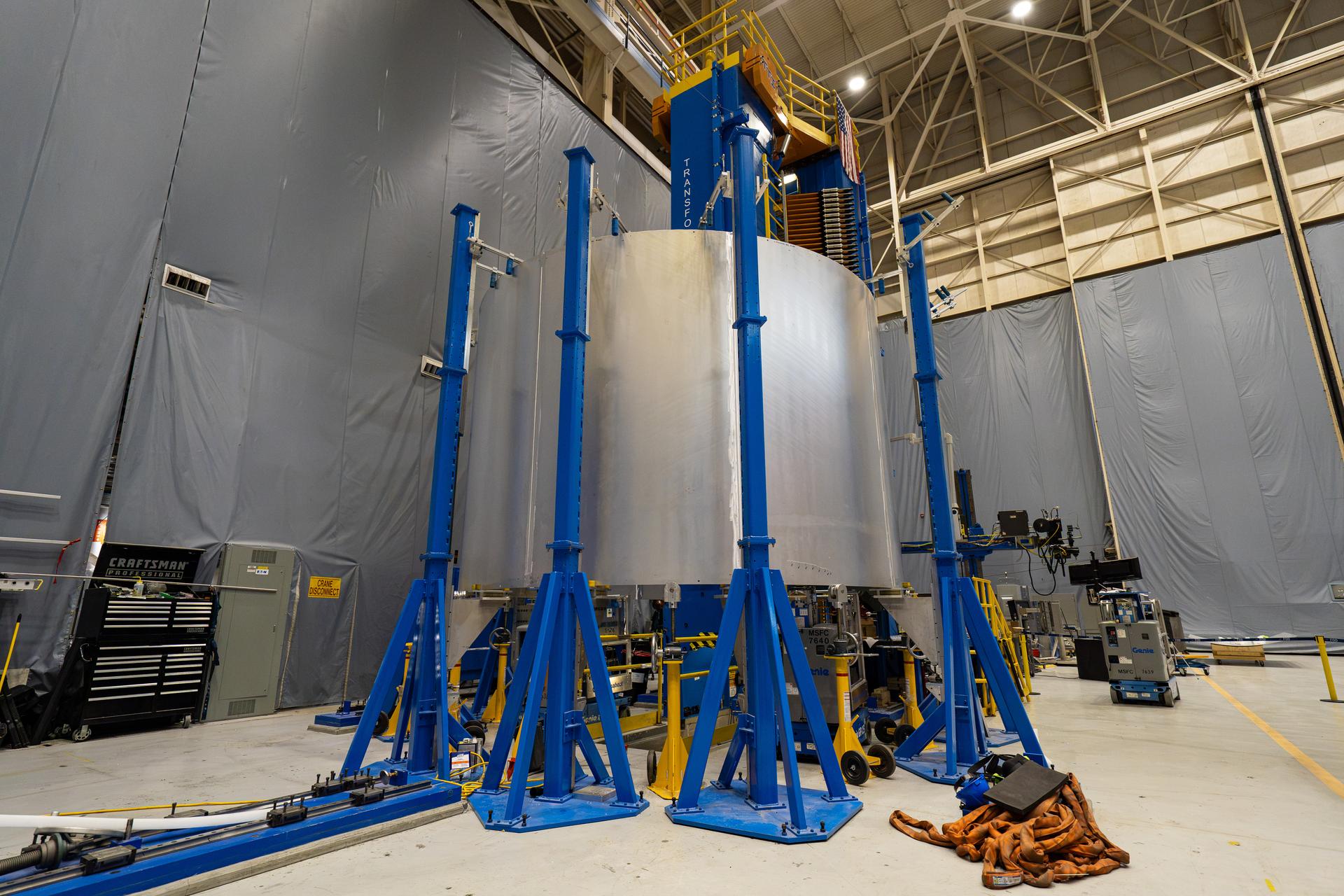
At NASA’s Marshall Space Flight Center in Huntsville, Alabama, technicians recently completed the eighth and final friction stir weld on the barrel section for the spacer that will fly on the Artemis III mission. With the welds complete, the barrel was lifted from the Vertical Weld Tool, and inspection activities are now underway. The next major milestone will be the installation of the spacer’s top and bottom structural rings.
For Artemis III, NASA will use a non‑propulsive spacer in place of the interim cryogenic propulsion stage. The spacer maintains the same overall dimensions and interface connection points as the upper stage, allowing it to be integrated between the Orion stage adapter and the launch vehicle stage adapter without modification to the vehicle’s configuration. The remaining interim cryogenic propulsion stage has been reassigned to the Artemis IV mission.
Mission Efficiencies for Artemis III, Beyond
NASA is repurposing the Orion stage adapter and launch vehicle stage adapter structural test articles for the Artemis III mission. Both structural test articles completed testing at Marshall prior to Artemis I, and engineers at Marshall are now carrying out detailed inspections and upgrades to ensure both structures meet flight requirements. This work represents a rapid and efficient response to evolving mission needs, leveraging newly fabricated structural hardware produced from legacy materials and modern manufacturing techniques to maintain schedule.
Efficiency gains extend beyond new and repurposed hardware. Components are also reused from the Orion crew module that flew on the Artemis II mission, enabling cost and time savings. Reusing will enable earlier hardware installation by about three months and will also accelerate the Artemis IV schedule by making the components originally built for Artemis III available more than six months ahead. Additionally, more than 250 components from the Artemis II Orion spacecraft will be reused to support Artemis IV and Artemis V missions.
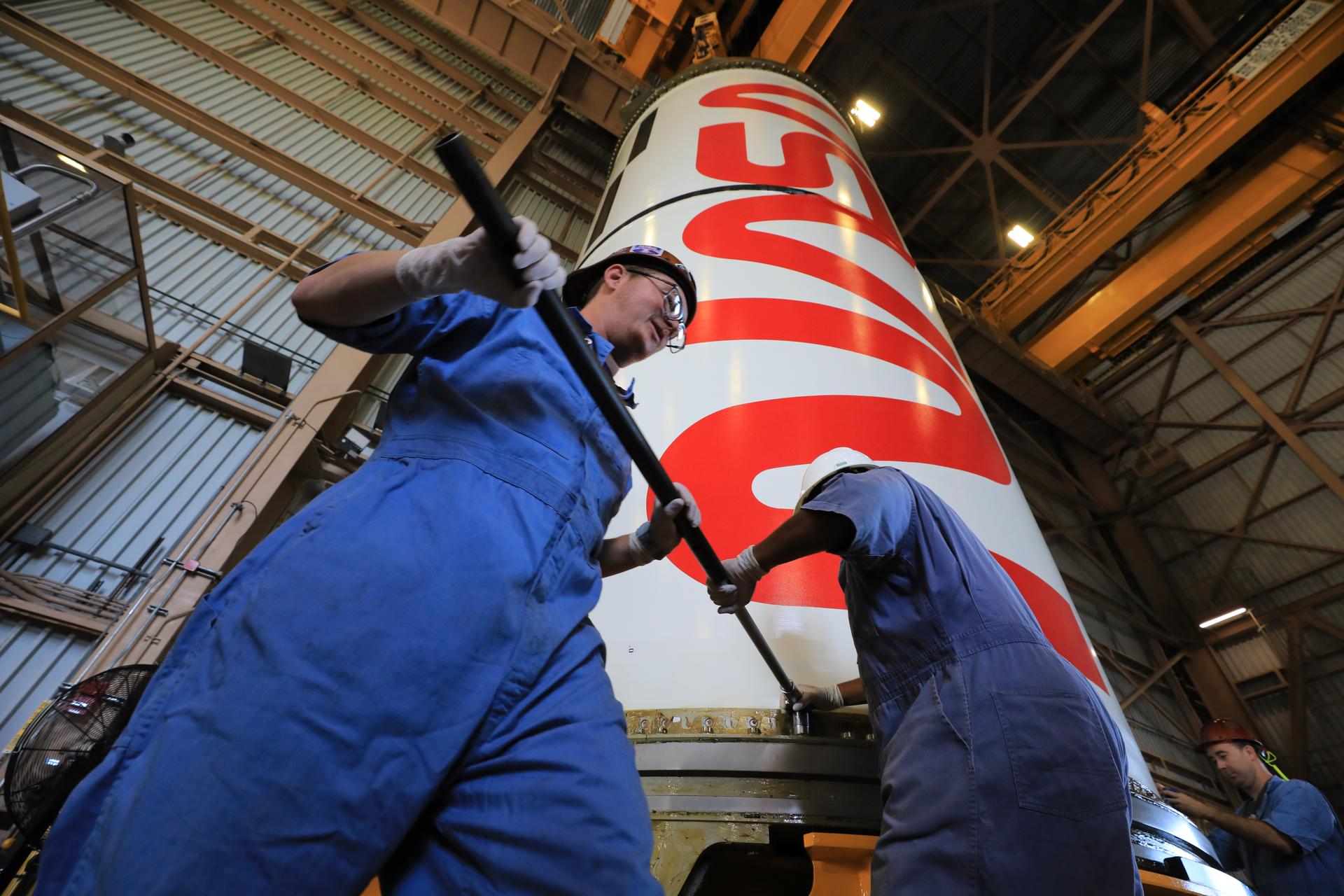
NASA also is applying lessons learned from previous Artemis missions to streamline rocket and spacecraft processing and integration. Efficient processing of the solid rocket booster motor segments allowed for acceleration of their preparedness for integration by almost four months for Artemis III. Ground equipment was hardened and reinforced on the mobile launcher, and washdowns were completed immediately following the Artemis II launch to avoid corrosion. This contributed to a nearly 50% reduction in turnaround time to return the tower to the Vehicle Assembly Building for its next mission. Reusing upgraded ground systems supports a more frequent launch cadence.
NASA will launch the SLS rocket and Orion spacecraft alongside its commercial partners to demonstrate critical systems needed for future lunar landings, beginning with Artemis IV in 2028.
