




Don't miss out on opportunities available from NASA. Check the link for All Grade Levels, as well as the opportunities links listed in your grade level. Check this page often for new additions.
All Opportunities (listed in order of expiration) "Kids in Micro-g" Student Experiment Design Challenge (Grades 5-8)
"Kids in Micro-
g" is a student experiment design challenge for students in grades 5-8. The challenge gives students a hands-on opportunity to design an experiment to be performed in the classroom and on board the International Space Station. Competition winners and runners up will be selected regionally and nationally. Twelve overall winners will have their experiments conducted by astronauts on board the space station. Deadline information will be released on
Nov. 9, 2009.
NASA Stardust-NExT Mission Survey (All Grade Levels)
NASA's Stardust-NExT mission is offering the public a chance to win a small cube of aerogel (the lightest and lowest-density solid) or a mission cookie cutter. NASA is asking the public to visit the Stardust-NExT mission Web site and complete an online survey about the site. A total of 100 surveys submitted through
Nov. 30, 2009, will be selected randomly to win the cookie cutter or aerogel sample.
Student Opportunity: Team America Rocketry Challenge (Grades 5-12)
TARC is a model rocket competition for U.S. students currently enrolled in grades 7-12. Teams of three to 10 students are challenged to design and build a rocket that will climb to 825 feet with a raw egg payload and stay aloft for 40 to 45 seconds. The payload must then return to earth unbroken. The winning teams will share a grand prize pool of over $60,000 in cash and scholarships. Participation is limited to the first 750 teams who register by
Nov. 30, 2009.
Student Opportunity: Annual CanSat Competition (Higher Education)
The CanSat competition is open to university and college students from the United States, Canada, Mexico and Europe. The mission requires the students to design and build a satellite called a CanSat. A CanSat is the size of a soda can and must be built according to the specifications released by the competition organizing committee. Teams will then compete against each other. Applications are due
Nov. 30, 2009.
NASA's DEVELOP Program -- 2010 Spring Session (Grades 9-12 and Higher Education)
NASA's Applied Sciences' DEVELOP program fosters the training and development of students in the sciences, extending the practical application and benefit of NASA's Earth science research to society. Student interns conduct projects focusing on the use of NASA Earth Observing Sources to benefit local communities and organizations under the guidance of advisors and mentors from NASA and partner organizations. Applications for the spring 2010 session are due
Nov. 30, 2009.
2009-2010 Fundamental Aeronautics Student Competition (Grades 9-12)
The Fundamental Aeronautics Program invites high school students to envision the benefits of an amphibious tiltrotor vehicle with civilian applications. The contest is open to teams or individuals. Participants must be enrolled in an accredited high school, secondary school or home school. International students may participate but are not eligible for cash prizes. A notice of intent is requested by
Dec. 15, 2009. Final projects are due
March 1, 2010.
2009-2010 NASA University Design Contest in Exploration Systems (Higher Education)
NASA invites college students to get involved with NASA's return to the moon by helping to design the tools and instruments needed for the next-generation manned moon rover. Student projects will tackle real problems to be solved for a successful manned lunar mission. The contest is open to U.S. citizens enrolled full-time in an accredited post-secondary institution in the U.S. An e-mail notice of intent is due by
Dec. 15, 2009. Final entries are due on or before
May 15, 2010.
Exploring Space Through Math: Applications in Algebra I Webcast (Grades 5-Higher Education)
Join NASA on
Dec. 16, 2009, for a webcast showcasing problems from the Exploring Space Through Math: Applications in Algebra I guide. This project will inspire your students with the opportunity to analyze real data from human spaceflight and to gain insight into STEM career possibilities. Each problem has a Student Edition and an Educator Edition with a lesson based on the 5-E's Instructional Model and complete problem solutions.
2010 NASA High Altitude Student Platform Opportunity (Higher Education)
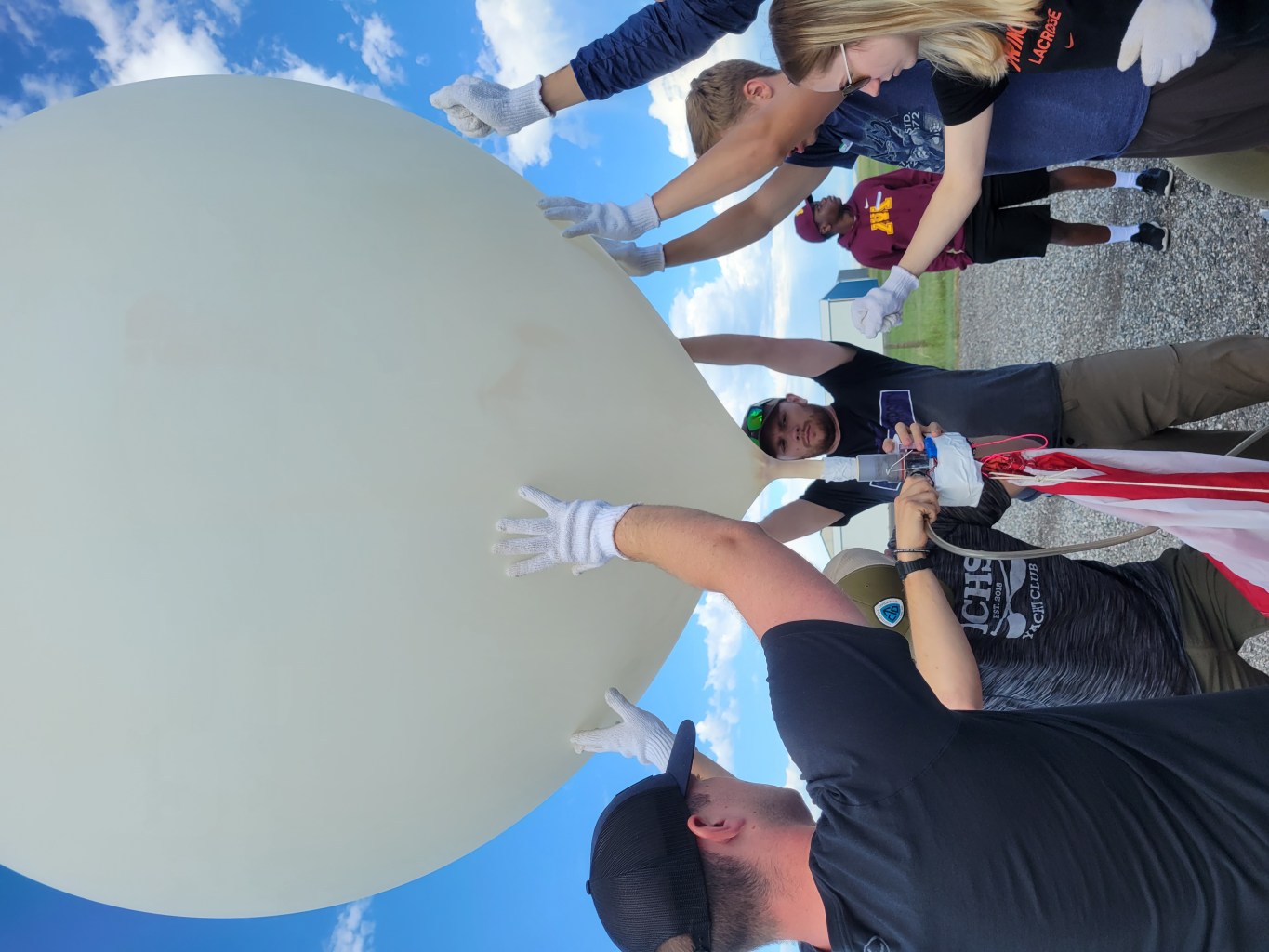
NASA is accepting applications from students at U.S. colleges and universities who want to send experiments to the edge of space on a high-flying scientific balloon. The annual NASA project provides near space access for 12 student experiments to be carried by a NASA high-altitude research balloon. The flights typically last 15 to 20 hours and reach an altitude of 23 miles. Experiments may include compact satellites or prototypes. The deadline for applications is
Dec. 18, 2009.
Top Stars: Educators Invited to Submit Examples of Inspiring Uses of Hubble in Education (All Grade Levels)
For almost 20 years, NASA's Hubble Space Telescope has inspired and engaged educators and students of all ages. U.S. formal (K-12, college) and informal educators are invited to submit their best examples of using NASA's Hubble Space Telescope for science, technology, engineering or mathematics education. Those selected as "Top Stars" will receive national recognition and awards. Entries will be accepted through
Jan. 2, 2010.
NASA Aeronautics Scholarship Program (Higher Education)
Applications are being accepted from students in aeronautics and related fields for the 2010-11 academic year. Twenty undergraduate students in their second year of study will receive up to $15,000 per year for two years and a summer internship at a NASA center with a $10,000 stipend. Five graduate students will receive up to $35,000 per year for three years and two summer internships at a NASA center with $10,000 stipends. Applicants must be U.S. citizens. Applications are due
Jan. 11, 2010.
2010 Albert Einstein Distinguished Educator Fellowship (Grades K-12)
The 2010-2011 Albert Einstein Distinguished Educator Fellowship Program is accepting applications from current elementary and secondary mathematics, technology and science classroom teachers with demonstrated excellence in teaching. Applicants must be U.S. citizens and be currently employed full-time in a public or private elementary or secondary school or school district. Applicants must have been teaching full time for at least five of the last seven years. The online application is due on
Jan. 13, 2010.
2009-2010 Fundamental Aeronautics Student Competition (Higher Education)
The Fundamental Aeronautics Program invites undergraduate and graduate students to research and design a civilian amphibious tiltrotor vehicle. The vehicle must be able to take off and land on water or land; carry up to fifty passengers; cruise at 300 knots; and cover 800 nautical miles. Participants must be enrolled in an accredited college or university. International students may participate but are not eligible for certain prizes. A notice of intent is requested by
Jan. 15, 2010. Final papers are due
May 3, 2010.
Education Award: Alan Shepard Technology in Education Award (Grades K-12)
Do you know K-12 teachers who are making a difference in education through the use of technology? Recognize their achievements by nominating them for the Alan Shepard Technology in Education Award. Technology personnel and K-12 classroom teachers who have demonstrated exemplary use of technology to enhance learning are eligible. The deadline for applications is
Jan. 16, 2010.
Mentored Research Opportunity: NASA Undergraduate Student Research Project (Higher Education)
NASA's USRP offers U.S. undergraduates research experiences at NASA centers. Applications are available for the 2010 summer session. Applicants must be sophomores, juniors or seniors with a 3.0 GPA. They must have an academic major or course work concentration in engineering, math, computer science, or physical or life sciences. Participants work on practical problems that will be applied in aerospace or on future NASA missions. The application deadline is
Jan. 22, 2010.
Mentored NASA's ESMD Research Paper Competition (Higher Education)
NASA's Exploration Systems Mission Directorate Research Paper Competition is open to students who are U.S. citizens in an undergraduate or graduate studies program. Research papers should relate to one of the following areas: Ground Operations, Lunar and Planetary Surface Systems, Propulsion, and Spacecraft. First place winners in each area will receive a $3500 cash scholarship and VIP seating at an upcoming launch. Entries are due
Jan. 25, 2010.
STS-131 Robotics Webcast (All Grade Levels)
Innovation, creativity, problem solving -- The world of robotics at NASA is all of these things. Join NASA's Teaching From Space Team on
Jan. 27, 2010, for a webcast to learn more about robotics, STS-131 and mission specialist Dottie Metcalf-Lindenburger. Participants will also be introduced to a new NASA Education Robotics Web site that contains education activities, career profiles, multimedia resources and student robotic opportunities.
Student Opportunity: National Space Biomedical Research Institute Summer Internship Program (Higher Education)
The NSBRI's summer program is for graduate or medical students and undergraduate students who have completed their second year of undergraduate studies. Applicants are asked to send a curriculum vitae or resume, a letter of interest indicating available dates during the summer, and two letters of recommendation. The program is open to U.S. citizens. The deadline to apply for the 2010 program is
Jan. 31, 2010.
Waste Limitation Management and Recycling Design Challenge (Grades 5-8, Informal)
The Waste Limitation Management and Recycling Design Challenge is open to students in grades 5-8. Teams of up to six students are challenged to create a Sustainable Water Recycling System for the moon. The challenge uses real-world scenarios that meet science and mathematics content standards. Students can participate in a formal, informal or home-school setting. Teams will test their system on a simulated wastewater stream and report results to NASA. Entries are due
Feb. 1, 2010.
2010 NASA Great Moonbuggy Race Competition (Grades 9-12 and Higher Education)
Registration is now open for the 17th Annual NASA Great Moonbuggy Race. The race will take place April 1-3, 2010, in Huntsville, Ala., at the U.S. Space & Rocket Center. High school and college students are required to design a vehicle that addresses a series of engineering problems similar to those faced by the original lunar-roving vehicle team. Each school may enter up to two teams. Entries must be received by
Feb. 1, 2010.
2010 RASC-AL Competition (Higher Education)
The 2010 Revolutionary Aerospace Systems Concepts Academic Linkage competition is a design project contest open to full-time undergraduate or graduate students majoring in engineering or science at an accredited college or university. The RASC-AL contest challenges participants to design projects based on real NASA projects. These design projects could then potentially be implemented by NASA. Student teams must submit abstracts by
Feb. 5, 2010.
Student Opportunity: National Space Biomedical Research Institute's Graduate Education Program in Space Life Sciences (Higher Education)
The NSBRI-sponsored training program in space life sciences enables students to work toward a Ph.D. or M.D./Ph.D. at Texas A&M University and focus their research on space life sciences and fields related to the space initiative. Texas A&M is currently recruiting participants for fall 2010. Students will pursue doctoral degrees in kinesiology, nuclear engineering (health physics) or nutrition, or a M.D./Ph.D. or Ph.D. in medical sciences. Application packages are due
Feb. 15, 2010.
NASA Fit Explorers Webcast (Grades K-8)
Join NASA on
Feb. 24, 2010, for a webcast about how to incorporate NASA Fit Explorer into your own classroom. Developed in cooperation with NASA scientists and fitness professionals working directly with astronauts, the Fit Explorer Project is a physical and inquiry-based approach to human health and fitness on Earth and in space. Students in grades 3-5 are challenged to set physical fitness and research goals; practice physical fitness activities; and research proper nutrition.
NASA Lunabotics Mining Competition (Higher Education)
NASA is challenging undergraduate and graduate student teams to design, build, and compete an excavator that could be used on the moon. NASA's Lunabotics Mining Competition will be held at Kennedy Space Center in Florida on May 25-28, 2010. All of NASA's Excavator Design, Build and Compete Project Funds have been awarded for the 2010 Lunabotics Mining Competition. Register for the Lunabotics Mining Competition by
Feb. 28, 2010. Registration is limited to 24 teams from U.S. universities.
Teacher Training Opportunity: Goldstone Apple Valley Radio Telescope Program (Grades K-12)
The GAVRT Program uses radio astronomy to provide real science experience to students and teach them that science is an ongoing process. Using classroom computers, students take control of a 34-meter, 500-ton, 9-story-tall radio telescope located at NASA's Deep Space Network at Goldstone, Calif. Interested teachers must attend a five-day training class. Classes will take place in Apple Valley, Calif. on
March 8-12,
July 19-23, and
Oct. 25-29, 2010. The cost of the class is $745.
NASA eProfessional Development Network -- Robotics Course Webcast (All Grade Levels)
Join NASA on
March 31, 2010, for a webcast about the courses offered by the NASA eProfessional Development Network. NASA's ePDN is dedicated to preparing teachers to engage their students in science, technology, engineering and mathematics through the use of NASA-developed learning materials and resources. This webcast will demonstrate how teachers can benefit from the ePDN's certificate programs in Robotics, Statistics, Earth and Space Science, and Instructional Technology Integration.
Art and Design Contest: Life and Work on the Moon (Grades 9-12 and Higher Education)
NASA invites high school and college students from all areas of study, including the arts, industrial design, architecture, and computer design, to submit their work on the theme "Life and Work on the Moon." Entries will be accepted in four categories: two-dimensional, three-dimensional, digital and literature. Entries will be evaluated on their artistic qualities and on whether they depict a valid scenario. Prizes include awards and exhibit opportunities. Entries are due
April 15, 2010.
MoonWorld Webcast (All Grade Levels)
Join NASA on
April 28, 2010, for a webcast about MoonWorld, a virtual lunar landscape in Second Life. MoonWorld provides everyone a chance to don a spacesuit and drive a rover across the surface of the moon. In MoonWorld, an avatar directly explores and collects lunar samples to figure out the history of one piece of the moon. The team returns to the lunar base to synthesize the data and make sure the life support system is still pumping out water, air and food.
NASA and PBS' Design Squad On the Moon Webcast (Grades K-12)
On
May 26, 2010, join a webcast about how to put science concepts into context with an array of resources by Design Squad, in collaboration with NASA. Choose from a collection of hands-on activities for grades 3-12, an online workshop for educators, and a Web site rich with multimedia resources to bring engineering to life in the classroom. Students will explore physical and Earth/space concepts learned in class via challenges using low-cost materials.
Send Your Name to Mars (All Grade Levels)
NASA invites you to submit your name to be included on a microchip that will be sent to Mars as part of NASA's Mars Science Laboratory mission, scheduled to launch in 2011. The Mars Science Laboratory is a rover that will assess whether Mars ever was, or still is, an environment able to support microbial life. Participants can print a certificate of participation and view a map showing where other contributors are from.
"From Earth to the Universe" Exhibit (All Grade Levels)
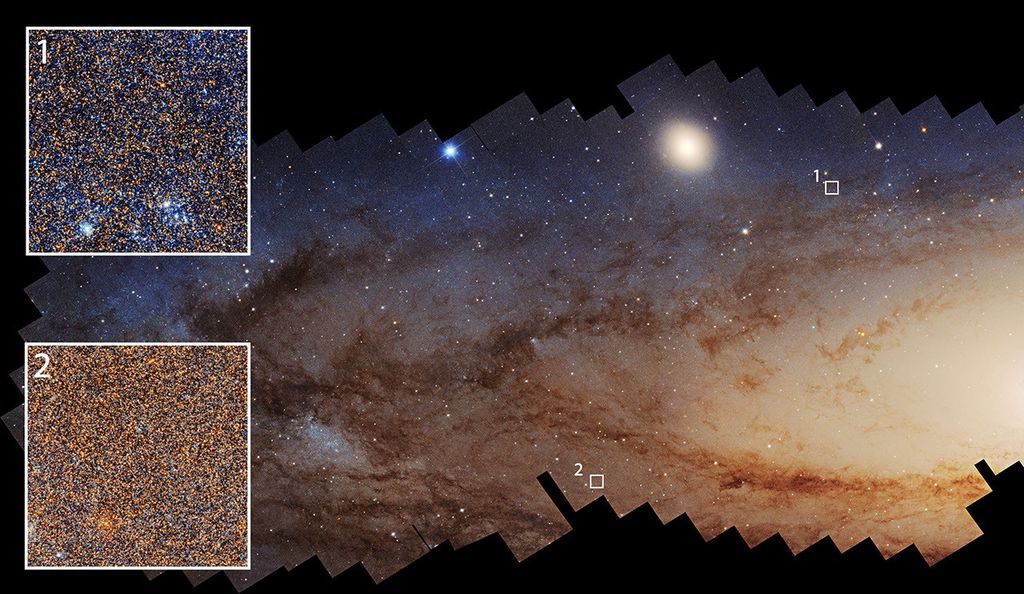
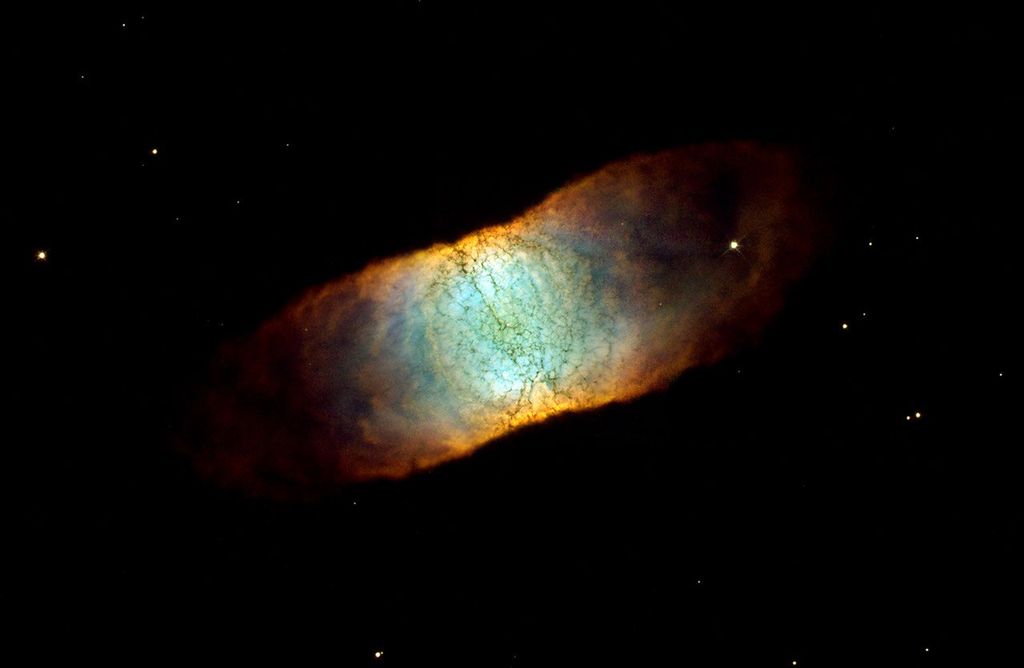
"From Earth to the Universe" is a collection of astronomical images that showcase the most dramatic views of the universe. The images represent the incredible variety of astronomical objects that are known to exist -- planets, comets, stars, nebulae, galaxies and the clusters in which they congregate -- and are being exhibited in over 250 locations throughout the world in 2009 and 2010. Over 60 countries are scheduled to host a FETTU exhibit.
Rock Around the World (Grades K-4)
Mars scientists are asking students from around the world to help them understand the red planet. Send in a rock collected by you or your classroom from your region of the world, and we will use a special tool like the one on the rover to tell you what it's made of. Then everyone can compare their rocks to the ones found on Mars.
Student Opportunity: Odyssey of the Mind (Grades K-12)
The Earth Observing System Project Science Office is sponsoring an Odyssey of the Mind Long-Term Problem -- Earth Trek. Teams will design and build a small vehicle that will visit four locations. Each time it leaves a location, the vehicle will look different. After leaving one of the locations, it will appear to be a group of vehicles traveling together. The team's performance will incorporate the visits to the locations, the environments and the changes in appearance of the vehicle.
Free Teaching Tools Aligned to State Science Education Standards (Grades K-12)
A series of free curriculum supplements from the National Institutes of Health aimed at promoting science education achievement is now aligned to individual state education standards in science, math, health and English language arts for grades K-12. The ongoing series promotes inquiry-based, interdisciplinary learning. The series currently includes 16 supplements on such topics as genetics, infectious diseases and cell biology. Visit the site to request these free education supplements.
Teacher Opportunity: Fit Explorer Challenge (Grades K-12, Informal Education)
Inspire the nation's future explorers by joining NASA and the President's Council on Physical Fitness and Sports in a variety of exciting physical and hands-on educational activities to encourage students to train like astronauts. Students in grades 3-5 will track their progress, learn the science behind nutritional and physical fitness, and relate physical Earth-based needs to the requirements of exploring in space.
Teacher and Student Opportunity: Ames Education Associates Project (Higher Education)
The Ames Education Associates Program is a unique experiential learning program that provides students or faculty members at U.S. colleges or universities, postdoctoral fellows and active K-12 teachers the opportunity to "experience NASA." Educational Associates will participate in and contribute to a project at a NASA facility for a minimum of two months, and a maximum of 12. The program operates year round and positions may start and end at any time.
Research Scholarship: NASA Astrobiology Institute (Higher Education)
The NASA Astrobiology Institute Research Scholarship Project offers research-related travel support that enables graduate or postdoctoral students to circulate among two or more NAI teams or participating institutions of the NAI. Requests are accepted on a continuous basis.
Grades K-4 NASA Stardust-NExT Mission Survey (All Grade Levels)
NASA's Stardust-NExT mission is offering the public a chance to win a small cube of aerogel (the lightest and lowest-density solid) or a mission cookie cutter. NASA is asking the public to visit the Stardust-NExT mission Web site and complete an online survey about the site. A total of 100 surveys submitted through
Nov. 30, 2009, will be selected randomly to win the cookie cutter or aerogel sample.
Top Stars: Educators Invited to Submit Examples of Inspiring Uses of Hubble in Education (All Grade Levels)
For almost 20 years, NASA's Hubble Space Telescope has inspired and engaged educators and students of all ages. U.S. formal (K-12, college) and informal educators are invited to submit their best examples of using NASA's Hubble Space Telescope for science, technology, engineering or mathematics education. Those selected as "Top Stars" will receive national recognition and awards. Entries will be accepted through
Jan. 2, 2010.
2010 Albert Einstein Distinguished Educator Fellowship (Grades K-12)
The 2010-2011 Albert Einstein Distinguished Educator Fellowship Program is accepting applications from current elementary and secondary mathematics, technology and science classroom teachers with demonstrated excellence in teaching. Applicants must be U.S. citizens and be currently employed full-time in a public or private elementary or secondary school or school district. Applicants must have been teaching full time for at least five of the last seven years. The online application is due on
Jan. 13, 2010.
Education Award: Alan Shepard Technology in Education Award (Grades K-12)
Do you know K-12 teachers who are making a difference in education through the use of technology? Recognize their achievements by nominating them for the Alan Shepard Technology in Education Award. Technology personnel and K-12 classroom teachers who have demonstrated exemplary use of technology to enhance learning are eligible. The deadline for applications is
Jan. 16, 2010.
STS-131 Robotics Webcast (All Grade Levels)
Innovation, creativity, problem solving -- The world of robotics at NASA is all of these things. Join NASA's Teaching From Space Team on
Jan. 27, 2010, for a webcast to learn more about robotics, STS-131 and mission specialist Dottie Metcalf-Lindenburger. Participants will also be introduced to a new NASA Education Robotics Web site that contains education activities, career profiles, multimedia resources and student robotic opportunities.
NASA Fit Explorers Webcast (Grades K-8)
Join NASA on
Feb. 24, 2010, for a webcast about how to incorporate NASA Fit Explorer into your own classroom. Developed in cooperation with NASA scientists and fitness professionals working directly with astronauts, the Fit Explorer Project is a physical and inquiry-based approach to human health and fitness on Earth and in space. Students in grades 3-5 are challenged to set physical fitness and research goals; practice physical fitness activities; and research proper nutrition.
Teacher Training Opportunity: Goldstone Apple Valley Radio Telescope Program (Grades K-12)
The GAVRT Program uses radio astronomy to provide real science experience to students and teach them that science is an ongoing process. Using classroom computers, students take control of a 34-meter, 500-ton, 9-story-tall radio telescope located at NASA's Deep Space Network at Goldstone, Calif. Interested teachers must attend a five-day training class. Classes will take place in Apple Valley, Calif. on
March 8-12,
July 19-23, and
Oct. 25-29, 2010. The cost of the class is $745.
NASA eProfessional Development Network -- Robotics Course Webcast (All Grade Levels)
Join NASA on
March 31, 2010, for a webcast about the courses offered by the NASA eProfessional Development Network. NASA's ePDN is dedicated to preparing teachers to engage their students in science, technology, engineering and mathematics through the use of NASA-developed learning materials and resources. This webcast will demonstrate how teachers can benefit from the ePDN's certificate programs in Robotics, Statistics, Earth and Space Science, and Instructional Technology Integration.
MoonWorld Webcast (All Grade Levels)
Join NASA on
April 28, 2010, for a webcast about MoonWorld, a virtual lunar landscape in Second Life. MoonWorld provides everyone a chance to don a spacesuit and drive a rover across the surface of the moon. In MoonWorld, an avatar directly explores and collects lunar samples to figure out the history of one piece of the moon. The team returns to the lunar base to synthesize the data and make sure the life support system is still pumping out water, air and food.
NASA and PBS' Design Squad On the Moon Webcast (Grades K-12)
On
May 26, 2010, join a webcast about how to put science concepts into context with an array of resources by Design Squad, in collaboration with NASA. Choose from a collection of hands-on activities for grades 3-12, an online workshop for educators, and a Web site rich with multimedia resources to bring engineering to life in the classroom. Students will explore physical and Earth/space concepts learned in class via challenges using low-cost materials.
Send Your Name to Mars (All Grade Levels)
NASA invites you to submit your name to be included on a microchip that will be sent to Mars as part of NASA's Mars Science Laboratory mission, scheduled to launch in 2011. The Mars Science Laboratory is a rover that will assess whether Mars ever was, or still is, an environment able to support microbial life. Participants can print a certificate of participation and view a map showing where other contributors are from.
"From Earth to the Universe" Exhibit (All Grade Levels)
"From Earth to the Universe" is a collection of astronomical images that showcase the most dramatic views of the universe. The images represent the incredible variety of astronomical objects that are known to exist -- planets, comets, stars, nebulae, galaxies and the clusters in which they congregate -- and are being exhibited in over 250 locations throughout the world in 2009 and 2010. Over 60 countries are scheduled to host a FETTU exhibit.
Student Opportunity: Odyssey of the Mind (Grades K-12)
The Earth Observing System Project Science Office is sponsoring an Odyssey of the Mind Long-Term Problem -- Earth Trek. Teams will design and build a small vehicle that will visit four locations. Each time it leaves a location, the vehicle will look different. After leaving one of the locations, it will appear to be a group of vehicles traveling together. The team's performance will incorporate the visits to the locations, the environments and the changes in appearance of the vehicle.
Free Teaching Tools Aligned to State Science Education Standards (Grades K-12)
A series of free curriculum supplements from the National Institutes of Health aimed at promoting science education achievement is now aligned to individual state education standards in science, math, health and English language arts for grades K-12. The ongoing series promotes inquiry-based, interdisciplinary learning. The series currently includes 16 supplements on such topics as genetics, infectious diseases and cell biology. Visit the site to request these free education supplements.
Teacher Opportunity: Fit Explorer Challenge (Grades K-12, Informal Education)
Inspire the nation's future explorers by joining NASA and the President's Council on Physical Fitness and Sports in a variety of exciting physical and hands-on educational activities to encourage students to train like astronauts. Students in grades 3-5 will track their progress, learn the science behind nutritional and physical fitness, and relate physical Earth-based needs to the requirements of exploring in space.
Rock Around the World (Grades K-4)
Mars scientists are asking students from around the world to help them understand the red planet. Send in a rock collected by you or your classroom from your region of the world, and we will use a special tool like the one on the rover to tell you what it's made of. Then everyone can compare their rocks to the ones found on Mars.
Grades 5-8 "Kids in Micro-g" Student Experiment Design Challenge (Grades 5-8)
"Kids in Micro-
g" is a student experiment design challenge for students in grades 5-8. The challenge gives students a hands-on opportunity to design an experiment to be performed in the classroom and on board the International Space Station. Competition winners and runners up will be selected regionally and nationally. Twelve overall winners will have their experiments conducted by astronauts on board the space station. Deadline information will be released on
Nov. 9, 2009.
NASA Stardust-NExT Mission Survey (All Grade Levels)
NASA's Stardust-NExT mission is offering the public a chance to win a small cube of aerogel (the lightest and lowest-density solid) or a mission cookie cutter. NASA is asking the public to visit the Stardust-NExT mission Web site and complete an online survey about the site. A total of 100 surveys submitted through
Nov. 30, 2009, will be selected randomly to win the cookie cutter or aerogel sample.
Student Opportunity: Team America Rocketry Challenge (Grades 5-12)
TARC is a model rocket competition for U.S. students currently enrolled in grades 7-12. Teams of three to 10 students are challenged to design and build a rocket that will climb to 825 feet with a raw egg payload and stay aloft for 40 to 45 seconds. The payload must then return to earth unbroken. The winning teams will share a grand prize pool of over $60,000 in cash and scholarships. Participation is limited to the first 750 teams who register by
Nov. 30, 2009.
Exploring Space Through Math: Applications in Algebra I Webcast (Grades 5-Higher Education)
Join NASA on
Dec. 16, 2009, for a webcast showcasing problems from the Exploring Space Through Math: Applications in Algebra I guide. This project will inspire your students with the opportunity to analyze real data from human spaceflight and to gain insight into STEM career possibilities. Each problem has a Student Edition and an Educator Edition with a lesson based on the 5-E's Instructional Model and complete problem solutions.
Top Stars: Educators Invited to Submit Examples of Inspiring Uses of Hubble in Education (All Grade Levels)
For almost 20 years, NASA's Hubble Space Telescope has inspired and engaged educators and students of all ages. U.S. formal (K-12, college) and informal educators are invited to submit their best examples of using NASA's Hubble Space Telescope for science, technology, engineering or mathematics education. Those selected as "Top Stars" will receive national recognition and awards. Entries will be accepted through
Jan. 2, 2010.
2010 Albert Einstein Distinguished Educator Fellowship (Grades K-12)
The 2010-2011 Albert Einstein Distinguished Educator Fellowship Program is accepting applications from current elementary and secondary mathematics, technology and science classroom teachers with demonstrated excellence in teaching. Applicants must be U.S. citizens and be currently employed full-time in a public or private elementary or secondary school or school district. Applicants must have been teaching full time for at least five of the last seven years. The online application is due on
Jan. 13, 2010.
Education Award: Alan Shepard Technology in Education Award (Grades K-12)
Do you know K-12 teachers who are making a difference in education through the use of technology? Recognize their achievements by nominating them for the Alan Shepard Technology in Education Award. Technology personnel and K-12 classroom teachers who have demonstrated exemplary use of technology to enhance learning are eligible. The deadline for applications is
Jan. 16, 2010.
STS-131 Robotics Webcast (All Grade Levels)
Innovation, creativity, problem solving -- The world of robotics at NASA is all of these things. Join NASA's Teaching From Space Team on
Jan. 27, 2010, for a webcast to learn more about robotics, STS-131 and mission specialist Dottie Metcalf-Lindenburger. Participants will also be introduced to a new NASA Education Robotics Web site that contains education activities, career profiles, multimedia resources and student robotic opportunities.
Waste Limitation Management and Recycling Design Challenge (Grades 5-8, Informal)
The Waste Limitation Management and Recycling Design Challenge is open to students in grades 5-8. Teams of up to six students are challenged to create a Sustainable Water Recycling System for the moon. The challenge uses real-world scenarios that meet science and mathematics content standards. Students can participate in a formal, informal or home-school setting. Teams will test their system on a simulated wastewater stream and report results to NASA. Entries are due
Feb. 1, 2010.
NASA Fit Explorers Webcast (Grades K-8)
Join NASA on
Feb. 24, 2010, for a webcast about how to incorporate NASA Fit Explorer into your own classroom. Developed in cooperation with NASA scientists and fitness professionals working directly with astronauts, the Fit Explorer Project is a physical and inquiry-based approach to human health and fitness on Earth and in space. Students in grades 3-5 are challenged to set physical fitness and research goals; practice physical fitness activities; and research proper nutrition.
Teacher Training Opportunity: Goldstone Apple Valley Radio Telescope Program (Grades K-12)
The GAVRT Program uses radio astronomy to provide real science experience to students and teach them that science is an ongoing process. Using classroom computers, students take control of a 34-meter, 500-ton, 9-story-tall radio telescope located at NASA's Deep Space Network at Goldstone, Calif. Interested teachers must attend a five-day training class. Classes will take place in Apple Valley, Calif. on
March 8-12,
July 19-23, and
Oct. 25-29, 2010. The cost of the class is $745.
NASA eProfessional Development Network -- Robotics Course Webcast (All Grade Levels)
Join NASA on
March 31, 2010, for a webcast about the courses offered by the NASA eProfessional Development Network. NASA's ePDN is dedicated to preparing teachers to engage their students in science, technology, engineering and mathematics through the use of NASA-developed learning materials and resources. This webcast will demonstrate how teachers can benefit from the ePDN's certificate programs in Robotics, Statistics, Earth and Space Science, and Instructional Technology Integration.
MoonWorld Webcast (All Grade Levels)
Join NASA on
April 28, 2010, for a webcast about MoonWorld, a virtual lunar landscape in Second Life. MoonWorld provides everyone a chance to don a spacesuit and drive a rover across the surface of the moon. In MoonWorld, an avatar directly explores and collects lunar samples to figure out the history of one piece of the moon. The team returns to the lunar base to synthesize the data and make sure the life support system is still pumping out water, air and food.
NASA and PBS' Design Squad On the Moon Webcast (Grades K-12)
On
May 26, 2010, join a webcast about how to put science concepts into context with an array of resources by Design Squad, in collaboration with NASA. Choose from a collection of hands-on activities for grades 3-12, an online workshop for educators, and a Web site rich with multimedia resources to bring engineering to life in the classroom. Students will explore physical and Earth/space concepts learned in class via challenges using low-cost materials.
Send Your Name to Mars (All Grade Levels)
NASA invites you to submit your name to be included on a microchip that will be sent to Mars as part of NASA's Mars Science Laboratory mission, scheduled to launch in 2011. The Mars Science Laboratory is a rover that will assess whether Mars ever was, or still is, an environment able to support microbial life. Participants can print a certificate of participation and view a map showing where other contributors are from.
"From Earth to the Universe" Exhibit (All Grade Levels)
"From Earth to the Universe" is a collection of astronomical images that showcase the most dramatic views of the universe. The images represent the incredible variety of astronomical objects that are known to exist -- planets, comets, stars, nebulae, galaxies and the clusters in which they congregate -- and are being exhibited in over 250 locations throughout the world in 2009 and 2010. Over 60 countries are scheduled to host a FETTU exhibit.
Student Opportunity: Odyssey of the Mind (Grades K-12)
The Earth Observing System Project Science Office is sponsoring an Odyssey of the Mind Long-Term Problem -- Earth Trek. Teams will design and build a small vehicle that will visit four locations. Each time it leaves a location, the vehicle will look different. After leaving one of the locations, it will appear to be a group of vehicles traveling together. The team's performance will incorporate the visits to the locations, the environments and the changes in appearance of the vehicle.
Free Teaching Tools Aligned to State Science Education Standards (Grades K-12)
A series of free curriculum supplements from the National Institutes of Health aimed at promoting science education achievement is now aligned to individual state education standards in science, math, health and English language arts for grades K-12. The ongoing series promotes inquiry-based, interdisciplinary learning. The series currently includes 16 supplements on such topics as genetics, infectious diseases and cell biology. Visit the site to request these free education supplements.
Teacher Opportunity: Fit Explorer Challenge (Grades K-12, Informal Education)
Inspire the nation's future explorers by joining NASA and the President's Council on Physical Fitness and Sports in a variety of exciting physical and hands-on educational activities to encourage students to train like astronauts. Students in grades 3-5 will track their progress, learn the science behind nutritional and physical fitness, and relate physical Earth-based needs to the requirements of exploring in space.
Grades 9-12 NASA Stardust-NExT Mission Survey (All Grade Levels)
NASA's Stardust-NExT mission is offering the public a chance to win a small cube of aerogel (the lightest and lowest-density solid) or a mission cookie cutter. NASA is asking the public to visit the Stardust-NExT mission Web site and complete an online survey about the site. A total of 100 surveys submitted through
Nov. 30, 2009, will be selected randomly to win the cookie cutter or aerogel sample.
Student Opportunity: Team America Rocketry Challenge (Grades 5-12)
TARC is a model rocket competition for U.S. students currently enrolled in grades 7-12. Teams of three to 10 students are challenged to design and build a rocket that will climb to 825 feet with a raw egg payload and stay aloft for 40 to 45 seconds. The payload must then return to earth unbroken. The winning teams will share a grand prize pool of over $60,000 in cash and scholarships. Participation is limited to the first 750 teams who register by
Nov. 30, 2009.
NASA's DEVELOP Program -- 2010 Spring Session (Grades 9-12 and Higher Education)
NASA's Applied Sciences' DEVELOP program fosters the training and development of students in the sciences, extending the practical application and benefit of NASA's Earth science research to society. Student interns conduct projects focusing on the use of NASA Earth Observing Sources to benefit local communities and organizations under the guidance of advisors and mentors from NASA and partner organizations. Applications for the spring 2010 session are due
Nov. 30, 2009.
2009-2010 Fundamental Aeronautics Student Competition (Grades 9-12)
The Fundamental Aeronautics Program invites high school students to envision the benefits of an amphibious tiltrotor vehicle with civilian applications. The contest is open to teams or individuals. Participants must be enrolled in an accredited high school, secondary school or home school. International students may participate but are not eligible for cash prizes. A notice of intent is requested by
Dec. 15, 2009. Final projects are due
March 1, 2010.
Exploring Space Through Math: Applications in Algebra I Webcast (Grades 5-Higher Education)
Join NASA on
Dec. 16, 2009, for a webcast showcasing problems from the Exploring Space Through Math: Applications in Algebra I guide. This project will inspire your students with the opportunity to analyze real data from human spaceflight and to gain insight into STEM career possibilities. Each problem has a Student Edition and an Educator Edition with a lesson based on the 5-E's Instructional Model and complete problem solutions.
Top Stars: Educators Invited to Submit Examples of Inspiring Uses of Hubble in Education (All Grade Levels)
For almost 20 years, NASA's Hubble Space Telescope has inspired and engaged educators and students of all ages. U.S. formal (K-12, college) and informal educators are invited to submit their best examples of using NASA's Hubble Space Telescope for science, technology, engineering or mathematics education. Those selected as "Top Stars" will receive national recognition and awards. Entries will be accepted through
Jan. 2, 2010.
2010 Albert Einstein Distinguished Educator Fellowship (Grades K-12)
The 2010-2011 Albert Einstein Distinguished Educator Fellowship Program is accepting applications from current elementary and secondary mathematics, technology and science classroom teachers with demonstrated excellence in teaching. Applicants must be U.S. citizens and be currently employed full-time in a public or private elementary or secondary school or school district. Applicants must have been teaching full time for at least five of the last seven years. The online application is due on
Jan. 13, 2010.
Education Award: Alan Shepard Technology in Education Award (Grades K-12)
Do you know K-12 teachers who are making a difference in education through the use of technology? Recognize their achievements by nominating them for the Alan Shepard Technology in Education Award. Technology personnel and K-12 classroom teachers who have demonstrated exemplary use of technology to enhance learning are eligible. The deadline for applications is
Jan. 16, 2010.
STS-131 Robotics Webcast (All Grade Levels)
Innovation, creativity, problem solving -- The world of robotics at NASA is all of these things. Join NASA's Teaching From Space Team on
Jan. 27, 2010, for a webcast to learn more about robotics, STS-131 and mission specialist Dottie Metcalf-Lindenburger. Participants will also be introduced to a new NASA Education Robotics Web site that contains education activities, career profiles, multimedia resources and student robotic opportunities.
2010 NASA Great Moonbuggy Race Competition (Grades 9-12 and Higher Education)
Registration is now open for the 17th Annual NASA Great Moonbuggy Race. The race will take place April 1-3, 2010, in Huntsville, Ala., at the U.S. Space & Rocket Center. High school and college students are required to design a vehicle that addresses a series of engineering problems similar to those faced by the original lunar-roving vehicle team. Each school may enter up to two teams. Entries must be received by
Feb. 1, 2010.
Teacher Training Opportunity: Goldstone Apple Valley Radio Telescope Program (Grades K-12)
The GAVRT Program uses radio astronomy to provide real science experience to students and teach them that science is an ongoing process. Using classroom computers, students take control of a 34-meter, 500-ton, 9-story-tall radio telescope located at NASA's Deep Space Network at Goldstone, Calif. Interested teachers must attend a five-day training class. Classes will take place in Apple Valley, Calif. on
March 8-12,
July 19-23, and
Oct. 25-29, 2010. The cost of the class is $745.
NASA eProfessional Development Network -- Robotics Course Webcast (All Grade Levels)
Join NASA on
March 31, 2010, for a webcast about the courses offered by the NASA eProfessional Development Network. NASA's ePDN is dedicated to preparing teachers to engage their students in science, technology, engineering and mathematics through the use of NASA-developed learning materials and resources. This webcast will demonstrate how teachers can benefit from the ePDN's certificate programs in Robotics, Statistics, Earth and Space Science, and Instructional Technology Integration.
Art and Design Contest: Life and Work on the Moon (Grades 9-12 and Higher Education)
NASA invites high school and college students from all areas of study, including the arts, industrial design, architecture, and computer design, to submit their work on the theme "Life and Work on the Moon." Entries will be accepted in four categories: two-dimensional, three-dimensional, digital and literature. Entries will be evaluated on their artistic qualities and on whether they depict a valid scenario. Prizes include awards and exhibit opportunities. Entries are due
April 15, 2010.
MoonWorld Webcast (All Grade Levels)
Join NASA on
April 28, 2010, for a webcast about MoonWorld, a virtual lunar landscape in Second Life. MoonWorld provides everyone a chance to don a spacesuit and drive a rover across the surface of the moon. In MoonWorld, an avatar directly explores and collects lunar samples to figure out the history of one piece of the moon. The team returns to the lunar base to synthesize the data and make sure the life support system is still pumping out water, air and food.
NASA and PBS' Design Squad On the Moon Webcast (Grades K-12)
On
May 26, 2010, join a webcast about how to put science concepts into context with an array of resources by Design Squad, in collaboration with NASA. Choose from a collection of hands-on activities for grades 3-12, an online workshop for educators, and a Web site rich with multimedia resources to bring engineering to life in the classroom. Students will explore physical and Earth/space concepts learned in class via challenges using low-cost materials.
Send Your Name to Mars (All Grade Levels)
NASA invites you to submit your name to be included on a microchip that will be sent to Mars as part of NASA's Mars Science Laboratory mission, scheduled to launch in 2011. The Mars Science Laboratory is a rover that will assess whether Mars ever was, or still is, an environment able to support microbial life. Participants can print a certificate of participation and view a map showing where other contributors are from.
"From Earth to the Universe" Exhibit (All Grade Levels)
"From Earth to the Universe" is a collection of astronomical images that showcase the most dramatic views of the universe. The images represent the incredible variety of astronomical objects that are known to exist -- planets, comets, stars, nebulae, galaxies and the clusters in which they congregate -- and are being exhibited in over 250 locations throughout the world in 2009 and 2010. Over 60 countries are scheduled to host a FETTU exhibit.
Student Opportunity: Odyssey of the Mind (Grades K-12)
The Earth Observing System Project Science Office is sponsoring an Odyssey of the Mind Long-Term Problem -- Earth Trek. Teams will design and build a small vehicle that will visit four locations. Each time it leaves a location, the vehicle will look different. After leaving one of the locations, it will appear to be a group of vehicles traveling together. The team's performance will incorporate the visits to the locations, the environments and the changes in appearance of the vehicle.
Free Teaching Tools Aligned to State Science Education Standards (Grades K-12)
A series of free curriculum supplements from the National Institutes of Health aimed at promoting science education achievement is now aligned to individual state education standards in science, math, health and English language arts for grades K-12. The ongoing series promotes inquiry-based, interdisciplinary learning. The series currently includes 16 supplements on such topics as genetics, infectious diseases and cell biology. Visit the site to request these free education supplements.
Higher Education NASA Stardust-NExT Mission Survey (All Grade Levels)
NASA's Stardust-NExT mission is offering the public a chance to win a small cube of aerogel (the lightest and lowest-density solid) or a mission cookie cutter. NASA is asking the public to visit the Stardust-NExT mission Web site and complete an online survey about the site. A total of 100 surveys submitted through
Nov. 30, 2009, will be selected randomly to win the cookie cutter or aerogel sample.
Student Opportunity: Annual CanSat Competition (Higher Education)
The CanSat competition is open to university and college students from the United States, Canada, Mexico and Europe. The mission requires the students to design and build a satellite called a CanSat. A CanSat is the size of a soda can and must be built according to the specifications released by the competition organizing committee. Teams will then compete against each other. Applications are due
Nov. 30, 2009.
NASA's DEVELOP Program -- 2010 Spring Session (Grades 9-12 and Higher Education)
NASA's Applied Sciences' DEVELOP program fosters the training and development of students in the sciences, extending the practical application and benefit of NASA's Earth science research to society. Student interns conduct projects focusing on the use of NASA Earth Observing Sources to benefit local communities and organizations under the guidance of advisors and mentors from NASA and partner organizations. Applications for the spring 2010 session are due
Nov. 30, 2009.
2009-2010 NASA University Design Contest in Exploration Systems (Higher Education)
NASA invites college students to get involved with NASA's return to the moon by helping to design the tools and instruments needed for the next-generation manned moon rover. Student projects will tackle real problems to be solved for a successful manned lunar mission. The contest is open to U.S. citizens enrolled full-time in an accredited post-secondary institution in the U.S. An e-mail notice of intent is due by
Dec. 15, 2009. Final entries are due on or before
May 15, 2010.
Exploring Space Through Math: Applications in Algebra I Webcast (Grades 5-Higher Education)
Join NASA on
Dec. 16, 2009, for a webcast showcasing problems from the Exploring Space Through Math: Applications in Algebra I guide. This project will inspire your students with the opportunity to analyze real data from human spaceflight and to gain insight into STEM career possibilities. Each problem has a Student Edition and an Educator Edition with a lesson based on the 5-E's Instructional Model and complete problem solutions.
2010 NASA High Altitude Student Platform Opportunity (Higher Education)
NASA is accepting applications from students at U.S. colleges and universities who want to send experiments to the edge of space on a high-flying scientific balloon. The annual NASA project provides near space access for 12 student experiments to be carried by a NASA high-altitude research balloon. The flights typically last 15 to 20 hours and reach an altitude of 23 miles. Experiments may include compact satellites or prototypes. The deadline for applications is
Dec. 18, 2009.
Top Stars: Educators Invited to Submit Examples of Inspiring Uses of Hubble in Education (All Grade Levels)
For almost 20 years, NASA's Hubble Space Telescope has inspired and engaged educators and students of all ages. U.S. formal (K-12, college) and informal educators are invited to submit their best examples of using NASA's Hubble Space Telescope for science, technology, engineering or mathematics education. Those selected as "Top Stars" will receive national recognition and awards. Entries will be accepted through
Jan. 2, 2010.
NASA Aeronautics Scholarship Program (Higher Education)
Applications are being accepted from students in aeronautics and related fields for the 2010-11 academic year. Twenty undergraduate students in their second year of study will receive up to $15,000 per year for two years and a summer internship at a NASA center with a $10,000 stipend. Five graduate students will receive up to $35,000 per year for three years and two summer internships at a NASA center with $10,000 stipends. Applicants must be U.S. citizens. Applications are due
Jan. 11, 2010.
2009-2010 Fundamental Aeronautics Student Competition (Higher Education)
The Fundamental Aeronautics Program invites undergraduate and graduate students to research and design a civilian amphibious tiltrotor vehicle. The vehicle must be able to take off and land on water or land; carry up to fifty passengers; cruise at 300 knots; and cover 800 nautical miles. Participants must be enrolled in an accredited college or university. International students may participate but are not eligible for certain prizes. A notice of intent is requested by
Jan. 15, 2010. Final papers are due
May 3, 2010.
Mentored Research Opportunity: NASA Undergraduate Student Research Project (Higher Education)
NASA's USRP offers U.S. undergraduates research experiences at NASA centers. Applications are available for the 2010 summer session. Applicants must be sophomores, juniors or seniors with a 3.0 GPA. They must have an academic major or course work concentration in engineering, math, computer science, or physical or life sciences. Participants work on practical problems that will be applied in aerospace or on future NASA missions. The application deadline is
Jan. 22, 2010.
Mentored NASA's ESMD Research Paper Competition (Higher Education)
NASA's Exploration Systems Mission Directorate Research Paper Competition is open to students who are U.S. citizens in an undergraduate or graduate studies program. Research papers should relate to one of the following areas: Ground Operations, Lunar and Planetary Surface Systems, Propulsion, and Spacecraft. First place winners in each area will receive a $3500 cash scholarship and VIP seating at an upcoming launch. Entries are due
Jan. 25, 2010.
STS-131 Robotics Webcast (All Grade Levels)
Innovation, creativity, problem solving -- The world of robotics at NASA is all of these things. Join NASA's Teaching From Space Team on
Jan. 27, 2010, for a webcast to learn more about robotics, STS-131 and mission specialist Dottie Metcalf-Lindenburger. Participants will also be introduced to a new NASA Education Robotics Web site that contains education activities, career profiles, multimedia resources and student robotic opportunities.
Student Opportunity: National Space Biomedical Research Institute Summer Internship Program (Higher Education)
The NSBRI's summer program is for graduate or medical students and undergraduate students who have completed their second year of undergraduate studies. Applicants are asked to send a curriculum vitae or resume, a letter of interest indicating available dates during the summer, and two letters of recommendation. The program is open to U.S. citizens. The deadline to apply for the 2010 program is
Jan. 31, 2010.
2010 NASA Great Moonbuggy Race Competition (Grades 9-12 and Higher Education)
Registration is now open for the 17th Annual NASA Great Moonbuggy Race. The race will take place April 1-3, 2010, in Huntsville, Ala., at the U.S. Space & Rocket Center. High school and college students are required to design a vehicle that addresses a series of engineering problems similar to those faced by the original lunar-roving vehicle team. Each school may enter up to two teams. Entries must be received by
Feb. 1, 2010.
2010 RASC-AL Competition (Higher Education)
The 2010 Revolutionary Aerospace Systems Concepts Academic Linkage competition is a design project contest open to full-time undergraduate or graduate students majoring in engineering or science at an accredited college or university. The RASC-AL contest challenges participants to design projects based on real NASA projects. These design projects could then potentially be implemented by NASA. Student teams must submit abstracts by
Feb. 5, 2010.
Student Opportunity: National Space Biomedical Research Institute's Graduate Education Program in Space Life Sciences (Higher Education)
The NSBRI-sponsored training program in space life sciences enables students to work toward a Ph.D. or M.D./Ph.D. at Texas A&M University and focus their research on space life sciences and fields related to the space initiative. Texas A&M is currently recruiting participants for fall 2010. Students will pursue doctoral degrees in kinesiology, nuclear engineering (health physics) or nutrition, or a M.D./Ph.D. or Ph.D. in medical sciences. Application packages are due
Feb. 15, 2010.
NASA Lunabotics Mining Competition (Higher Education)
NASA is challenging undergraduate and graduate student teams to design, build, and compete an excavator that could be used on the moon. NASA's Lunabotics Mining Competition will be held at Kennedy Space Center in Florida on May 25-28, 2010. All of NASA's Excavator Design, Build and Compete Project Funds have been awarded for the 2010 Lunabotics Mining Competition. Register for the Lunabotics Mining Competition by
Feb. 28, 2010. Registration is limited to 24 teams from U.S. universities.
NASA eProfessional Development Network -- Robotics Course Webcast (All Grade Levels)
Join NASA on
March 31, 2010, for a webcast about the courses offered by the NASA eProfessional Development Network. NASA's ePDN is dedicated to preparing teachers to engage their students in science, technology, engineering and mathematics through the use of NASA-developed learning materials and resources. This webcast will demonstrate how teachers can benefit from the ePDN's certificate programs in Robotics, Statistics, Earth and Space Science, and Instructional Technology Integration.
Art and Design Contest: Life and Work on the Moon (Grades 9-12 and Higher Education)
NASA invites high school and college students from all areas of study, including the arts, industrial design, architecture, and computer design, to submit their work on the theme "Life and Work on the Moon." Entries will be accepted in four categories: two-dimensional, three-dimensional, digital and literature. Entries will be evaluated on their artistic qualities and on whether they depict a valid scenario. Prizes include awards and exhibit opportunities. Entries are due
April 15, 2010.
MoonWorld Webcast (All Grade Levels)
Join NASA on
April 28, 2010, for a webcast about MoonWorld, a virtual lunar landscape in Second Life. MoonWorld provides everyone a chance to don a spacesuit and drive a rover across the surface of the moon. In MoonWorld, an avatar directly explores and collects lunar samples to figure out the history of one piece of the moon. The team returns to the lunar base to synthesize the data and make sure the life support system is still pumping out water, air and food.
Send Your Name to Mars (All Grade Levels)
NASA invites you to submit your name to be included on a microchip that will be sent to Mars as part of NASA's Mars Science Laboratory mission, scheduled to launch in 2011. The Mars Science Laboratory is a rover that will assess whether Mars ever was, or still is, an environment able to support microbial life. Participants can print a certificate of participation and view a map showing where other contributors are from.
"From Earth to the Universe" Exhibit (All Grade Levels)
"From Earth to the Universe" is a collection of astronomical images that showcase the most dramatic views of the universe. The images represent the incredible variety of astronomical objects that are known to exist -- planets, comets, stars, nebulae, galaxies and the clusters in which they congregate -- and are being exhibited in over 250 locations throughout the world in 2009 and 2010. Over 60 countries are scheduled to host a FETTU exhibit.
Teacher and Student Opportunity: Ames Education Associates Project (Higher Education)
The Ames Education Associates Program is a unique experiential learning program that provides students or faculty members at U.S. colleges or universities, postdoctoral fellows and active K-12 teachers the opportunity to "experience NASA." Educational Associates will participate in and contribute to a project at a NASA facility for a minimum of two months, and a maximum of 12. The program operates year round and positions may start and end at any time.
Research Scholarship: NASA Astrobiology Institute (Higher Education)
The NASA Astrobiology Institute Research Scholarship Project offers research-related travel support that enables graduate or postdoctoral students to circulate among two or more NAI teams or participating institutions of the NAI. Requests are accepted on a continuous basis.
Informal Education NASA Stardust-NExT Mission Survey (All Grade Levels)
NASA's Stardust-NExT mission is offering the public a chance to win a small cube of aerogel (the lightest and lowest-density solid) or a mission cookie cutter. NASA is asking the public to visit the Stardust-NExT mission Web site and complete an online survey about the site. A total of 100 surveys submitted through
Nov. 30, 2009, will be selected randomly to win the cookie cutter or aerogel sample.
Top Stars: Educators Invited to Submit Examples of Inspiring Uses of Hubble in Education (All Grade Levels)
For almost 20 years, NASA's Hubble Space Telescope has inspired and engaged educators and students of all ages. U.S. formal (K-12, college) and informal educators are invited to submit their best examples of using NASA's Hubble Space Telescope for science, technology, engineering or mathematics education. Those selected as "Top Stars" will receive national recognition and awards. Entries will be accepted through
Jan. 2, 2010.
STS-131 Robotics Webcast (All Grade Levels)
Innovation, creativity, problem solving -- The world of robotics at NASA is all of these things. Join NASA's Teaching From Space Team on
Jan. 27, 2010, for a webcast to learn more about robotics, STS-131 and mission specialist Dottie Metcalf-Lindenburger. Participants will also be introduced to a new NASA Education Robotics Web site that contains education activities, career profiles, multimedia resources and student robotic opportunities.
Waste Limitation Management and Recycling Design Challenge (Grades 5-8, Informal)
The Waste Limitation Management and Recycling Design Challenge is open to students in grades 5-8. Teams of up to six students are challenged to create a Sustainable Water Recycling System for the moon. The challenge uses real-world scenarios that meet science and mathematics content standards. Students can participate in a formal, informal or home-school setting. Teams will test their system on a simulated wastewater stream and report results to NASA. Entries are due
Feb. 1, 2010.
NASA eProfessional Development Network -- Robotics Course Webcast (All Grade Levels)
Join NASA on
March 31, 2010, for a webcast about the courses offered by the NASA eProfessional Development Network. NASA's ePDN is dedicated to preparing teachers to engage their students in science, technology, engineering and mathematics through the use of NASA-developed learning materials and resources. This webcast will demonstrate how teachers can benefit from the ePDN's certificate programs in Robotics, Statistics, Earth and Space Science, and Instructional Technology Integration.
MoonWorld Webcast (All Grade Levels)
Join NASA on
April 28, 2010, for a webcast about MoonWorld, a virtual lunar landscape in Second Life. MoonWorld provides everyone a chance to don a spacesuit and drive a rover across the surface of the moon. In MoonWorld, an avatar directly explores and collects lunar samples to figure out the history of one piece of the moon. The team returns to the lunar base to synthesize the data and make sure the life support system is still pumping out water, air and food.
Send Your Name to Mars (All Grade Levels)
NASA invites you to submit your name to be included on a microchip that will be sent to Mars as part of NASA's Mars Science Laboratory mission, scheduled to launch in 2011. The Mars Science Laboratory is a rover that will assess whether Mars ever was, or still is, an environment able to support microbial life. Participants can print a certificate of participation and view a map showing where other contributors are from.
"From Earth to the Universe" Exhibit (All Grade Levels)
"From Earth to the Universe" is a collection of astronomical images that showcase the most dramatic views of the universe. The images represent the incredible variety of astronomical objects that are known to exist -- planets, comets, stars, nebulae, galaxies and the clusters in which they congregate -- and are being exhibited in over 250 locations throughout the world in 2009 and 2010. Over 60 countries are scheduled to host a FETTU exhibit.
Teacher Opportunity: Fit Explorer Challenge (Grades K-12, Informal)
Inspire the nation's future explorers by joining NASA and the President's Council on Physical Fitness and Sports in a variety of exciting physical and hands-on educational activities to encourage students to train like astronauts. Students in grades 3-5 will track their progress, learn the science behind nutritional and physical fitness, and relate physical Earth-based needs to the requirements of exploring in space.