



























From Earth orbit to the Moon and Mars, explore the world of human spaceflight with NASA each week on the official podcast of the Johnson Space Center in Houston, Texas. Listen to in-depth conversations with the astronauts, scientists and engineers who make it possible.
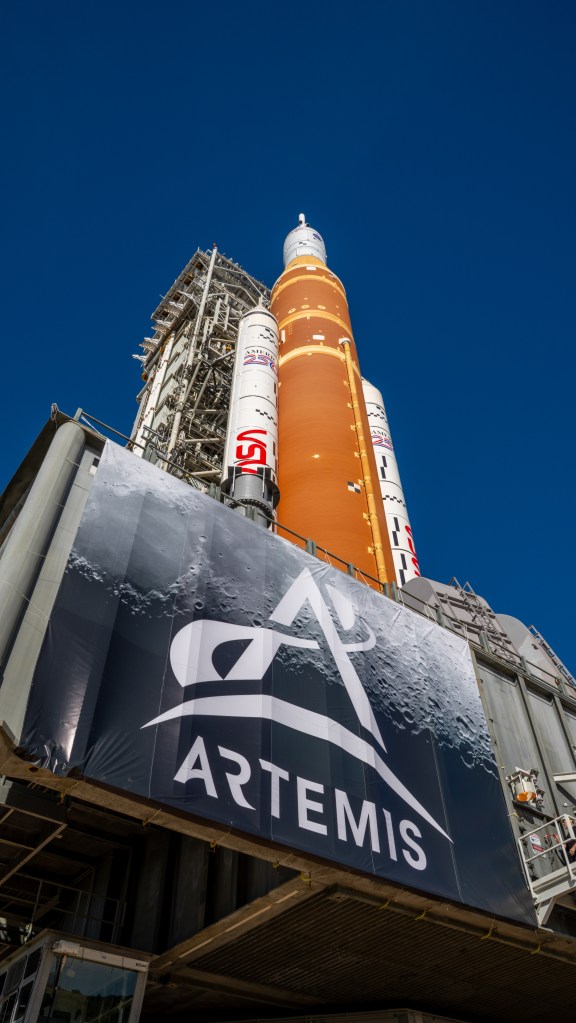
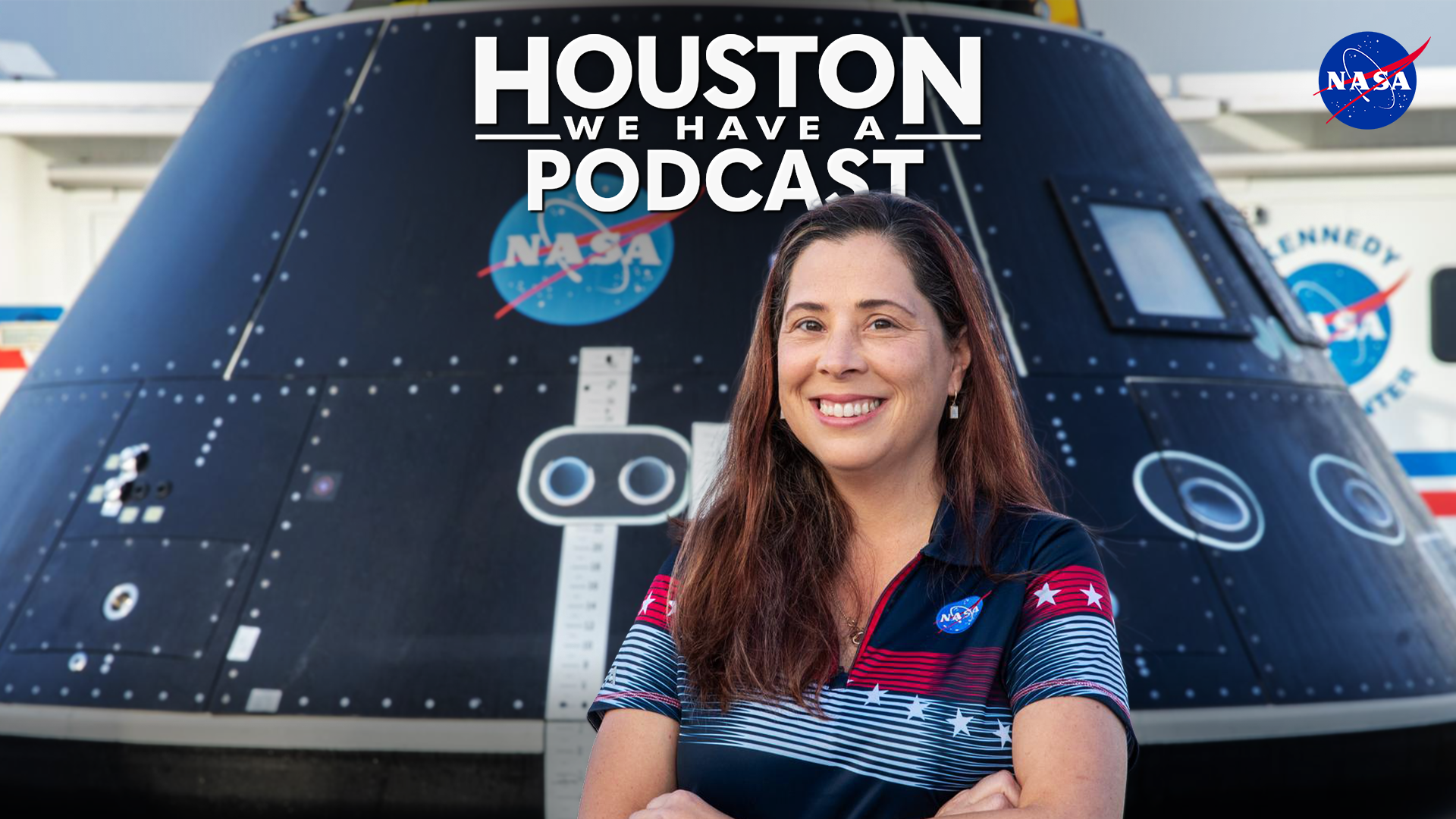
On episode 408, Artemis II landing and recovery director Lili Villarreal discusses how NASA and its partners recover the Orion spacecraft and its four astronauts following splashdown at the end of the mission. This episode was recorded August 12, 2025.

Transcript
Nilufar Ramji
Houston We Have a Podcast. Welcome to the official podcast of NASA’s Johnson Space Center Episode 408: Artemis II: Recovery. I’m Nilufar Ramji, and I’ll be your host today on this podcast, we bring in the experts, scientists, engineers and astronauts all to let you know what’s going on in the world of human spaceflight and more.
We’re headed to the moon and beyond, and the Artemis two test flight will be NASA’s first crewed mission to the moon in over 50 years. NASA astronauts Reid Weisman, Victor Glover, Christina Koch and Canadian Space Agency astronaut Jeremy Hansen, will take this flight aboard NASA’s Orion spacecraft, testing its systems and ensuring it’s ready for future deep space missions. Throughout the Artemis campaign, NASA is sending astronauts to explore the moon for scientific discovery, economic benefits and to build the foundation for the first crewed missions to Mars for the benefit of all.
The Artemis II mission has many moving parts, and we’ve covered some of them on this podcast already. So today we are going to focus on recovery.
On the final day of the mission, the Orion spacecraft will bring the four crew members through Earth’s atmosphere for a splashdown in the Pacific Ocean. Then a team of experts will ensure the crew is recovered from their landing site and are able to exit Orion safely.
Joining me today is the Artemis two landing and recovery director, Lili Villarreal from the exploration Ground Systems team at NASA’s Kennedy Space Center. She has worked with a large team at NASA and our partners to ensure the recovery of both spacecraft and crew is meticulously planned and tested.
With this episode, we had some difficulty with the recording, and you may notice some changes in the sound quality at certain points in this episode.
Are you ready? Let’s dive in.
Nilufar Ramji
Lili, thank you so much for joining me on Houston We Have a Podcast.
Lili Villarreal
Well, thank you for having me. I’m very honored to support this podcast.
Nilufar Ramji
Well, we want to get right in to learn a little bit more about Artemis two recovery. So let’s start off with a little bit about yourself. Tell me a little bit about your NASA career and how you ended up as the Artemis II recovery director.
Lili Villarreal
Well, I’ll start out with saying that just like everybody else that works at NASA, you know, most of us wanted to be an astronaut, and I started out at Georgia Tech, getting my bachelor’s and master’s in aerospace engineering. And after I graduated, I went to work for Boeing in Seattle, working on the environmental control system designed for the 747 and the triple-sevens. And I really loved it, but I knew that Boeing had a contract with NASA in Florida, working on the assembly of the International Space Station, and so that was something that I really, really wanted to be a part of it. Gave me the opportunity to work for NASA, and I just kept applying for any job that was open in that contract. I think I bugged him so much. Eventually, about a year later, one of the managers got a hold of me and asked me if I wanted to come and do an interview. And of course, I was like, Yes, and he hired me that same day, and that’s how my career at NASA really started. That was back in 2000 and I was very lucky to have been a part of working International Space Station for it’s pretty much since the beginning, for 15 years with Boeing at first as a mechanical lifting and hailing engineer, and then I transferred over to NASA in the Operations Engineering area. Now also became a deputy Mission Manager in the Space Station days. After the space shuttle ended, I was I transferred myself over to the Artemis program because, oh my god, we were going to the moon, and I want to be part of that. And I’ve been working on the Artemis program for quite some time in different operational management kind of jobs and and I just ended up, in the last few years, lucky enough to have been asked to come and do the recovery operations recovery director job. So very lucky, and I have loved every minute of it.
Nilufar Ramji
So it’s safe to say that for as long as we have had a continuous human presence in low Earth orbit, you’ve been at NASA, or you’ve been working alongside NASA.
Lili Villarreal
Yes, 100% that is a fact. Yes.
Nilufar Ramji
That’s really exciting. And congratulations on being selected for the role of recovery director. Let’s talk a little bit about the mission itself. How, how does everything play out from where you sit?
Lili Villarreal
Well, you know, we actually are responsible for recovery. We call it recovery, rescue and retrieval. So recovery is considered the part of the recovery that the- recovering, the crew and the capsule in a nominal splashdown event. Rescue is all about rescuing the crew if they land in an off nominal location or they there is an actual abort during the launch. And retrieval is all about getting that capsule post a crew rescue, and obviously in an area that we didn’t anticipate the capsule landing at so it’s three things, is recovery, rescue and retrieval.
Nilufar Ramji
Fantastic. And how does that recovery, rescue and retrieval, has it- How has it evolved from the Apollo missions to where we are today? Is it a little bit different? Is it about the same?
Lili Villarreal
Well, you know, before my time, there was an entire team that spent quite some time developing the ConOps and evaluating different trade studies. There were multiple different trade studies to try to figure out what the best method to do that recovery, rescue and retrieval of Orion and the crew was going to be. And believe it or not, in those teams, they actually had personnel who were part of the Apollo recovery missions, and they, yeah, and it was great, because they provided some very valuable feedback and lessons learned about how they did it. And so what has evolved out of that is really a very similar process, but a little different when it comes to recovery method. Like Apollo, we had partnered with the military to perform our recover and rescue operations in like Mercury, Gemini, and Apollo missions, we actually will recover the crew in the open water, assisting them in crew egress before getting them on a ship. And what’s a little different is actually the method of how we recover the capsule from the Apollo. Instead of lifting the capsule via a helicopter or a crane, this is a much bigger, heavier capsule, so we actually float the capsule into a well deck of a military ship. And this time around, we’re doing it with one military ship, a very versatile, wonderful ship. Unlike Apollo, we had numerous military ships supporting splashdown. So very similar, but very different.
Nilufar Ramji
Yes, it sounds like a lot of those lessons from Apollo have transferred over, which is really great to hear, because we are carrying on this legacy of going being beyond the Moon as well. So can you tell me if this is this the recovery operations that you’re going through for the Artemis II mission is different from how we would recover a spacecraft from, let’s say, Space Station missions, or other NASA missions that may not necessarily involve crew.
Lili Villarreal
Yeah, you know, I’m really glad that you asked this question, because not a lot of people understand why our ConOps is so different from recovering a spacecraft from Space Station. First of all, when you come back from space station, all their landing sites are very close to the mainland, and that means that they can quickly helicopter the crew or personnel to land, since they are so close. And that means that they don’t need that higher level of medical care on their recovery vessels, like we do. They also don’t undock from the space station until they know 100% that the landing site has the best weather, and often it’s really benign weather to support that splashdown. So they’re very fortunate in that capability. With us, it’s a little bit different. You know, I mentioned that our vehicle is bigger and heavier, which drives how we recover the vehicle. And also, a lot of people don’t understand that, you know, we could possibly land, where we land and when we land is kind of driven by the day that you launch. There is no waiting to undock from anywhere. There’s no loitering around space after coming back from the Moon, waiting for good weather. We could potentially land in areas where the winds and the sea state conditions are much higher than what a spacecraft from space station can handle. Obviously, Orion’s designed for that. And that is really all due to the orbital dynamics of this free flight of going to the moon and coming back when we launch, we’re coming back in that nine to ten day window time frame, and really the only thing that we can control is the ability to use the guidance and navigation of Orion to kind of select a location from where we enter or punch through the atmosphere to San Diego. So think of a line in the middle of the Pacific towards San Diego that’s like our trajectory to land somewhere between that entry and towards San Diego, we got to find the best weather location, so, and that means that we could potentially be landing very, very far from land. So we have to bring everything with us that we would need for such a recovery for that. We have to bring a higher level of medical care. Essentially, we have a hospital with us, because we could be very far away from land
and unable to get the crew to that higher level of medical care. We also bring all the imagery assets that we would need to film the spacecraft where we are at, because some of the spacecraft that are currently used in Space Station missions, you know, don’t have that range from the mainland to come meet us. And then, of course, we also bring with us some additional helicopters to recover the crew. We use helicopters to pick up the crew from the open water after the egress to capsule. Again, we could land very far away, and it could be days before we get back to port. So we also have to bring the team that helps us recover that capsule into the well deck, and then we have to process that vehicle as much as we can before we get back to port. So that’s the biggest difference. And again, why we partner with the military is so important. They have that global reach, those amazing assets that help us do this, this recovery anywhere in the Pacific,
Nilufar Ramji
Right? And we go together. So this is it’s fantastic to see the inter-government cooperation that’s happening here, and it is so cool. There’s so many things I want to ask you, and maybe we can do a little bit of a deep dive into the recovery procedures and operations themselves. If you could walk me through the steps in a very for Artemis II recovery in a very succinct way. How would you explain it?
Lili Villarreal
Sure. So let’s see. We actually start our operations about 30 days before launch. We and that’s all about preparing the ship and the hardware with all the equipment we’re going to need. We’ll go do an actual practice run, we call it a just in time training, right before launch to train that particular ship. Those military personnel are going to be with us for the actual recovery. We’ll run through a whole entire simulation. Right after launch, we’ll be ready. The team will be in San Diego ready to go. Once the mission management team decides where we’re going to land, we’ll actually leave port probably about five days before landing, and head to the midway point of that range where we could possibly land. And every day as landing day comes a little closer, we’ll move the ship a little closer to where we think we’re going to land. Again, we’re trying to find that good weather. So the goal is to be at that landing site about 24 hours before splashdown, with everybody ready to go. The day of splashdown, about three hours before the capsule enters the atmosphere. That’s when our team gets up, gets everything out in the open water that we’re going to need. Those are the small boats with all the Navy personnel and our NASA personnel are going to be supporting the open water crew recovery and then post capsule configuration to get it back into the well deck. We also have four helicopters. We’ll have them up in the air before splashdown. Two of those helicopters are extremely important. We we have our imaging equipment, our NASA imagery equipment on those helicopters. And those are the ones that you’ll probably get to see the live link videos as the capsules coming in from or from entry. And then the other two helicopters are dedicated for picking up the crew in the open water. So basically, all these assets are in in a location we call waypoint alpha, which is about five miles away from splashdown, including the big ship. We stay at waypoint Alpha until the capsule has entered the atmosphere and has picked up GPS after the blackout. Once we know that the capsule has picked up GPS, now we can move in even closer to the splashdown site, and we’ll go to about two miles before splashdown location. And once we get through splashdown, then it is we I think we wait about three minutes to make sure all the debris has fallen down, and there is go time. Everybody, the ship, the helicopters, the small boats, are now just going as fast as they can towards the capsule to make sure that we get there to assist the crew. For some reason they need to get out right away. But basically, for every. Thing goes well, we’ll get to the capsule, and then we’re gonna hold about 100 yards from the capsule, while Mission Control works with the crew to go through their respective post landing checklist, making sure they secure everything in the capsule, from the capsule, goes through this whole sequence of making sure the hyper system is secure, and then making sure that they’re getting ready for the power down sequence at this time, really, the flight directors and mission controls have the authority of the crew and the capsule when we know that we that we got good comm with the crew, our recovery force forces have good comm with the crew that we know that we’re going to go through the power down sequence, actually, after we’ve gone through the power down sequence and and we’re basically there, ready to go, the flight director will hand over authority to myself, the NASA recovery director, and that is when we’ll start the process of going through the checklist with the crew to open the hatch.
Once we open the hatch, our job is really to get the first person that’s actually going to go into the vehicle is actually a dive medical officer, a doctor from the military, who go in, assess the crew, see if they need any help. In the meantime, our team is outside setting up some GSC to help get, get ready to have the crew come out of the capsule. We have this big front porch that we use to help put the crew on, to get them out of the capsule, so that we can eventually get them hoisted onto a helicopter. And then once the crew, you know, we’ll go through the crew health assessments, and we’ll prepare the crew from coming out of the capsule. We’ll- the Navy divers will help the crew egress from the capsule onto the front porch. And on the front porch, we actually have these called astronaut recovery vests, which are pretty neat. We basically wrap the astronauts in these vests, and they’re actually a hoisting vest that we use to hoist the crew onto the helicopters. When the crew is ready to be hoisted, we move the capsule away from this front porch to prevent any of the helicopter spray to get on the capsule. We call in the helicopters to come and pick up the crew and, and it’s a very quick event. They pick up those four crew members in like five to seven minutes. Yeah, they, uh, a special swimmer comes down, hooks up to the that vest that I told you about, that is now, um, you know, wrapped around the the each astronaut and boom, boom, boom. They just pick up with two helicopters. They come around and pick up four crew members and pretty fast event. And then they’re on their way to the ship, where they land on a flight deck. And a lot of people will be on the flight deck waiting for the crew to help them come out. And then they’ll eventually go to the med bay just to continue follow on medical assessment. While the crew is now on the ship, we’re now taking care of the post crew egress operations, which is configuring the internal cabin of the capsule, turning off some systems, stowing anything we need to stow, and then closing the hatch. That way we can prepare to now recover the capsule with the ship. And when I say recover the capsule, hopefully you know what I’m talking about. We literally just have the ship head towards the capsule, and we have a long line from a winch line that is deployed from the back of the well deck, which is then attached to the capsule. And then we literally just slowly manipulate the capsule into the well deck. Extremely similar. It’s actually the same process that we did on Artemis I, yeah. And once we call it hard down. Hard down means that the capsule is now in the well deck. Completely hard down. It cannot move anymore. We’ve we’ve drained the wild deck of water. We call that our big milestone, and we’re basically ready to bring everybody back on the ship and head home.
Nilufar Ramji
That’s fantastic. And as you’re saying this, I’m picturing it because I’ve seen some of the footage from the tests you guys have done in the past, and having recently seen a crew return as well. There are some similarities, but also some differences in that you don’t bring the capsule to the recovery vessel and then egress the crew. The crew comes out first, and then you focus on the spacecraft after.
Lili Villarreal
Yes, and I think, at one point, and this is before my time at the previous administration, as I like to call it. The goal was to bring the crew in the capsule into the well deck and then recover them inside the well deck. However, what we’ve learned from multiple URT’s before Artemis, one was that process takes a long time, and it just didn’t make sense, especially leaving the crew inside the capsule for. It could be up to five to six hours inside that capsule. You know, they there’s, at one point the capsule, the power is off, so there’s not a lot of air circulation, and it just didn’t make sense to get the crew out that way. So we changed the ConOps, maybe, I would say seven, eight years ago to now do it in the open water like Apollo used to do it.
Nilufar Ramji
That’s really cool. And I just keep thinking of, you know, astronauts as if they’re going on an extended work trip, and when you get back from that work trip, all you want to do is just get out of the plane and go home. So this is this is that that mantra coming to play here.
Lili Villarreal
Oh yes, I believe that it’ll be ready to come out for sure. And you can imagine how happy they’re going to be to see the military open that hatch. Oh yeah, yeah. And, you know, they’ve had a long day, our day started about three hours before they enter the the atmosphere. They did. You know, they’re at the end of their day for that particular landing day. So we definitely want to get them back on the ship within two hours of splashdown, so that they can get their medical assessment. And, you know, start the process of, hopefully we’ll be able to bring, if we’re land, really close to land, we can bring them back to land sooner than later. If not, they’ll have to ride back with us until we get closer to land, and can helicopter them off of the ship once the helicopters are within range.
Nilufar Ramji
And how many people does it take to do this?
Lili Villarreal
You know, it’s a very large group, because, like I talked about, we have to bring everything with us, right? So we have exactly, yeah, we have a whole test management team that does the entire think of it as the same thing that a launch control team and a mission control team has. We have a landing recovery team that does all the operations, runs the operations. And then we have, you know, a various personnel that have to support us. We have the doctors, the medical team, who is extremely important make sure that they take care of the crew. We also have, you know, the suit technicians to help the crew with the suit. And not only that, you know, after the crew removes the suits, we want to make sure that we we can get the suits dried and ready to go and preserve them for the next mission. We also have an entire team that’s responsible for the well deck. We have our contractor, Comet, that does most of that work. And we have other different kinds. We have search and rescue personnel from Goddard. We have experts from Orion that come with us. You know, we’re very interested to see the heat shield after it comes back. And so we’ll do as much inspections of the vehicle as we can. And we also need to process the vehicle. So I need a lot of hyper Pyro and mechanical engineers with us and technicians that can go process the vehicle in the well deck, post, hard down.
Nilufar Ramji
There are so many moving parts, and it seems like you guys have this well orchestrated procedure in place, and you guys have practiced it so many times, I think a dozen, if not more, and you mentioned URT earlier. So tell us what URT is, and how does that fit into how you’ve practiced this entire recovery operation.
Lili Villarreal
So URT’s are called Underway Recovery tests. We have done 12 in the inception of once we figured out how we were going to do that the URT one through, I believe 8 was done before Artemis I and before EFT1 . And it took a lot of URTs to figure out what was the best process for recovering the capsule. There was a lot of trial and error during those early URT’s. Some URT’s were not successful. We had to come back, start fresh, try to figure out how to how to better recover the capsule inside the well deck is was really around URT 8 where the final configuration of how to recover the capsule into the well deck was finalized, and URT 9 was actually the certification run of all the people who supported, who were there for Artemis I, all URT’s from 9, from 1 to 9 were all concentrating on recovery in the capsule. So when I took on this job, it was right after Artemis I. I was actually very lucky to be there for Artemis I. That was my training run. It was definitely the best training I’ve ever had just being part of that mission. But URT 10, 11, and 12. Now we had to add the crew piece into the equation. We had not done any tests or procedures or confirmed our con ups or how we would recover the crew, and that was 10 was our biggest test, to verify that we were heading down the right the right path. Of how we would recover the crew. And then quickly, 11 was a test with the actual Artemis II prime crew and doing it with them. And 12 was our last certification run in preparation for this mission.
Nilufar Ramji
Are you going to be doing any more runs after having just completed URT 12?
Lili Villarreal
Yeah. So every mission will always do what’s called a just in time training, which is basically doing what we call baby URT’s. And the reason we do those is because, even though the NASA team is trained, the military ship that we end up having with us on the day of mission has not been trained. There’s a lot, you know, in the military people come and go. And so we don’t have the luxury of having the same people that we had a URT 12 have for the mission. Some people will be around. Some key divers will be around. Some of the helicopter crew will be around, but not everybody. And so we use these just in time training exercises for one last training event for us, but it’s really mainly to train the ship and the personnel who will be from the military with us on that mission.
Nilufar Ramji
Wow. And so the key word I’m hearing across all of this, or my word of the day right now, is integration. It’s so important that they integrate with one another, right?
Lili Villarreal
I mean, that is the main thing is so important, we wouldn’t be successful if we did not integrate together. I have to tell you that in my entire career, I have never worked with such a fabulous team. They’re my favorite. They’re so dedicated, and, you know, we’re willing to go above and beyond to meet our mission objectives. Not everybody wants to sign up and go on a military ship for weeks at a time. It could be even more in a mission if we have to go really far away to recover the capsule. Who’s willing to go and live on a ship and do the job, the work that they do. And you know, our days are very long on those ships. And so I’m very lucky that I have such a dedicated team, and they make it so easy for me to lead this team, and honestly, it’s because of them that we will succeed.
Nilufar Ramji
It’s a proud mom moment right there. You heard it here first.
Nilufar Ramji
What is the biggest lesson you have taken away from this entire process leading up to today?
Lili Villarreal
Oh, my goodness. Be ready for anything. I think all every URT has been such an excellent training run for us. I think every day at your team, the word of the day is pivot. We have had something happen where we have to figure out how to get out of a situation that we didn’t expect. Either there’s a ship issue, a hardware issue, and sometimes, you know, we have people get sick, and sometimes we have people not able to come with us, that we were relying on them, they were a single point. And then how do we do it without them? And that is, I think, our best moments is trying to figure out quickly how to resolve a problem. And I don’t know how, how much of a I don’t know how else we can train better than than what we’ve seen. It’s, it’s been great, but bad, right, that we’ve had these issues, but it’s been really a good lesson for us to be ready to prepare for the day of mission.
Nilufar Ramji
Well, I mean, the practice definitely does make perfect, so the fact that you guys have had the time and have ironed out this process a little bit more clearly is it’s, it’s so great to hear that. And you’ve practiced this a dozen or so times. And I just want to know, how do you train for something like this? Did you know that you were going to be the Artemis two recovery director, and what are maybe some of the safety or hazard considerations that you you’ve had in this process?
Lili Villarreal
You know, that’s a funny story. I was not looking to be the Artemis two director. I was actually doing another job that I was very happy in. I was the Deputy Float Director to the Artemis I Float Director who was Cliff Lanham at the time. Our job was to actually put the cap, the assemble the SLS, test it and get it ready and hand it over to the Launch Director. Recovery was not part of that at all, and I knew what was going on recovery, but it was kind of on the side, and I just kind of ignored it. And what happened was, is the at the time, Melissa Jones, was the Artemis I Recovery Director, but she was not going to be doing Artemis II, so they had another director who was learning under her, and she was responsible for Artemis II right about, I think, October, right before we launched Artemis I, the Artemis II Recovery Director decided to leave NASA, and I was just busy doing my job, and Melissa Jones actually was my direct supervisor. She came over to my office and asked me, “Hey, can you do you want to do this job?” And I was floored. I didn’t even think about it. And I took me a week to think, should I do this? Should I not do it? I knew it was going to be a very challenging job, and after thinking it over and talking to my family, I just couldn’t pass it up, because, number one, it was going to be different work, something I’ve never done before, and it sounded kind of fun. Is it fun? Yes. Is it a lot of work? Yes. And I’m really glad I took the job.
Nilufar Ramji
It sounds very fulfilling and incredibly exciting. And I’m smiling ear to ear right now listening to you tell me about this, because it is sorry I’m geeking out, but this is so cool.
Lili Villarreal
Aw, thanks. Yeah, you had asked about some of the hazards you have to consider. There are so many hazards we have to consider. You know, this, this is a very dynamic event, the splashdown of the capsule. One of the things we have to be very cognizant about is making sure our recovery forces are not in the area where debris could hit them. And so we do have a team from JSC. Their name is Sasquatch, kind of like Bigfoot, you know, footprints, yeah. So they help us figure out, and it’s all about math and science. With them, they have all the weather data, and they have a cool program that tells them, based on historical drop tests and from previous missions where everything’s going to fall and they’re the ones that keep us safe. They tell us, this is as close as you can get to the capsule until this half this timeline happens, and so they keep us safe. So that’s one of the biggest hazards we have to worry about. And once we get close to the vehicle, the vehicle is still powered up at the time that we get close to the vehicle, and ammonia is still running and being vented. So we make sure that everybody is far enough away, very similar to the other spacecraft that land from space station, you wait until everything’s safe before you can actually approach the capsule. So those are our two biggest hazards that we need to get through before we can get to the point where we can open that hatch and help the crew out.
Nilufar Ramji
Understood. And then let’s talk a little bit. Are there any hazards or things that you may test for before you approach the spacecraft, or is that is that done with the Sasquatch team?
Lili Villarreal
No, that actually, the Navy divers who are in the open water has devices that help them do sniff checks to verify that there are no hazards to them and from hypers or ammonia hazards that could be dangerous to them before they actually do any work. And so what we do before, after the handover from the flight director to the NASA recovery director, will do that hazardous check, which takes about 15, 20 minutes, and in very similar to, I think you probably guys have seen the SpaceX team do the same thing. We want to make sure that that the environment is safe for our people before we get close to that vehicle. So that’s the number one thing that we check before it happens. Now, if there are any hazards and we can’t do anything about it, we have contingency plans to make sure that the team wears the full protective PPE, which is, oh, goodness, now I can’t think of what that- personal protection equipment, thank you. The personal the correct PPE for that kind of environment. So we, we always have a backup plan for the backup plan. You have to.
Nilufar Ramji
That’s fantastic. And you said, my, my other word of the day, which is contingencies. So you can go through all the tests and you can practice all of the things. But what kinds of considerations or plans do you make when planning for a contingency? Are there maybe categories or scenarios of contingencies you plan for?
Lili Villarreal
Absolutely we have actually a whole entire list of what we call recovery decision criteria, RDCs. Those are pre planned contingency events for when something does go wrong. There are usually just one failure deep. Say, for example, you know, you know, the capsule came down only on one parachute, sorry, two parachutes. What are the steps that we’re going to do with that? Do with that? What if we do have a line that’s attached to the capsule break as we’re trying to bring it into the recovery capsule? So we have steps for those kind of scenarios and contingency plans for for them. We have about 38 of those RDCs that we have worked through with the military, our management, our safety. And we will enact those RDCs when we get to a situation where we are in those kind of contingency events. And we train for them all the time too.
Nilufar Ramji
That is, I’m just thinking about what kind of things could happen and how the team is probably prepared for the various scenarios. So I guess the next question I have for you is about contingency planning. Has it changed over time? Does it change from mission to mission, if it’s water or land recovery? How do you- How does it evolve when contingency planning is in place?
Lili Villarreal
Well, you know, it has changed since Artemis I because crew is now involved. And so we have to have contingency planning for every kind of scenario that could happen, not just for where we land in a nominal area that we plan to land, but also what happens if we land somewhere else. We have a whole dedicated rescue team from the air force that is on standby, ready to support with C-17s and pararescue men with all the gear that you need to go rescue the crew, the planning is extensive, and we’ve been actually working on that since Artemis I. Like I said, we we spend a lot of time pre Artemis I and concentrating how to recover the capsule, how to retrieve the capsule if it lands somewhere else. And we’ve been spending the past few years since Artemis I, dedicating how we’re going to plan for any contingency event. Now we crew on board. So that’s really what has changed from Artemis I to Artemis II. All of the things that we’ve learned and done to get us ready for Artemis II are going to be applicable for Artemis III and beyond, because the ConOps should not change significantly, it’s still going to be crew coming back from the Moon, and so it’ll probably be the same.
Nilufar Ramji
Yeah, safety is paramount in these situations, especially where crew is concerned. Lili, do you have anything else that you want to share about contingency planning that I may have missed in my questions to you?
Lili Villarreal
Just so that everybody knows that we constantly do train and go through, run through scenarios. We do Sims, we do tabletops, just to go through them and verify that, you know, we thought about, oh, what if this happens? What if that happens? And just myself, I got to tell you that I think about, I don’t know if it’s part of the job, but every, every time I take a walk, I walk a lot for exercise, but every time I’m walking, I kind of think of like, “Oh, my God, what if this happens? What am I gonna do? Oh, what if this happens, what am I gonna do?” It’s, I think it’s like our we all do that. It’s like, what are you gonna plan to do if this happens? And that keeps us on our toes, and you know, because the end goal is we want to bring everybody home, right?
Nilufar Ramji
Exactly. Well, we have some time left leading up to the launch of Artemis II, and I just wonder, What else will your team be doing in the remaining months leading up to lift off?
Lili Villarreal
I’m going to tell you that starting, I would say late September through launch, this is now going to be some of our busiest time and landing recovery, because this is when we start engaging with the ship that’s going to be part of our mission. And so we now have to start having a lot of technical interchange meetings with them. We have a lot of training that we have to do for the military. We’ll go to the JSC NBL to train with the military, and not just the Navy divers, but also US Air Force pararescue men. We are also going to have to go meet up with a lot of people in San Diego that are part of the military, that are going to support us. We have some dunker training that some of the team has to go do to be able to go fly on those helicopters, and then we got to go do that just in time training and a lot of trips we have coming up for the team to get ready for launch.
Nilufar Ramji
So out of all of these things that are about to happen, what are you most excited for in the upcoming months.
Lili Villarreal
I think I’m going to be so excited when I see Orion on top of the SLS, because that means-
Nilufar Ramji
oh yeah!
Lili Villarreal
Yeah! We are getting ready to go. And I’m really excited about our just in time training exercise. And you know, our last URT was in February. Yeah, time flies. So I love doing, going out there and actually running through the exercises and getting the team excited. I remember when we did that just in time exercise for Artemis I. It was my first time being on a ship and seeing what we what you do in recovery operations and and that was so exciting. And then it was such hard work, and when the mission came, everything went so well that it felt kind of easy. God, I hope that’s exactly what’s going to happen for Artemis II. But, you know, we’ll be prepared for anything. But I’m really excited for that just in time exercise
Nilufar Ramji
So lots of exciting things coming up in the next few months, and we our work is only just beginning in some respects as well. So what do you think we’ll learn from the Artemis II mission with regards to the job that you have, and how will that help us prepare? For or improve future deep space missions.
Lili Villarreal
Well, you know, one of the things that we’re going to be talking about, and we do this actually, after every URT is the lessons learned that come out of that mission and the recovery operations. Does it make sense to do it the way that we’re doing it? Can we do it a different way? Those are the questions that’s my job to figure out. Can we do it better? Can we do it faster? Can we do it safer? And I actually one of my favorite things to do post mission is lessons learned and try to get more efficient and better at it. I would love to be closer to a capsule in the future. As it comes down, we need a lot more data to figure out that from our Sasquatch team. Can we recover the crew faster? Can we recover them a different way? Can we recover the capsule a different way? Those are the things that I think we’re going to talk about after Artemis II post flight.
Nilufar Ramji
I think we need to have you back on the podcast post flight to tell our listeners about what you’ve learned and how things will evolve.
Lili Villarreal
Oh, anytime. Thank you for having me.
Nilufar Ramji
Of course, and thank you so much for joining us today, Lili. We really appreciate it. Appreciated your knowledge and expertise.
Lili Villarreal
No problem.
Nilufar Ramji
Well, thanks for joining us today. I hope you learned something that you didn’t know before.
You can check out all of the latest from around the agency at nasa.gov, and you can find out more about the Artemis II mission at nasa.gov/artemis.
Our full collection of episodes and all of the other wonderful NASA Podcasts can be found at nasa.gov/podcasts. On social media we are on the NASA Johnson Space Center pages of Facebook, X, and Instagram. And if you have any questions or suggestions for future episodes, email us at nasa-houstonpodcast@mail.nasa.gov.
This interview was recorded on August 12, 2025.
Our producer is Dane Turner. Our audio engineers are Will Flato and Daniel Tohill. And our social media is managed by Kelcie Howren. Houston We Have a Podcast was created and is supervised by Gary Jordan. Special thanks to Antonia Jaramillo and Madison Tuttle for helping us plan and set up this interview. And of course, thanks again to Lili Villarreal for taking the time to come on the show.
Give us a rating and feedback on whatever platform you’re listening to us on, and tell us what you think of our podcast. We’ll be back next week.
3… 2… 1… This is an official NASA podcast.