




















Sound and Hearing Studies, Earth Observations Fill Science Schedule
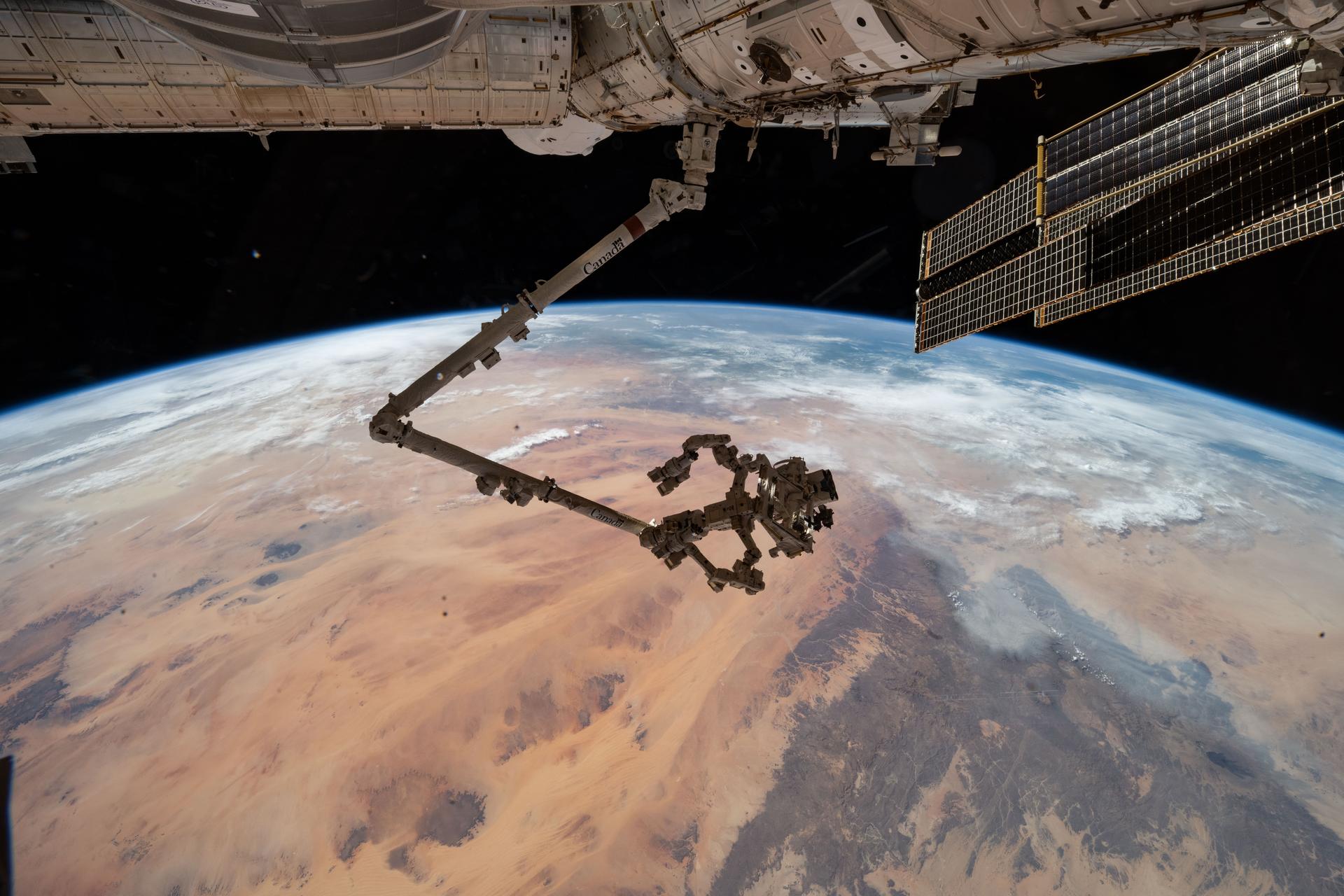
Sound and hearing studies as well as Earth observations kept the Expedition 74 trio busy on Wednesday. The International Space Station residents also worked on cargo transfers, downloaded radiation data, and kept up lab maintenance.
NASA Flight Engineer Chris Williams began his day inside the Columbus laboratory module exploring how sound and shockwaves travel through small, solid particles, also called granular materials. Sensors measured the speed of sound and how the waves weaken and change shape as they move through the loose collection of tiny beads. Results may show how lunar or Martial soils behave as construction materials or during resource extraction. Insights could also lead to a better understanding of soil mechanics on Earth helping prevent landslides and sinkholes.
Williams also took turns with cosmonauts Sergey Kud-Sverchkov and Sergei Mikaev, station Commander and Flight Engineer respectively, taking a regularly scheduled hearing test. Using a quiet area in the orbital outpost, such as the Quest airlock, the crew wore a headset connected to a laptop computer and responded to a series of beeps and tones to check the health of the eardrum and inner ear in microgravity.
Williams spent the second half of his shift organizing cargo inside a SpaceX Dragon spacecraft due to return to Earth this spring. Dragon will bring back a variety completed experiments for analysis including material samples exposed to the external space environment, liquid crystal films developed in microgravity, and stem cells programmed to turn into brain and cardiac cells. Dragon will also fire its engines one more time, while docked to the Harmony module’s forward port, boosting the station’s orbit at the end of the week.
Mikaev continued his Earth observations at the beginning of his shift pointing a camera out windows on the Zvezda and Nauka modules and photographing African landmarks including the Nile Delta, Mount Kilimanjaro, and Lake Malawi. He also performed a monthly collection of radiation detectors and downloaded radiation dosages for review by mission controllers on the ground.
Kud-Sverchkov worked the first half of his shift on electronics and communications maintenance in the Rassvet module. During the second half of his day, the two-time station resident inspected and inventoried electrodes that help maintain muscle health in microgravity then finally replaced expired gas masks with new gas masks inside Nauka.
