






Dragon Returns to Earth, More Cargo Preps, Advanced Research Underway
A SpaceX Dragon spacecraft has returned to Earth filled with several thousand pounds of science experiments and lab hardware for retrieval and analysis completing a six-month stay at the International Space Station. The Expedition 74 crew now turns its attention toward March when two more cargo spaceships depart the orbital outpost and complete their resupply missions. Meanwhile, advanced space biology and technology research wrapped up the week in space.
Dragon parachuted to a splash down in the Pacific Ocean off the coast of California at 11:44 p.m. PST on Thursday where NASA and SpaceX support personnel awaited the science and cargo-packed spacecraft. Dragon had undocked from the station’s forward port on the Harmony module at 12:05 p.m. on Thursday where it had been moored since August 25, 2025.
The next cargo craft to end its station mission is slated to be uninstalled from Harmony’s Earth-facing port with the Canadarm2 robotic arm in early March. JAXA’s (Japan Aerospace Exploration Agency) HTV-X1 will then be released by the Canadarm2 a day later into Earth orbit where it will complete several weeks of scientific experiments. HTV-X1 launched on Oct. 25, 2025, from Tanegashima Space Center in southern Japan and was captured with Canadarm2 and installed to Harmony Oct. 29.
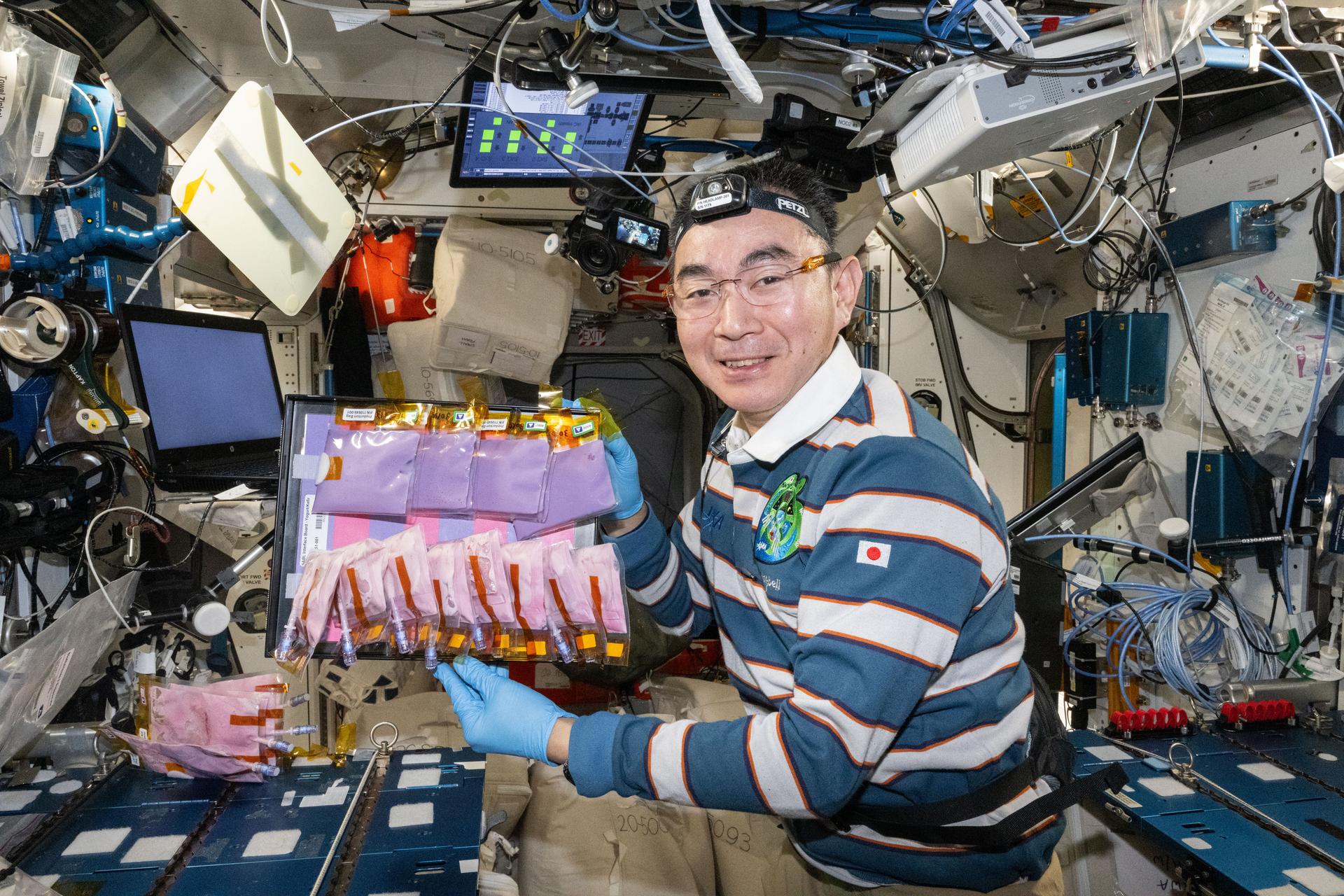
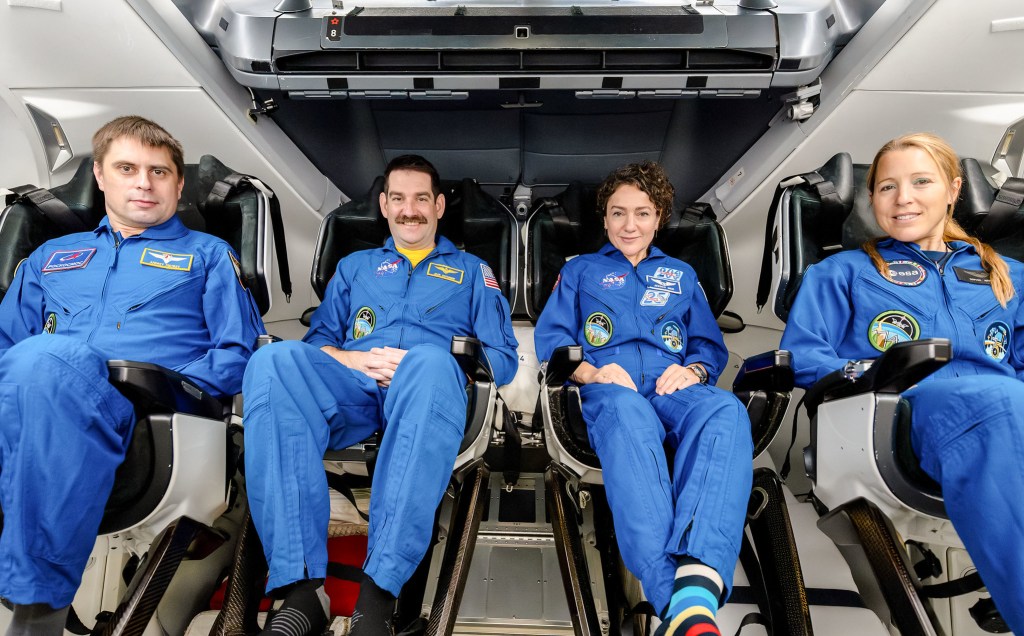
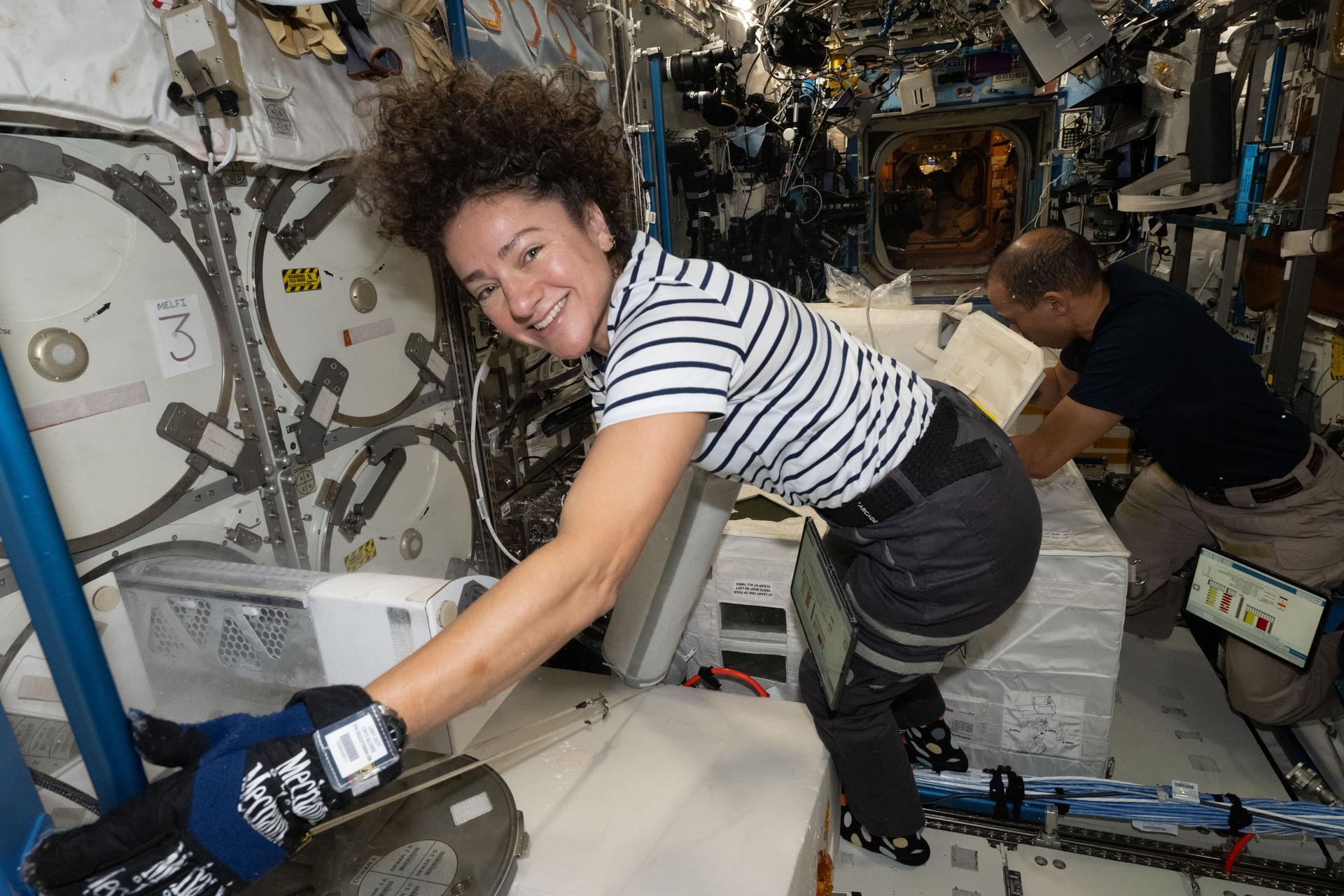
Flight Engineers Chris Williams, Jessica Meir, and Jack Hathaway, from NASA, and Sophie Adenot from ESA (European Space Agency) began packing the HTV-X1 on Friday with disposable cargo since JAXA’s spacecraft will reenter Earth’s atmosphere above the south Pacific Ocean for a destructive, but safe reentry. However, HTV-X1 will stay in orbit for a few more weeks after its release to test new antenna and solar cell technologies and deploy CubeSats for independent missions.
A few days after HTV-X1 leaves, Canadarm2 will once again remove another cargo craft and release it into Earth orbit. This time, Northrop Grumman’s Cygnus XL trash-filled cargo craft will be uninstalled from the Unity module’s Earth-facing port and released shortly afterward for an atmospheric reentry and fiery disposal above the south Pacific. Cygnus XL launched from Florida on Sept. 14 and arrived at the station on Sept. 18 for a robotic capture and installation.
The cosmonauts focused much of their time on Roscosmos research activities at the end of the week. Commander Sergey Kud-Sverchkov and Flight Engineer Sergei Mikaev began their shift attaching electrodes to their chests and measuring their cardiac activity. Next, Kud-Sverchkov pointed molecular beams at semiconductor crystals to test and observe how they grow in weightlessness. Mikaev jogged on a treadmill for a regularly scheduled microgravity fitness evaluation.
Flight Engineer Andrey Mikaev dismantled Earth observation hardware at the beginning of his shift after an automated overnight photography session. Next, Fedyaev wore virtual reality goggles and responded to computer-controlled visual and audio stimuli to test his sense of balance and orientation in space. Finally, the two-time station resident explored using artificial intelligence-assisted tools to convert speech-to-text to improve documentation for data and communications with ground controllers.
Learn more about station activities by following the space station blog, @space_station on X, as well as the ISS Facebook and ISS Instagram accounts.
Get the latest from NASA delivered every week. Subscribe here.
