





Suggested Searches

International Space Station

Categories

Also Featured In

NASA’s SpaceX Crew-12 Spacecraft Flying Solo

At 5:24 a.m. EST, The Dragon spacecraft separated from the Falcon 9’s second stage and began flying on its own. The spacecraft is traveling at approximately 17,500 miles per hour (28,200 kilometers per hour). In less than a minute, the Dragon crew spacecraft nosecone open sequence will begin.

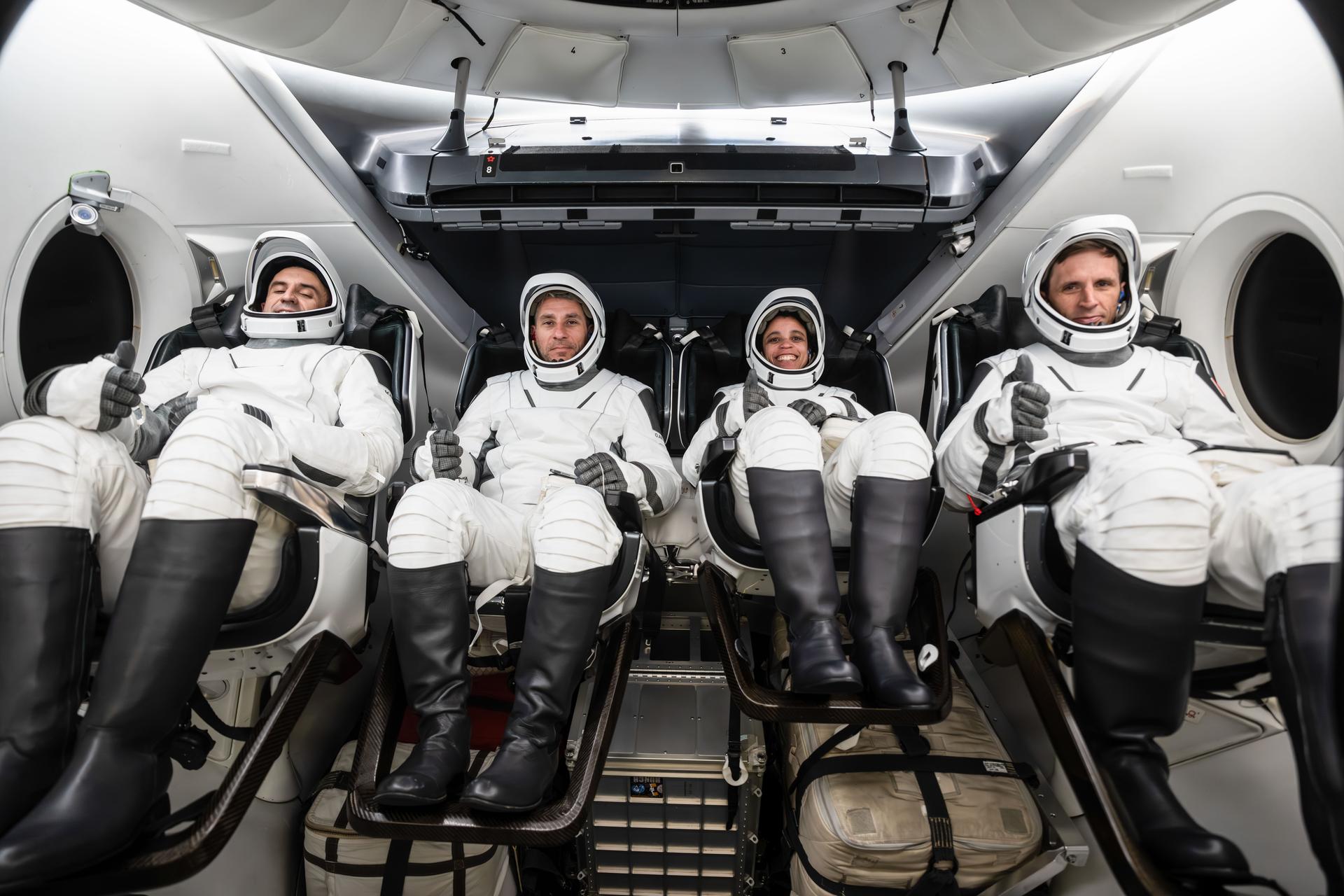
The spacecraft now is in orbit and will autonomously dock to the Harmony module’s space-facing port. The crew will soon open their visors and get out of their suits during the ride.

Crew-12: Max Q, Main Engine Cutoff, Stage Separation

SpaceX’s Falcon 9 rocket reached Max-Q, the moment of peak mechanical stress on the rocket. Following this, first stage main engine cutoff occurred, and the rocket’s first and second stages have separated.

The rocket’s first-stage booster is scheduled to return to Space Launch Complex 40 at Cape Canaveral Space Force Station in Florida — marking the first time SpaceX has launched and landed a booster from the same launch complex at Cape Canaveral Space Force Station.

Next, the Falcon 9’s second-stage engine will ignite to carry Crew-9 and the Dragon spacecraft closer to the International Space Station.

Falcon 9 Second Stage Engine Shuts Down

After about nine minutes of flight, the Falcon 9’s second stage has shut down and the Dragon crew spacecraft now is in orbit, where it will soon separate from Falcon 9's upper stage and continue its journey to the International Space Station. Momentarily, the rocket’s first stage will attempt to land at SpaceX’s Landing Zone 1 at Cape Canaveral Space Force Station in Florida.