





















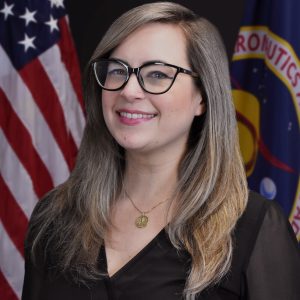
Employee Spotlight: Lori Perkins

NASA’s goal is to provide users with communications and navigation services that are secure, reliable, and affordable.
Lori Perkins, deputy project manager of the Lunar Communications Relay and Navigation Systems (LCRNS) project, leverages networking abilities and passion for space to further achieve this goal.
Perkins joined NASA in 1989 while simultaneously pursuing a bachelor’s degree in computer science with a focus in networking at the University of Dayton. During that time, she worked in the Packet Processor 2 Data Capture (PACOR) Facility, which focuses on the use of computer technology in space missions.
For this effort, Perkins took data that was received from the spacecraft ‘which came to the facility out-of-order’ and wrote code to piece it back together.
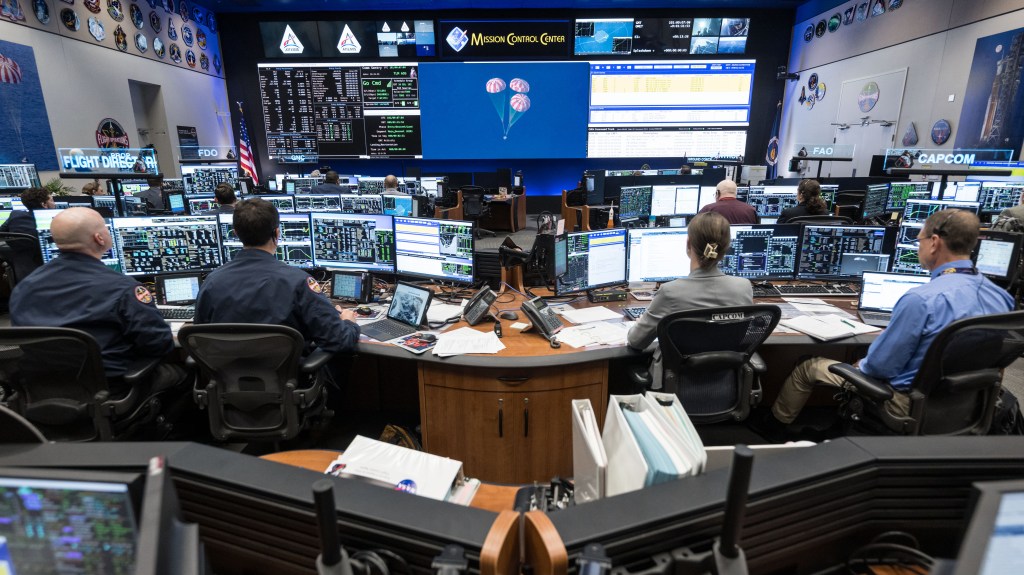
Upon receiving her degree in 1991, Perkins began writing computer programs for several NASA control centers. She became the go-to subject matter expert for trending and analysis, mission planning, and control center operations. And Perkins was eager to learn more.
She continued her education at Johns Hopkins Whiting School of Engineering and attained her master’s in engineering in 1994. It was during this time when Perkins fell in love with science.
Five years later, Perkins pivoted to NASA’s Scientific Visualization Studio (SVS) at Goddard Space Flight Center. The SVS team of visualizers specialize in a wide variety of disciplines, including astronomy, planetary science, climatology, cartography, and 3D modeling.
Perkins used the “Discover” supercomputer at the NASA Center for Climate Simulation (NCCS) to run computationally-intense data visualization jobs. Scientific visualization translates data into images allowing NASA to see patterns that were otherwise unknown. These visualizations are accurate and insightful for the NASA research community, but they are also a tool to share the meaning and excitement of the complex scientific work to a broader audience.
A computer is a tool. I worked with scientists to use this tool to produce outcomes that were useful for them and accessible to those who wanted to learn more.

Lori Perkins
Deputy Project Manager of Lunar Communications Relay and Navigation Systems (LCRNS), NASA Goddard Space Flight Center
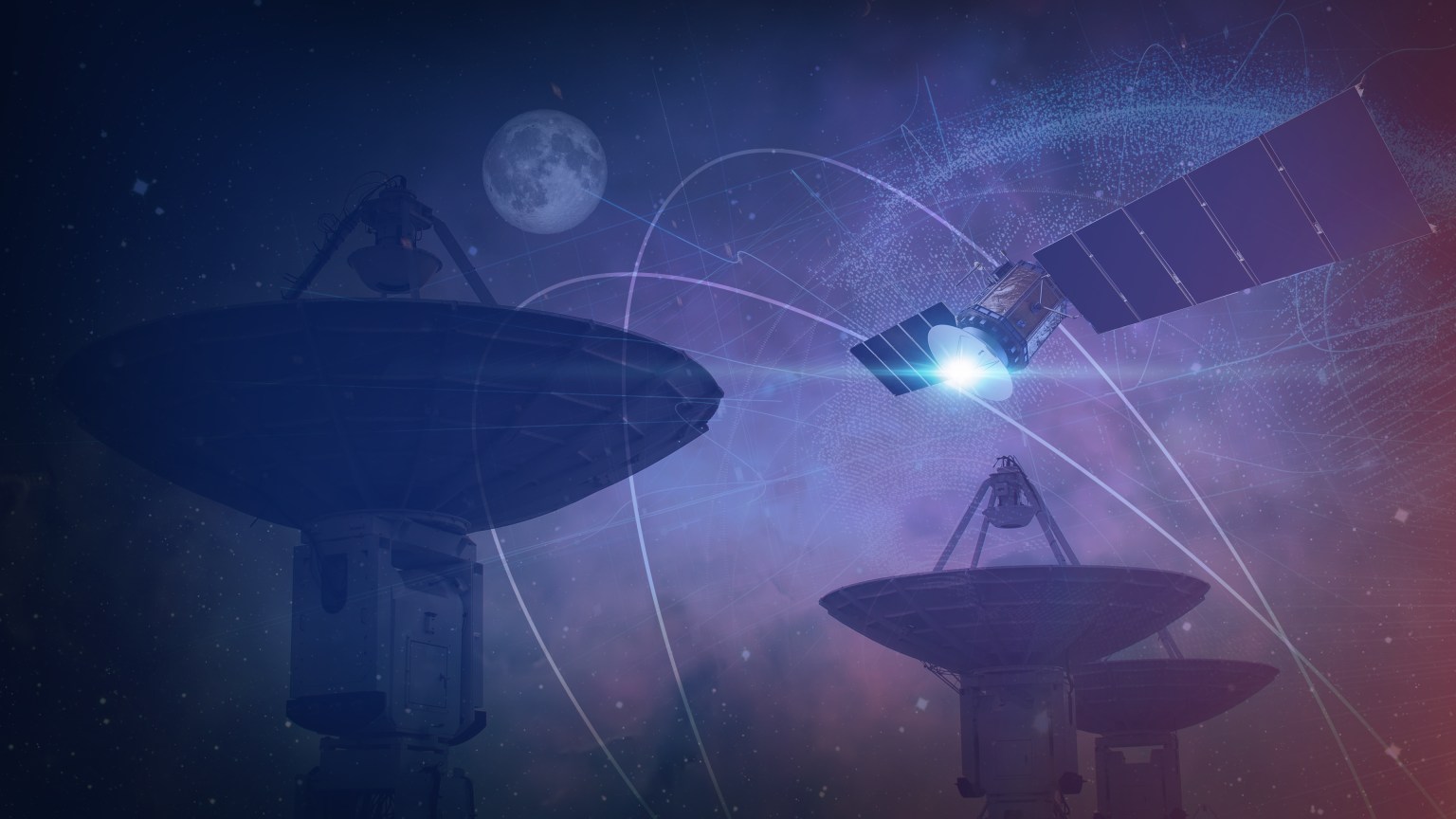
After supporting the SVS team for over 24 years, Perkins now applies her computer science and communications skills to the development of lunar relays as LCRNS’ deputy project manager. In this role, Perkins tracks mission milestones and works with the Space Communications and Navigation (SCaN) program office to secure funding. The lunar relay project aims to establish a robust communications and navigation infrastructure for lunar missions, augmenting SCaN’s capabilities by providing consistent communications, and positioning, navigation, and timing (PNT) services for both surface and orbiting assets.
Perkins immediately proved to be an asset to the team.
In September 2024, NASA’s Near Space Network Services procurement awarded Intuitive Machines, LLC of Houston a contract to develop and integrate lunar relays into the network’s portfolio, enhancing communications and navigation services for future Artemis missions. NASA anticipates these lunar relay services will support human-landing systems, lunar terrain vehicles, and Commercial Lunar Payload Services flights.
Shortly after the award, Perkins and the lunar relay team supported the Capability Validation Milestone (CVM)-01 Service Concept Review with Independent Review Board members and stakeholder teams. This milestone demonstrated progress toward Intuitive Machine’s development of a commercial lunar communications and navigation service.
In April 2025, Intuitive Machines demonstrated that the functional and performance requirements defined for the system meet NASA’s needs, completing CVM-02, the second assessment milestone. Perkins’ leadership has been instrumental to keeping the lunar relay project on track. The first lunar relay satellite is slated to launch in early 2026.
Perkins ensures her team has what it needs to verify and validate lunar relays at the Moon. Once NASA achieves this capability, companies worldwide can benefit from this technology. The LCRNS team is aiming to complete their seventh and final verification milestone by 2029, when the lunar relay will be fully operational.
The LCRNS project is fundamental to advancing the lunar relay because it provides both communications and GPS-like navigation. Our team is laying the infrastructure that will allow people to communicate to and from the Moon.
Lori Perkins
Deputy Project Manager of Lunar Communications Relay and Navigation Systems (LCRNS), NASA Goddard Space Flight Center
The lunar relay is another step in NASA partnership with U.S. industry to build commercial services that support NASA missions, including NASA’s long-term Moon-to-Mars objectives for interoperable communications and navigation capabilities.
A Maryland native, Perkins is a season-ticket holder for the Baltimore Ravens. She enjoys spending fall game days with family, and paddleboarding and kayaking during the warmer seasons.
This article highlights initiatives within NASA Goddard Space Flight Center’s Exploration and Space Communications project. Learn more about LCRNS here.