







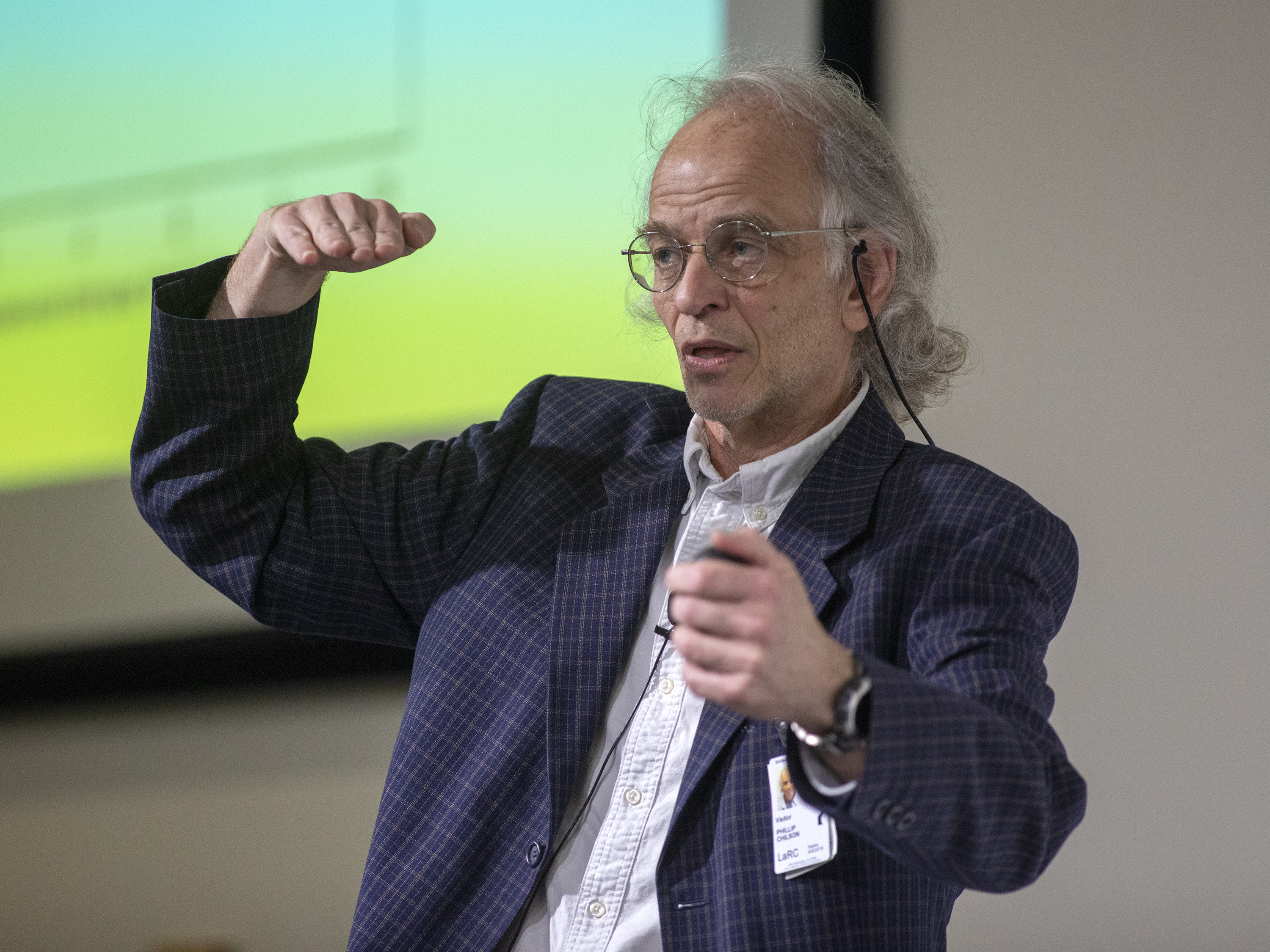
We are living in a world of transitions for technologies old and new. The rise of unmanned aerial systems are transforming society today and in the future. For now, in the field of atmospheric science, the potential for UAS to enhance the study is already being felt and investigated by one professor.
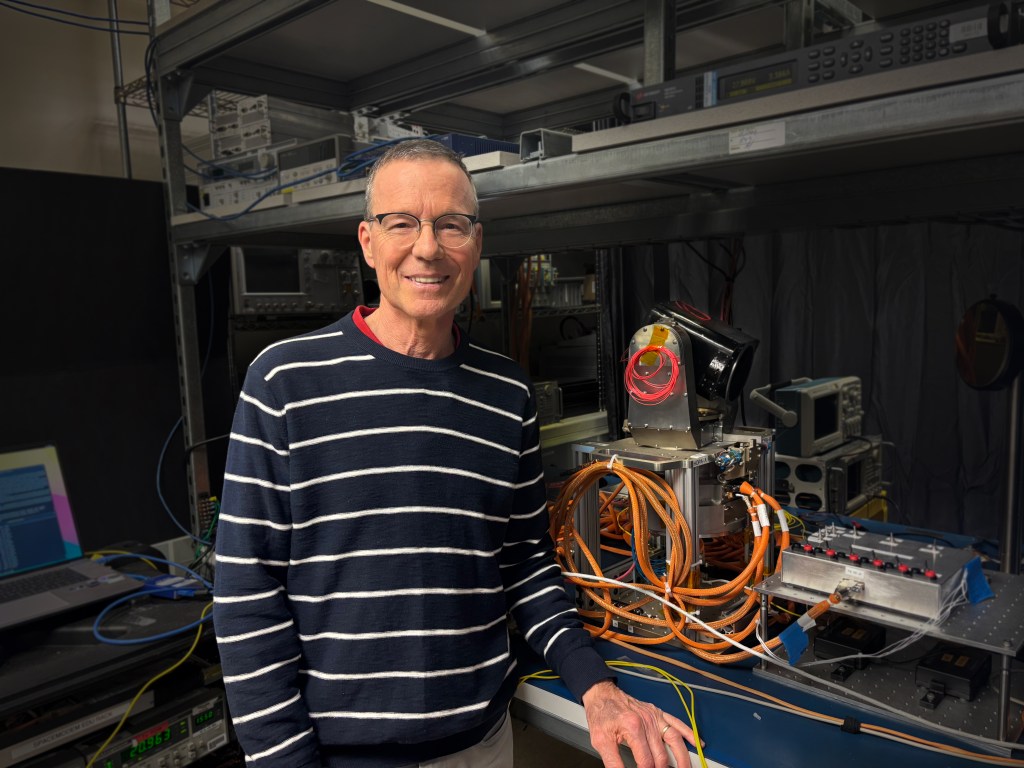
Phillip Chilson discussed his work at a recent colloquium at NASA’s Langley Research Center in Hampton, Virginia. Chilson is a professor in the School of Meteorology at the University of Oklahoma and director of the university’s Center for Autonomous Sensing and Sampling. Chilson’s current research interests include investigations of the atmospheric boundary layer, aeroecology, the advancement of remote sensing technologies, and development of UAS for atmospheric studies.
“We’re trying to advance the science,” he said. “We’re trying to find ways to close the gap.”
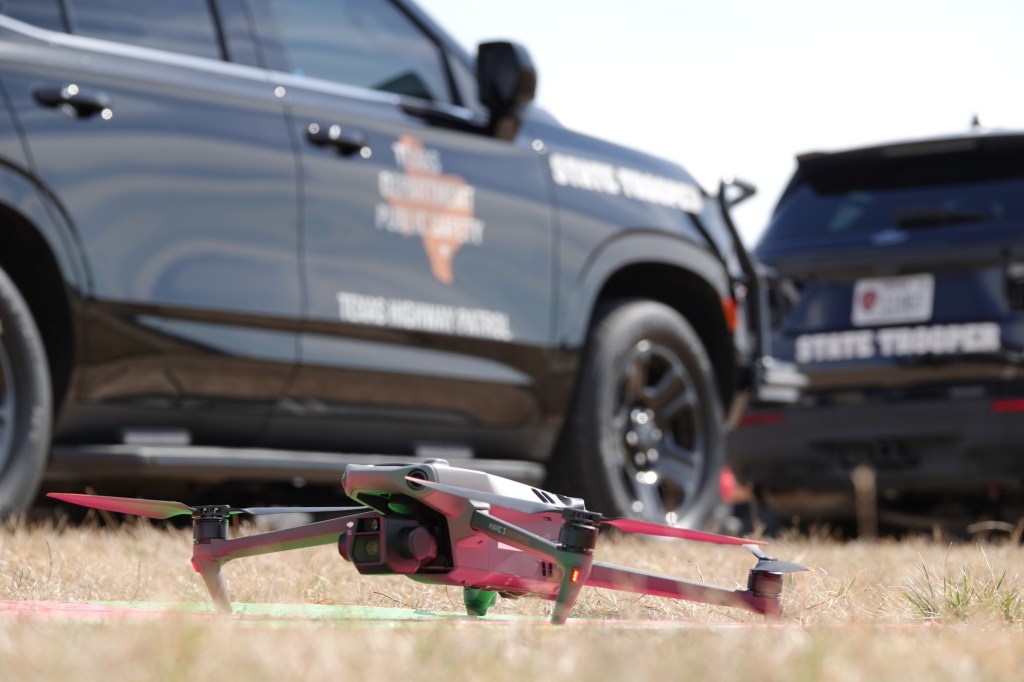
There is rich potential in using small UAS to collect much-needed measurements in the lower atmosphere where satellites are at a disadvantage. Data from fleets of UAS could revolutionize the capability for atmospheric observation, significantly improve weather forecasting skill and help to identify severe weather threats.
“We know that there is a data gap and a measurement gap in the lower atmosphere,” Chilson said. “This is not news.”
Emerging technology surrounding UAS provides ample opportunities to collect dense profiles of the atmospheric state as part of advanced weather observing systems. Chilson said the days for developing UAS and sensor technology, and for integrating them into atmospheric science and forecast models, are causing a paradigm shift in means of advanced data collection. He said he is already seeing benefits of this emerging technology in his studies.
Chilson said small UAS can provide much-needed targeted lower-atmospheric data to answer some of the fundamental and high-impact science questions facing the atmospheric science community, and are needed for modern observing systems to fill a data gap close to the Earth’s surface.
“I want data. I don’t care what platform it comes from,” Chilson said.
“We know that there is a data gap and a measurement gap in the lower atmosphere. This is not news.”
– Phillip Chilson
Chilson’s lecture showcased preliminary data from a 3D Mesonet, including collection of vertical atmospheric measurements using instrumented, autonomous and unattended UAS across a spatial network of fixed surface observing sites. Measurements from an operational version of the 3D Mesonet could be utilized to better characterize the atmospheric boundary layer, improve weather forecasts and to identify threats of severe weather.
“The forecasters are doing a tremendous job,” Chilson said. “I say kudos to the weather services for the progress they’ve made but there’s always room for improvement.”
That need for improvement was born when Chilson was a child living in South Carolina and had a deep fascination with meteorology and atmospheric science.
“There was something about the weather that captured my fantasy,” he said. “That was all I wanted to do.”
Living in a state that sees its fair share of severe weather events from hurricanes to tornadoes, he saw the effects natural disasters first-hand. Chilson said a tornado that made landfall and severely damaged a nearby town made an impression on him about the power of weather.
“The warning systems weren’t as good then as they are now,” he said. “You pretty much had to hunker down, even at the whisper of a warning.”
When Chilson got older, his interests shifted to physics and he learned how those two fields can work together while he was in college.
He has come to find that more data leads to better warnings for people on the ground to utilize in the event of a severe weather event. Also important, Chilson said, is to increase lead time for warnings and make them more adaptive to people with certain barriers, like people with language, sight, hearing and physical disabilities.
“By improving forecast skills, it can go a long way in helping people take the warnings seriously when they’re issued,” he said.
Severe weather events like tornados and hurricanes are nature’s way of releasing pent-up energy in the atmosphere, so they are a fact of life on Earth. The question of how people can be better prepared for them must be continually answered with improved data with the assistance of existing and emerging technology, like UAS.
“You can’t ask the atmosphere to not do what it does,” Chilson said.
Chilson has been living in Oklahoma since 2005, which is part of an area of the United States’ Great Plains that is labeled Tornado Alley due to the many tornadoes that occur there in late spring and occasionally the early fall. Moisture from the Gulf of Mexico clashing with frontal systems moving over the U.S. provide much of the fuel for intense showers and severe thunderstorms.
“I work where I do because of the weather that we get,” he said. “It definitely makes you continuously aware of the importance of the work you’re doing.”
After a storm caused damage near his home, for example, he saw a photo ripped from a family’s album when he was walking to survey the scene – another example of the randomness of severe weather and the importance of his work.
“It just gets you. It makes your heart jump a little bit,” he said. “It drives home that it’s not just research.”
Eric Gillard
NASA Langley Research Center