









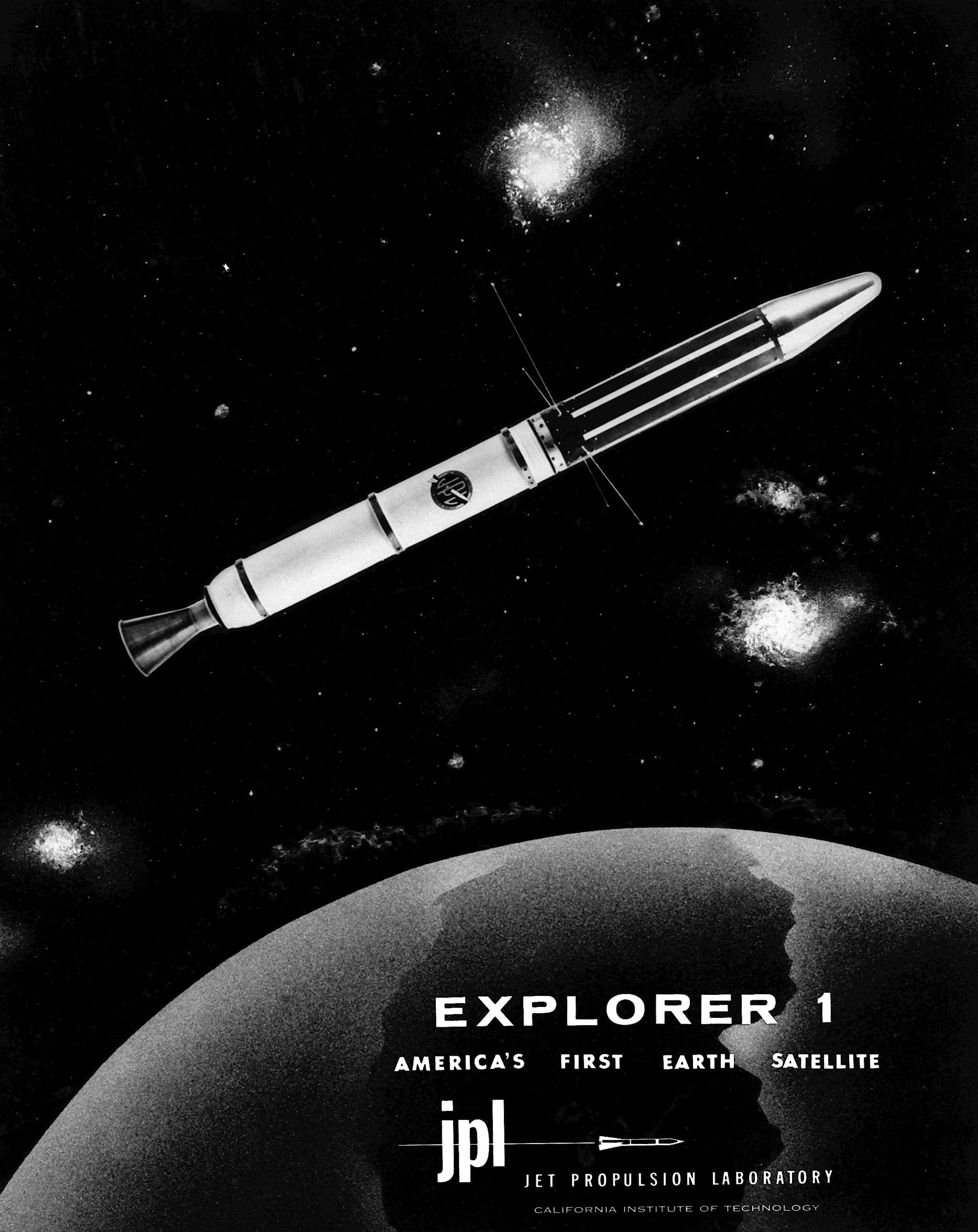
Illustration of Explorer 1 Above Earth
Explorer 1 became the first successfully launched satellite by the United States when it was sent to space on Jan. 31, 1958. A quick response to the Soviet Union's launch of Sputnik 1, Explorer 1's success marked the beginning of the U.S. Space Age. The satellite, which was designed, built and operated by the NASA Jet Propulsion Laboratory, carried a cosmic ray detector, which lead to Explorer Principal Investigator Dr. James Van Allen's discovery of radiation belts around Earth held in place by the planet's magnetic field. The findings were later named Van Allen belts in honor of their discoverer.
Image Credit: NASA/JPL-Caltech
- X
https://www.nasa.gov/image-detail/amf-pia04601/
TakenJuly 1, 2003
ProducerJPL
Image CreditNASA/JPL-Caltech
Size1867x2353px
PIA NumberPIA04601
