










Employee Spotlight: Joel Parker

Joel Parker started his navigation journey at Mississippi State University, where he fell in love with astrodynamics and wrote his thesis on lunar frozen orbits’ satellite orbits that remain fixed to a consistent or predictable position over the Moon’s surface.
He found an open position at NASA’s Goddard Space Flight Center in Greenbelt, Maryland, shortly after graduating, where he worked on the General Mission Analysis Tool (GMAT), the NASA’s open-source software system for space mission design, optimization, and navigation. His mission design work expanded to the Transiting Exoplanet Survey Satellite (TESS), a satellite that has successfully discovered nearly 600 exoplanets (and counting!) by studying the brightness of stars for periodic drops that could indicate a planet’s orbit.
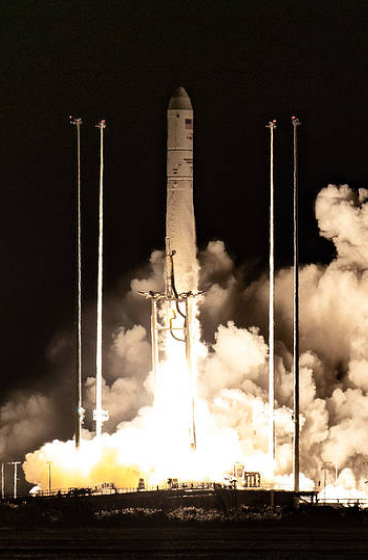
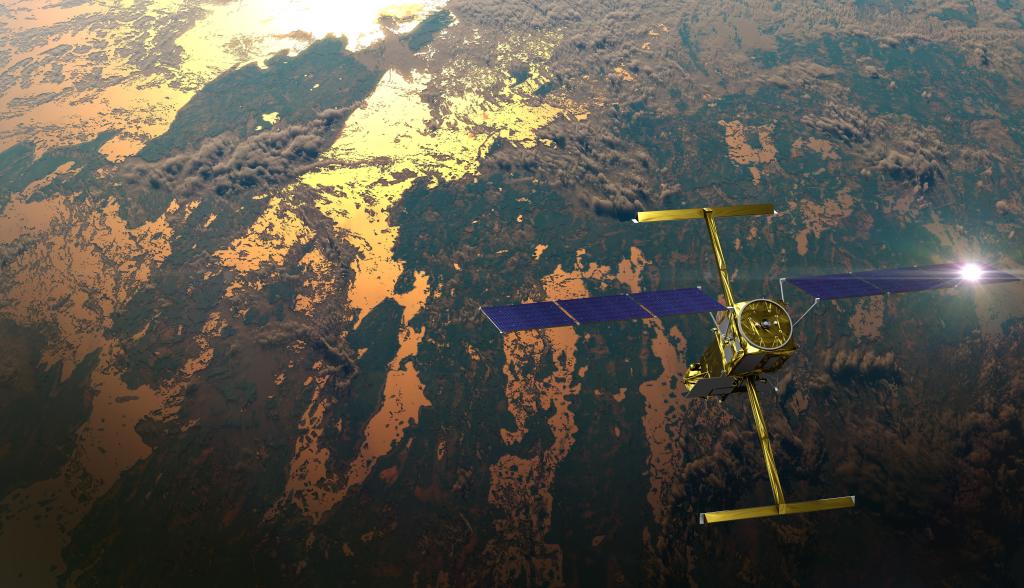
Parker served as a flight dynamics engineer and ultimately flight dynamics lead on TESS through its launch and in parallel began working as a Global Navigation Satellite System (GNSS) advocate under the Exploration and Space Communications (ESC) projects division, a part of the Space Communications and Navigation (SCaN) Program office. Over the years, he’s contributed to several projects, including as flight dynamics lead for NASA’s Plankton, Aerosol, Cloud, ocean Ecosystem (PACE) mission. Now, Parker is the principal investigator for a payload that aims to redefine how we navigate on the Moon: the Lunar GNSS Receiver Experiment (LuGRE).
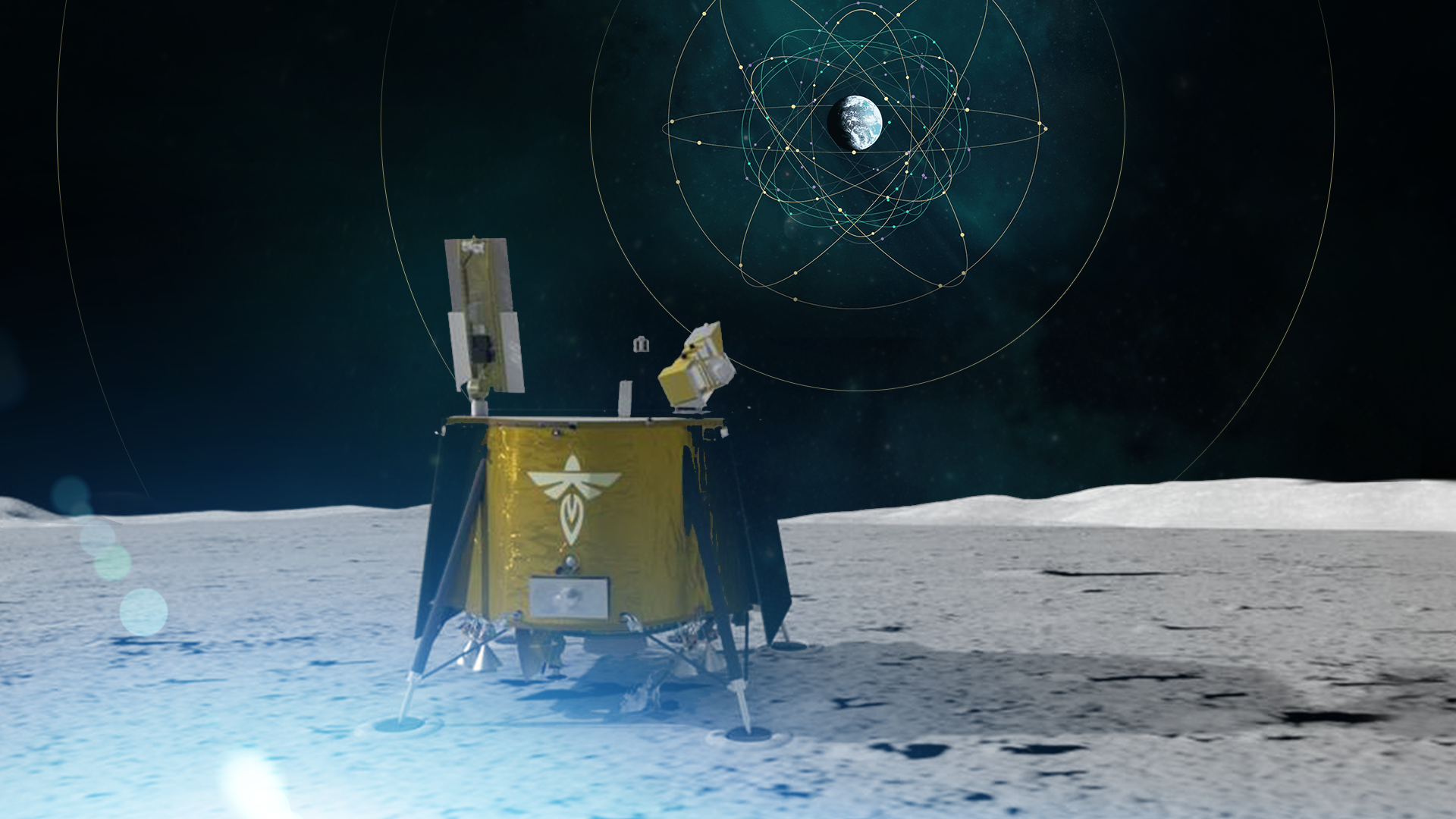
GNSS is responsible for many science instruments’ ability to accurately determine both their current location, and the precise course, orientation, speed, and timing needed to reach and maintain their desired position in orbit. Reliable navigation tools are a critical component of all Earth, space, and lunar missions, and especially so for the safety of NASA’s crewed space missions.
Parker has been collaborating with NASA Headquarters in Washington since the LuGRE mission’s initial proposal. LuGRE — one of ten NASA payloads traveling to the lunar surface as part of NASA’s Commercial Lunar Payload Services (CLPS) program — is the first known mission to use GNSS signals near the Moon or on the Moon’s surface. It is an experiment determining if GNSS signals, specifically those from the GPS and Galileo constellations, can reach the Moon by collecting navigation signals during launch, orbit, and after lunar landing.
For Parker, working on payloads like LuGRE isn’t just about the technical achievements. It’s about being part of an agency whose work has a direct benefit to the world.
It's rare to work at a place where your projects are both impactful and shareable. Here I get to talk openly about what we do and how it benefits the public.

joel parker
NASA Flight Dynamics Engineer and LuGRE Mission Lead
And the public, like GNSS itself, stretches beyond the United States. One of Parker’s favorite aspects of his role is working with the International Committee on GNSS, a United Nations-managed organization that promotes the sustainable development of positioning, navigation, and timing technologies worldwide. Parker particularly values the insights and fresh ideas that come from working with international entities that approach space exploration from unique perspectives.
“It’s amazing to see how other countries view space technology and to actually be part of that global dialogue on what’s possible,” said Parker.
Parker cites LuGRE as a particularly special career moment: one where he shaped a mission’s goals and direction from birth through launch, all while collaborating with the Italian Space Agency (ASI).
“This mission has the potential to change how we navigate on the Moon, and being part of something with such a lasting impact is incredibly fulfilling,” said Parker. “It’s a lot of effort to get everyone moving in the same direction, but the reward of seeing a mission come together ‘of seeing everything click into place’ is unmatched.”
Leading a mission like LuGRE involves more than just technical skills. Parker spends much of their time coordinating, communicating, and ensuring that everyone is aligned. Throughout his time with NASA, Parker has learned the importance of patience and adaptability. He emphasizes the importance of flexibility and openness to different viewpoints.
One of my biggest takeaways is that every perspective counts, and sometimes, you just need to give things time to fall into place.
joel parker
NASA Flight Dynamics Engineer and LuGRE Mission Lead
Parker passion for new places and perspectives extends to his personal life, where his love of travelling has led him to places like New Zealand, Vienna, and India.
At home, Parker navigates parenting his two children, and finding joy in cooking. He’s experimented in the kitchen with everything from baking bread to brewing beer.
His interests outside work contribute to his professional approach. Travel provides the opportunity to open his mind to new ideas and perspectives, while cooking allows him to explore new cuisines and make things that are loved by others.
From Mississippi to the Moon and from beermaking to Bangalore, Parker celebrates the passion, perseverance, and the endless curiosity that drives NASA forward.