




















NASA Marshall Lunar, Meteor Observatory Marks 20 Years of Discovery
For two decades, NASA’s Automated Lunar and Meteor Observatory has helped scientists track meteors, observe impacts on the Moon, and better understand the space environment future explorers will face.
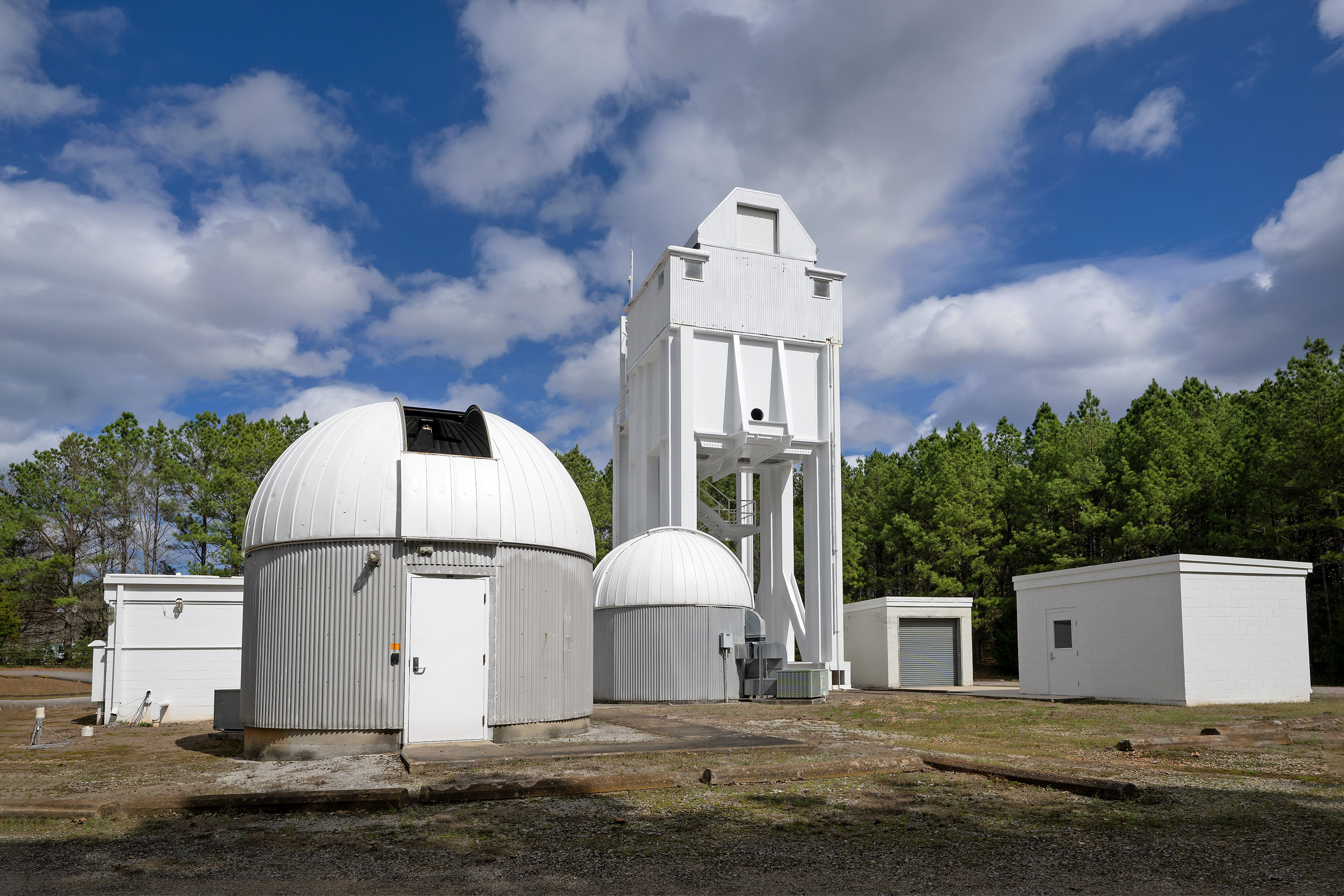
For a fraction of a second, a tiny rock traveling through space can strike the lunar surface or streak across the sky producing a brief burst of light. With clear skies and the right technology, these bursts can be observed from Earth. For 20 years, a stargazing outpost at NASA’s Marshall Space Flight Center in Huntsville, Alabama, has been quietly scanning the sky, watching for these flashes. This is the Automated Lunar and Meteor Observatory, better known as the ALaMO.
The observatory saw its “first light” on March 12, 2006, beginning two decades of observations supporting NASA’s Meteoroid Environment Office in tracking meteors and monitoring impacts on the Moon. These observations help researchers better understand the hazards spacecraft and astronauts may encounter beyond Earth’s atmosphere.
The ALaMO includes two domes, a 15-meter (50-foot) observation tower with a roll-off roof, and an operations center that enables coordinated observations of meteors and lunar impacts.
Watching the Moon for Impact Flashes
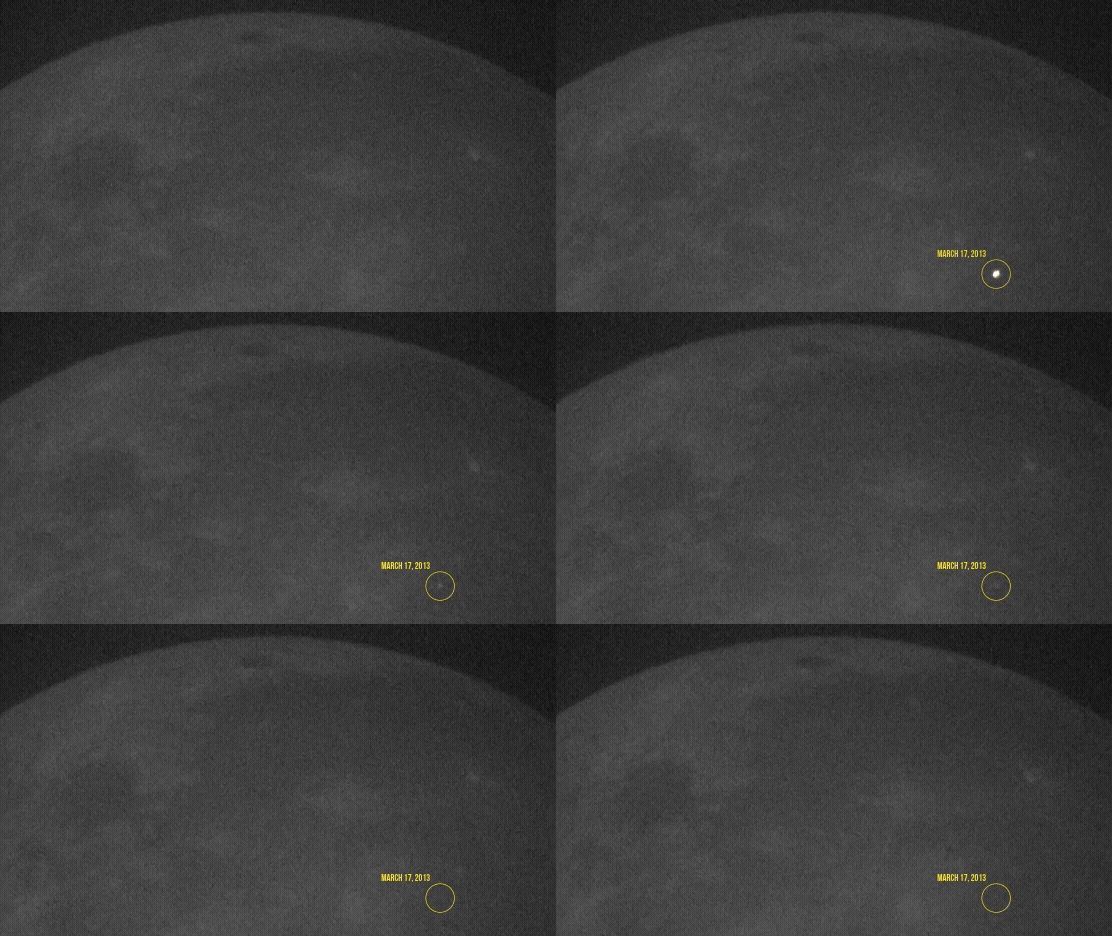
Just months after beginning operations, the ALaMO recorded its first lunar impact flash on May 2, 2006. Since then, NASA Marshall astronomers have observed more than 400 impacts on the lunar surface.
One of the observatory’s most notable observations occurred on March 17, 2013, when the ALaMO detected a bright flash caused by a bowling ball-sized meteoroid striking the Moon. Follow-up imagery from NASA’s Lunar Reconnaissance Orbiter later confirmed a newly formed crater roughly 60 feet wide, making this the first time the formation of a lunar impact crater was directly observed.
Tracking Fireballs Across Earth’s Sky
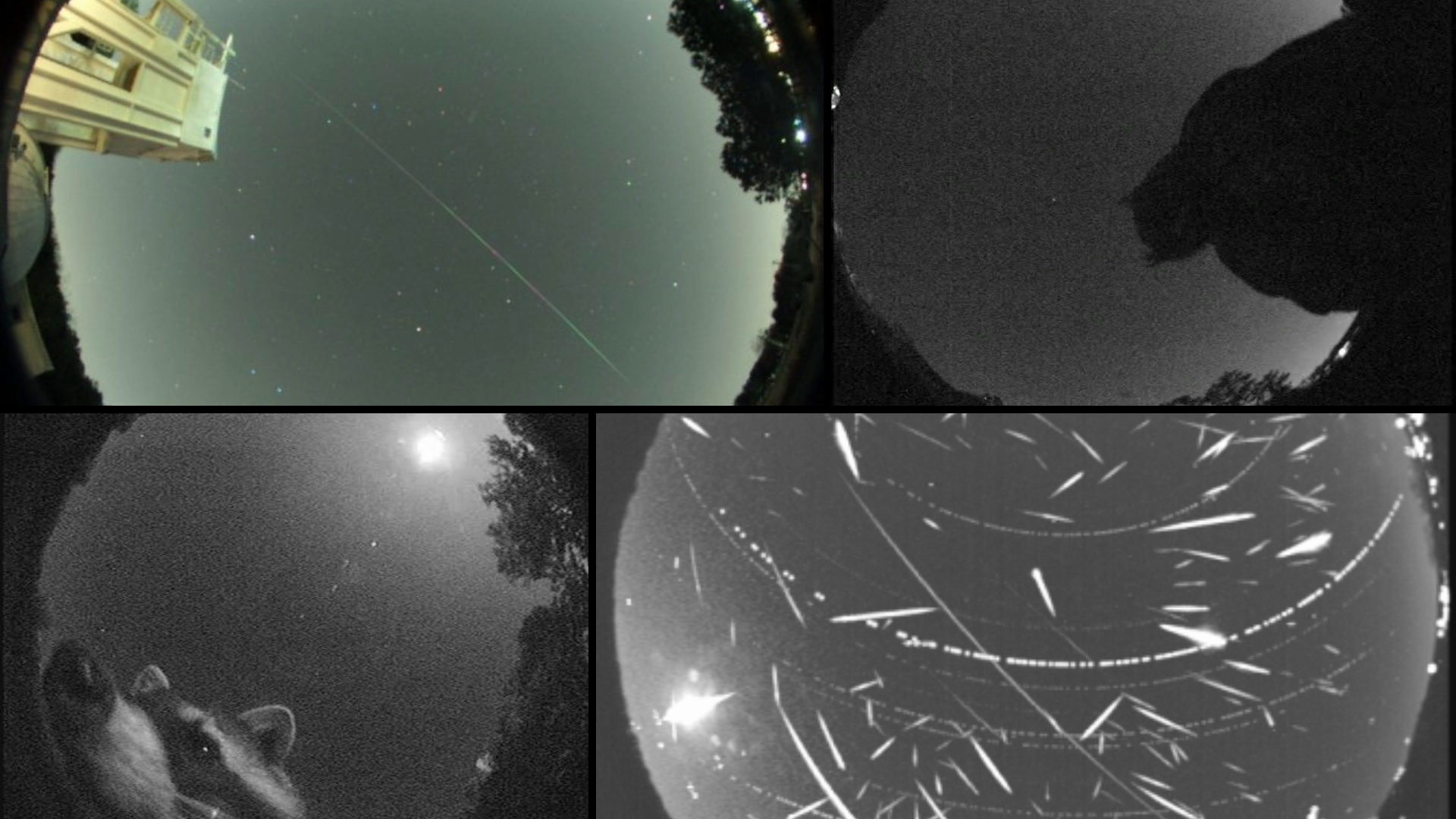
The ALaMO also plays an important role in studying meteors closer to Earth. In 2008, the first all-sky camera installed at the observatory helped launch the NASA All Sky Fireball Network. The network includes 15 cameras across the United States that capture bright meteors streaking across the night sky.
In 2025, the ALaMO underwent a major refit, installing four new cameras that are part of the Global Meteor Network. The worldwide network includes roughly 1,300 cameras that allow scientists to study meteoroids using observations collected across the globe rather than relying only on local skies and weather conditions.
Occasionally, the cameras also record unexpected nighttime visitors passing in front of the lenses, from owls and frogs to spiders and snails! Check out our best shots.
Contributing to Asteroid Research
In addition to fireball monitoring, the observatory contributes to asteroid research. The ALaMO became certified by the Minor Planet Center in 2007, supporting observations of asteroids and comets.
Between 2009 and 2014, the observatory’s 0.5-meter telescope contributed to several asteroid occultation campaigns. These events occur when an asteroid passes in front of a celestial body, briefly blocking its light. By measuring how long the light is obscured, scientists can determine the asteroid’s size and shape.
One such observation helped researchers determine the shape of the unique metal-rich asteroid Psyche, which NASA will be further studying through a mission of the same name.
Looking to a Bright Future
Twenty years after first light, the ALaMO continues helping scientists better understand the dynamic environment of space, from meteors streaking through Earth’s atmosphere to impacts shaping the surface of the Moon.
As NASA prepares to return humanity to the Moon, and eventually journey onward to Mars, the observatory’s work remains an important part of understanding the cosmic neighborhood future astronauts will travel through.
Watch the skies with us! Live views from the ALaMO and NASA All Sky Fireball Network are available at https://fireballs.ndc.nasa.gov/.