







Thursday Packed With Human Research as Station’s Orbit is Boosted
Relaxation, exercise, and biomedical studies were the key research objectives for the Expedition 74 crew on Thursday as NASA and its partners investigate ways to keep astronauts healthy on long-term missions. The International Space Station is also orbiting higher after the docked Progress 93 cargo craft fired its thrusters on Wednesday.
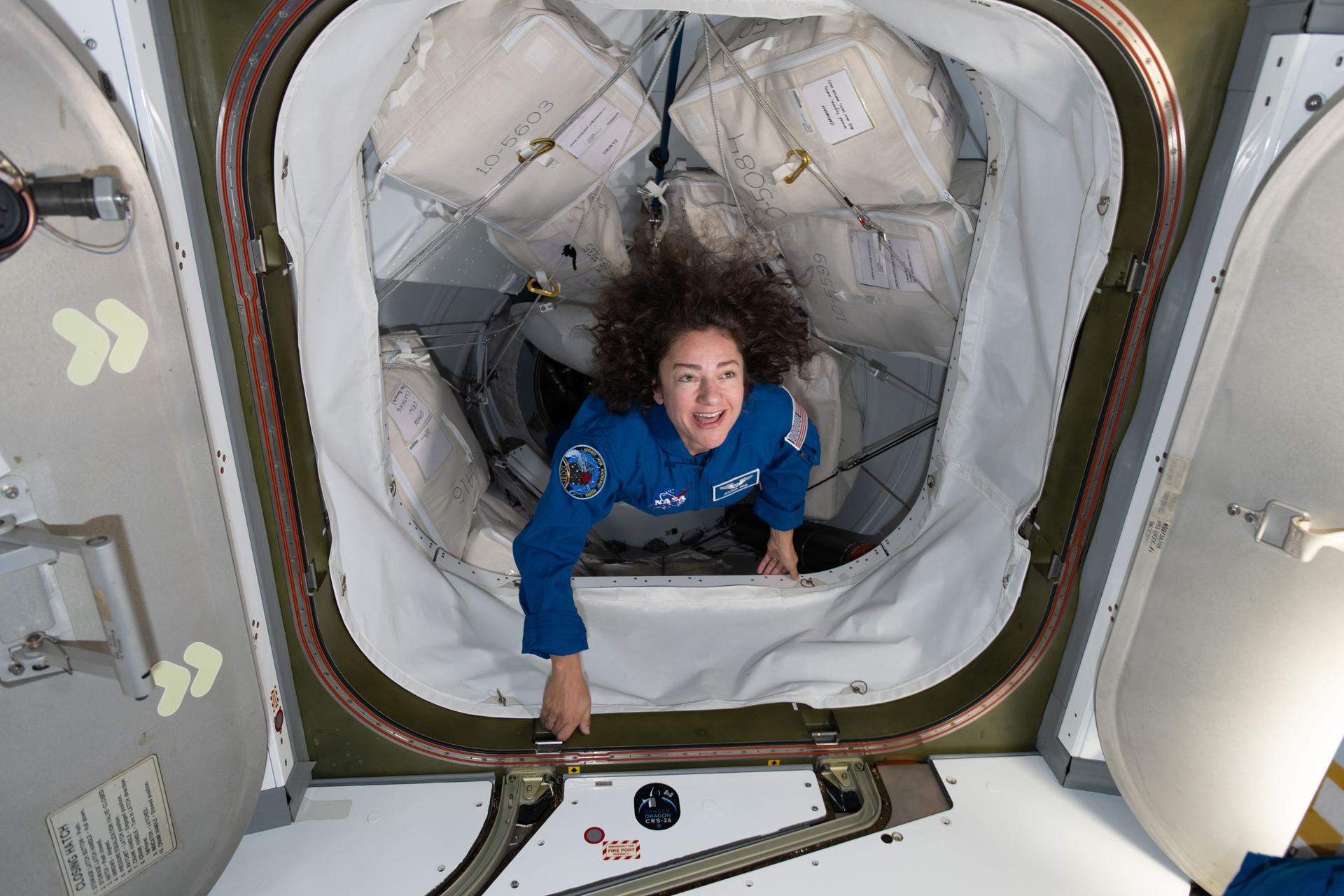
Flight Engineers Jessica Meir of NASA and Sophie Adenot of ESA (European Space Agency) kicked off Thursday exploring how to reduce stress and improve sleep while living and working aboard a spacecraft. The duo, right after waking up, first filled out a questionnaire documenting stress and emotions experienced off the Earth. Next, the two astronauts collected their saliva samples so researchers can analyze a crew member’s stress and immunity levels. The RelaxPro study sponsored by ESA explores using non-invasive relaxation and meditation techniques aboard a spacecraft to improve astronaut health and promote mission success.
The NASA and ESA astronauts then joined each other in the afternoon and reviewed setting up hardware for the ARED (advanced resistive exercise device) Kinematics exercise study that takes place in the Tranquility module. They watched a video explaining the precise positioning of four cameras to capture a crew member’s workout, calibrating the cameras, setting up a video monitor, and configuring a computer for data acquisition. Doctors are exploring the forces an astronaut’s muscles and bones experience when working out in weightlessness to maintain fitness and health during a long-term spaceflight.
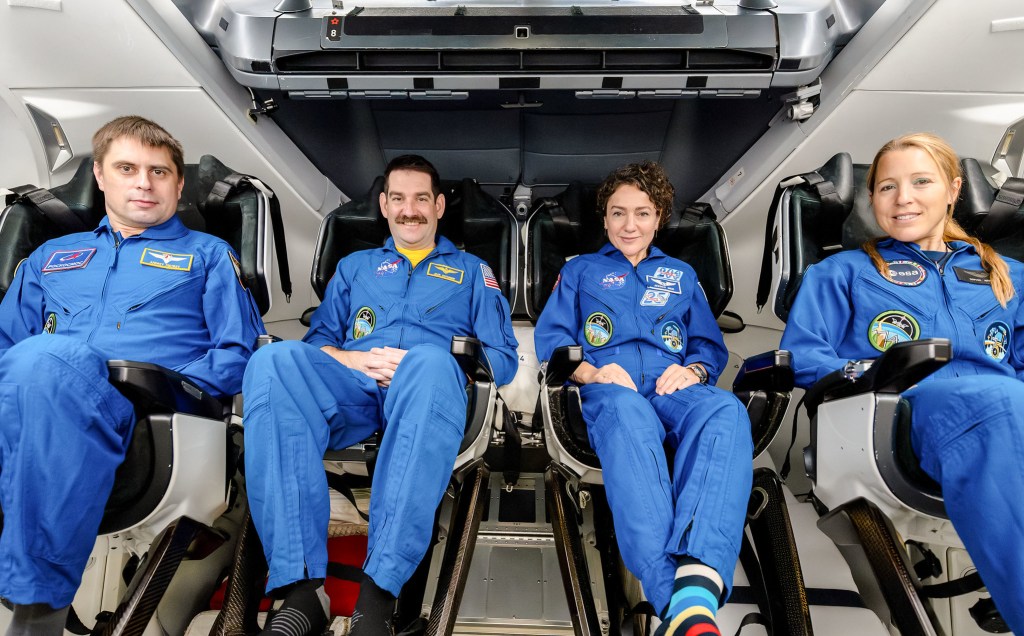
NASA Flight Engineer Jack Hathaway began his shift organizing blood sampling hardware then retrieving biomedical samples from a science freezer for scientific processing. Afterward, Hathaway transferred food packs into the Harmony module and staged them for future crew usage. During the second half of his shift, he loaded cargo into a SpaceX Dragon cargo spacecraft for return to Earth then joined Meir for a call to mission controllers discussing their experience flying the Dragon crew spacecraft as it docked to the orbital outpost on Feb. 14.
NASA Flight Engineer Chris Williams partnered with Meir twice on Thursday during two short biomedical sessions. He first assisted her as she drew her blood sample, spun it in a centrifuge, then stowed it in a science freezer to analyze her bone health. Toward the end of the crew’s shift, Meir imaged William’s eyes using medical imaging hardware as doctors on the ground remotely monitored to see how microgravity is affecting his retina, optic nerve, and cornea. Williams also worked in the Kibo laboratory module uninstalling the Solid Combustion Experiment Module following the completion of its scientific objectives, including improving spacecraft fire safety and observing how solid fuels burn in microgravity.
Roscosmos Flight Engineer Andrey Fedyaev, who is beginning his second spaceflight, worked on a pair of investigations on Thursday using advanced technology. For the first experiment, Fedyaev wore virtual reality goggles and responded to visual and audio signals to test his sense of balance and orientation in space. For the second experiment, he tested artificial intelligence-assisted tools to convert speech-to-text for improved documentation for data and communications with ground controllers.
Station Commander Sergey Kud-Sverchkov assisted Fedyaev with the advanced human research studies. Kud-Sverchkov also trained to perform procedures and use medical hardware in case of a medical emergency board the orbital outpost. Finally, the two-time station resident downloaded radiation data the station is exposed to while orbiting Earth for analysis.
Roscosmos Flight Engineer Sergei Mikaev primarily spent Thursday on lab upkeep activities focusing most of his time on locating and inventorying hardware throughout the station’s Roscosmos segment. Mikaev also checked the Elektron oxygen generator’s water tanks for air bubbles to ensure the life support device’s continuous operation.
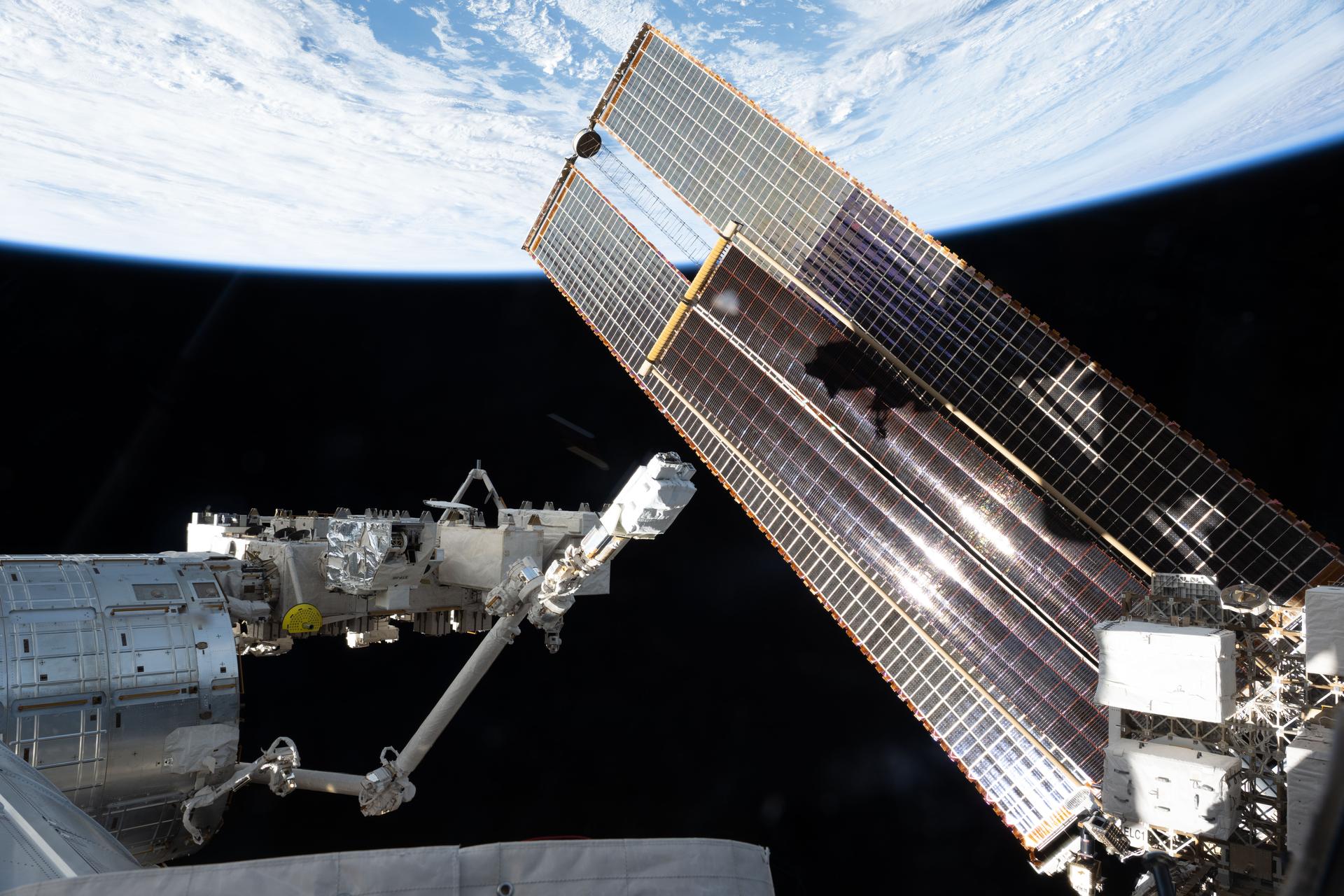
The Roscosmos Progress 93 spacecraft fired its thrusters for 10 minutes, 55 seconds to reboost the station ahead of the launch of the Progress 94 resupply spacecraft. The maneuver raised the station’s altitude by 2 miles at perigee, placing the space station in an orbit of 269.2 x 255 statute miles.
Learn more about station activities by following the space station blog, @space_station on X, as well as the ISS Facebook and ISS Instagram accounts.
Get the latest from NASA delivered every week. Subscribe here.
