

![Request for Information – Potential [Placeholder for Prize]](https://assets.science.nasa.gov/dynamicimage/assets/science/psd/solar/2023/09/s/solarsystem_0.jpg?w=1024)
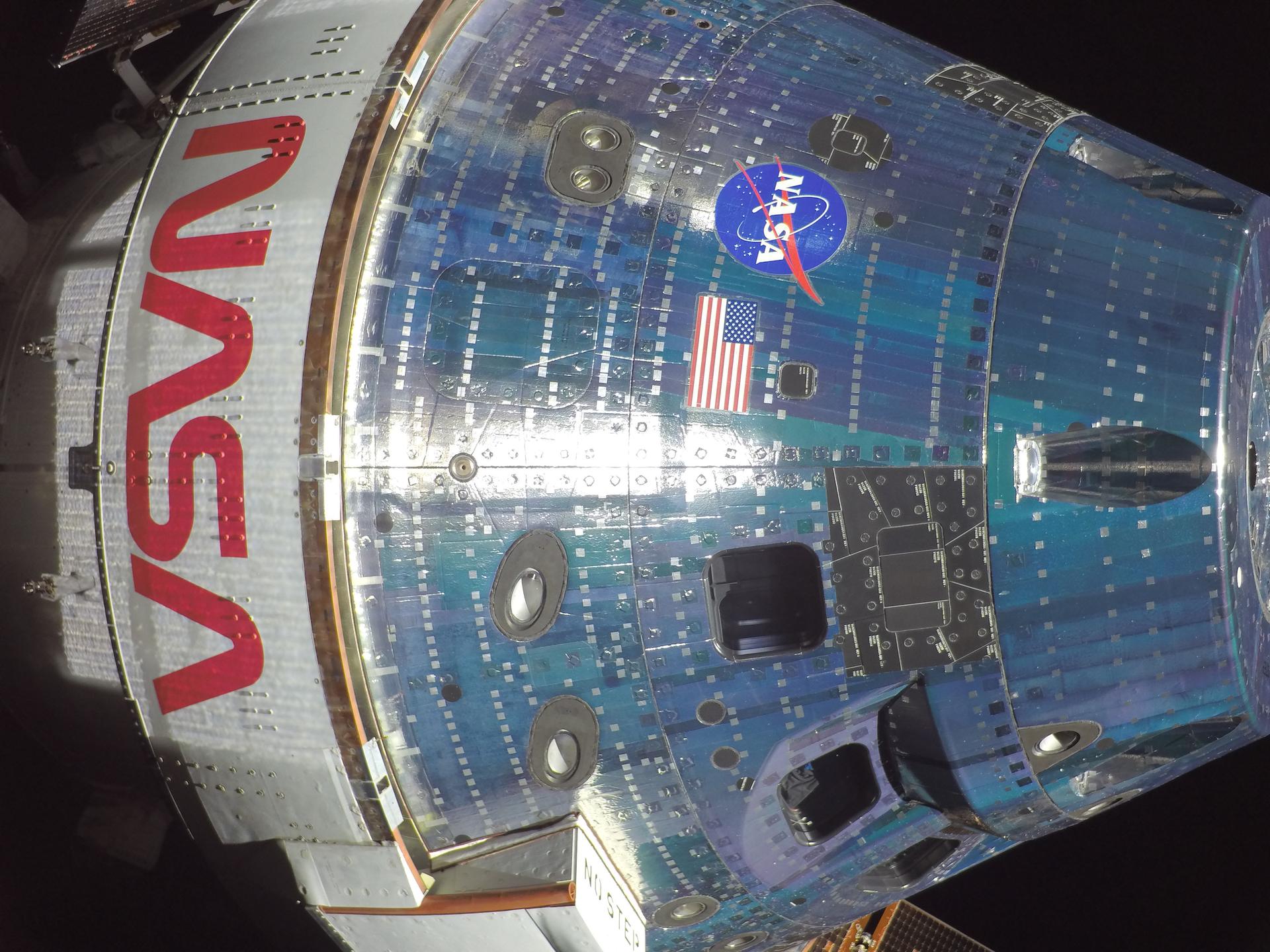



Crew Studies Robotics and Virtual Reality Advancing Space Tech

Robotics and virtual reality filled the science schedule aboard the International Space Station on Tuesday as the Expedition 74 crew promoted education and explored human research. The orbital trio also inspected safety equipment, worked on cargo swaps, and conducted Earth observations.
Students from the Asia-Pacific region are preparing for a robotics challenge that will see their codes uplinked to the orbital outpost to control the cube-shaped, free-flying Astrobee robotic helpers inside the Kibo laboratory module. The object of the challenge is to command an Astrobee to locate hidden objects inside Kibo promoting science, technology, engineering, and math subjects on the ground. NASA Flight Engineer Chris Williams reviewed preparations and powered on the Astrobee in advance of the robotics challenge that will take place on Wednesday.
Williams then spent the rest of his shift inspecting fire suppression and emergency breathing gear throughout the space station’s U.S. segment. He checked the equipment for damage, corrosion, and leaks and ensured the safety hardware was stowed in the proper configurations and locations.
Roscosmos cosmonauts Sergey Kud-Sverchkov and Sergei Mikaev took turns wearing virtual reality goggles and responding to visual and audio cues inside the Nauka science module on Tuesday. They also wore electrodes on their face and head and tested their how their balance and spatial orientation are adapting to microgravity. Results from the Virtual investigation may help crews adjust quicker to weightlessness and prepare for the return to Earth’s gravity after a long-term mission.
Kud-Sverchkov earlier pointed a camera out windows on the Zvezda service module and photographed landmarks from the Swiss Alps to Kazakhstan’s Lake Balkhash. Mikaev swapped a variety of cargo in and out of the Progress 92 cargo craft docked to the orbital outpost’s Poisk module.
Learn more about station activities by following the space station blog, @space_station on X, as well as the ISS Facebook and ISS Instagram accounts.
Get the latest from NASA delivered every week. Subscribe here.
