
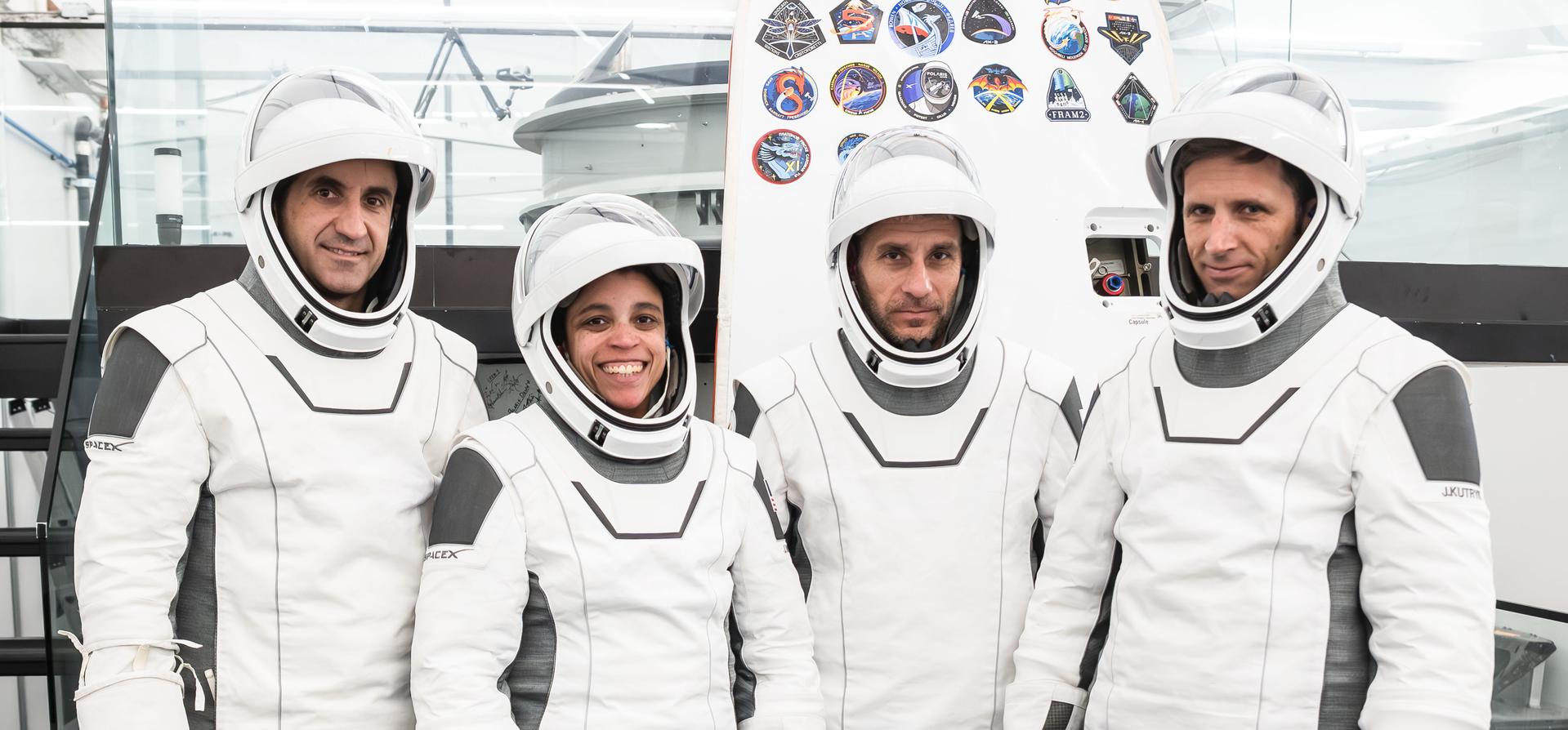














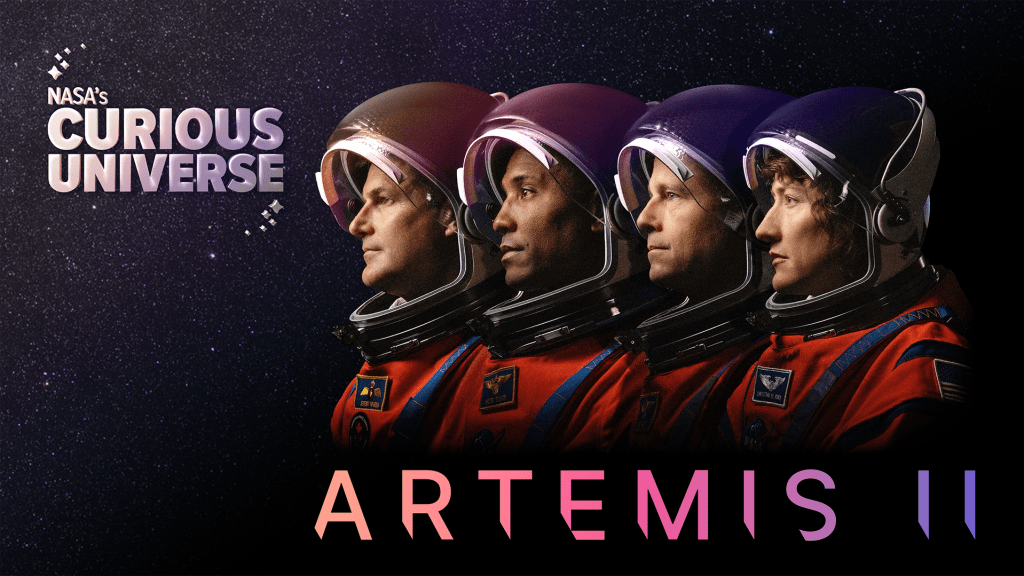
This year, four NASA astronauts are flying around the Moon and back—and Curious Universe is bringing you along for the ride. The mission is called Artemis II. It’s a key test flight that will set the stage for future missions to land on the lunar South Pole for the first time and set up a long-term presence there. In this limited series, get to know your Artemis II astronaut crew, go behind the scenes at NASA facilities across the country and discover the teamwork, passion and problem-solving fueling humanity’s return to the Moon—and beyond.
[MUSIC: “I Want to Be An Astronaut” by Alan D. Boyd]
APOLLO 8 ARCHIVAL: Transmission is coming to you approximately halfway between the Moon and the Earth. It’s a beautiful, beautiful view.
CHARLIE BLACKWELL-THOMPSON: I was just a kid in grade school at the end of the Apollo program, and I remember watching those moon landings with my classmates…
APOLLO 11 ARCHIVAL: Tranquility Base here, the Eagle has landed. Roger Tranquility, we copy you on the ground.
CHARLIE: …and being so intrigued, so curious, so inspired.
APOLLO 11 ARCHIVAL: That’s one small step for man, one giant leap for mankind.
CHARLIE: Apollo made the world stop and look.
APOLLO 17 ARCHIVAL: And as we leave the moon and Taurus-Littrow, we leave it we came and God willing as we shall return. With peace and hope for all mankind.
CHARLIE: And I think that Artemis will do the same thing. The world will stop and look up in wonder, in intrigue, and will feel a sense of accomplishment.
[MUSIC: “Fast Motion Orchestra” by Laurent Levesque]
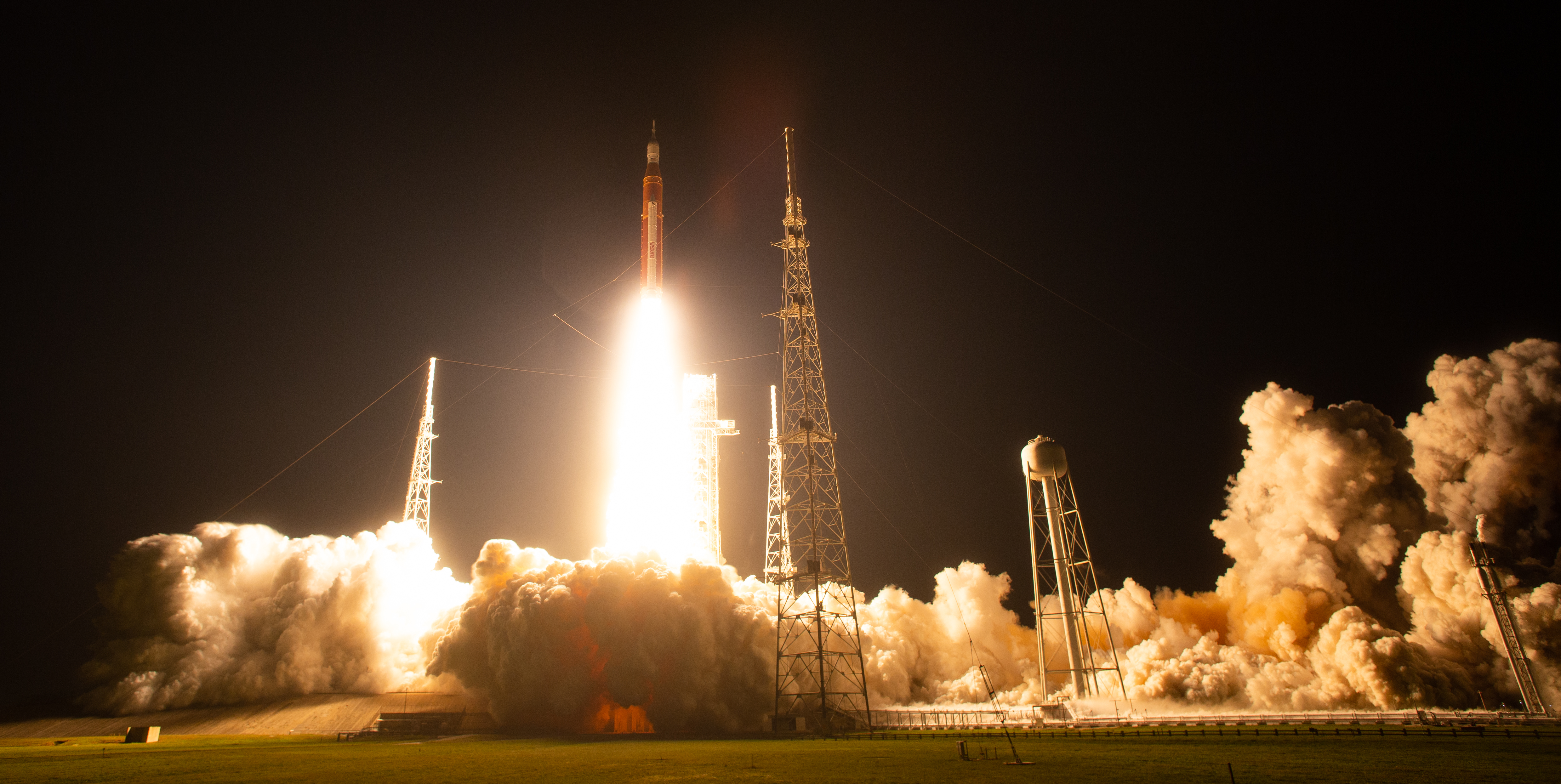
ARTEMIS I LAUNCH ARCHIVAL: And here we go. Hydrogen burn off…
VICTOR GLOVER: Pushing ourselves to explore is just core to who we are. That’s a part of being a human.
ARTEMIS I LAUNCH ARCHIVAL: Core stage engine start.
VICTOR GLOVER: We want to know what’s out there, just beyond the horizon. And so the Artemis program is our opportunity…
ARTEMIS I LAUNCH ARCHIVAL: And liftoff of Artemis I. We rise together back to the moon and beyond.
REID WISEMAN: At a high level, the Artemis II mission launches out of Kennedy Space Center on the Space Launch System and Orion spacecraft and the crew, will travel two orbits around Earth and then head on to the Moon, 250,000 miles from Earth. There’s only one primary goal of Artemis II, is to prepare this spacecraft for Artemis III and for our NASA astronauts to go land on the moon.
JEREMY HANSEN: Artemis is the twin sister of Apollo. That’s intentional. It is to remind us that we’re going to go do great things. Yes, we’re going to put humans back on the surface of the Moon. But we’re not stopping there. When you see us fly around the Moon on Artemis II, that is just a snippet of the incredible things that are to come.
REID: We’re going back to the moon because it’s the next step in our journey to Mars. We need to go explore the Moon. There’s vast regions of unexplored areas with the coldest, darkest places in our solar system.
CHRISTINA KOCH: We were always going to the Moon. From the time humans started exploring this was always in our future and in our fate.
REID: In our lifetime, we’ve looked at the Moon knowing that people had been there. And now in the Artemis generation, kids will walk out and look at the Moon going, we are there. We are there now, and we are going further into our solar system.
CHRISTINA: Hi, I’m Christina Koch.
JEREMY: Jeremy Hansen.
VICTOR: I’m Victor Glover.
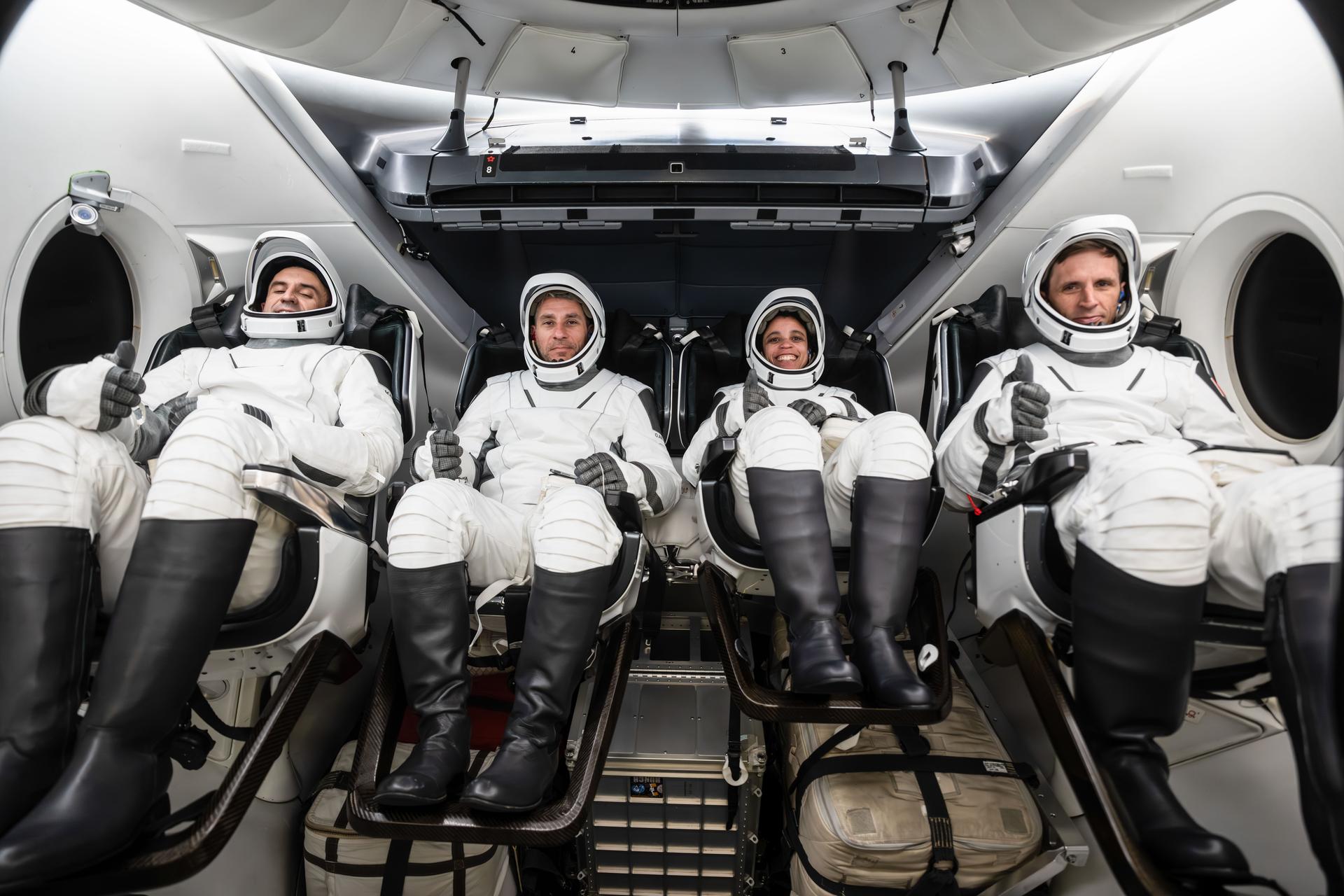
REID: NASA astronaut Reid Wiseman, I’m gonna fly with Victor Glover, Christina Koch and Jeremy Hansen around the moon and safely back to earth.
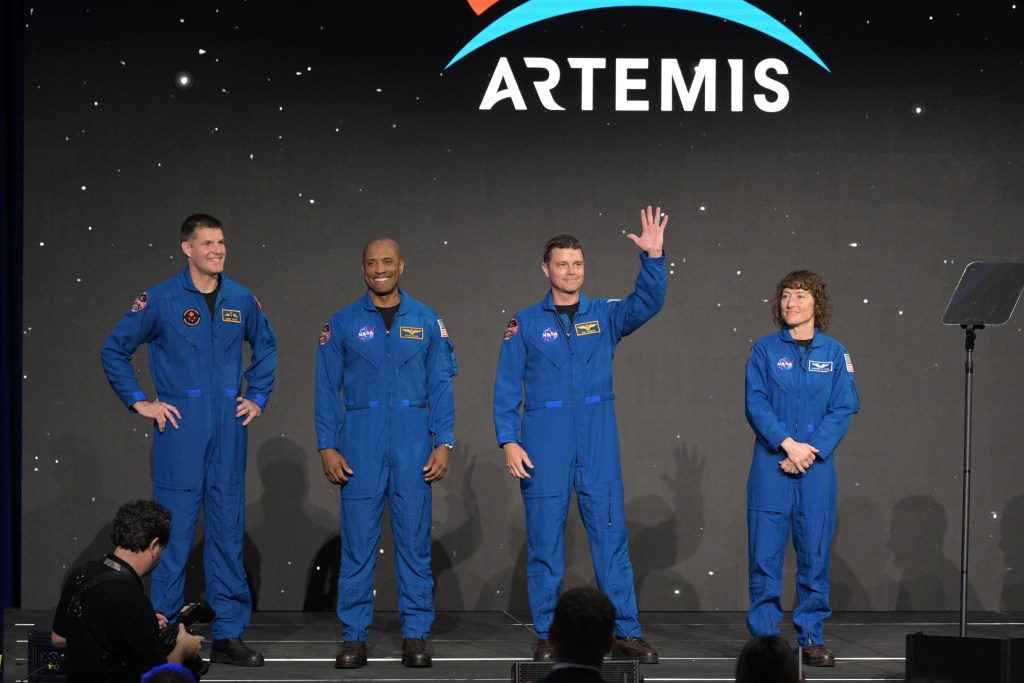
HOST JACOB PINTER: NASA is making history.
HOST PADI BOYD: And we’re bringing you the inside story.
JACOB: Get to know the Artemis II astronauts like you won’t hear them anywhere else… and meet the people behind the scenes, lifting them to space.
PADI: Experience a special Artemis II series of Curious Universe.
JACOB: An official NASA podcast.
PADI: Coming soon.