













Employee Spotlight: Lauren Konitzer

In the Navigation and Mission Design Branch at NASA, Lauren Konitzer plays a vital role in ensuring that spacecraft are precisely where they need to be. Her work ensures that science missions can reach and maintain proper orbit through a combination of trajectory and mission analysis, maneuver planning and control, and trajectory design and optimization. It’s work that requires a complicated blend of precision, innovation, and teamwork.
For Konitzer, being a navigation engineer allows her to combine her passion for astrophysics with the practical, hands-on world of engineering. Growing up, Konitzer aimed to explore the mysteries of the universe by pursuing a career in astrophysics before she happened to take an engineering class and fell in love with the work.
“I got to college and started a physics degree and realized it was really, really hard,” Konitzer laughs. “Engineering just clicked. It was so much more what I am geared for, and it still lets me contribute to the NASA missions that inspired me as a kid.”
As an adult, Konitzer is motivated by NASA’s collaborative atmosphere. Her work involves a constant exchange of knowledge and ideas between long-time subject matter experts and newcomers joining the field with fresh perspective. She loves working alongside people who share a drive for discovery and pushing the limits of science exploration.
For those interested in a career in mission design and navigation, Konitzer emphasizes the importance of both technical and interpersonal skills.
You'll need to be able to collaborate, listen, and align with others – because in this field, we're all working together to push humanity forward.

Lauren Konitzer
Navigation and Mission Design Engineer, NASA Goddard Space Flight Center
Konitzer has learned that there is a surprising amount of communication involved in engineering – moving forward as a team involves constantly discussing ideas, addressing concerns, and bridging different perspectives. This balance between technical expertise and interpersonal skills is something Konitzer has grown to appreciate deeply.
Still, she admits her favorite part of the role is testing hardware.
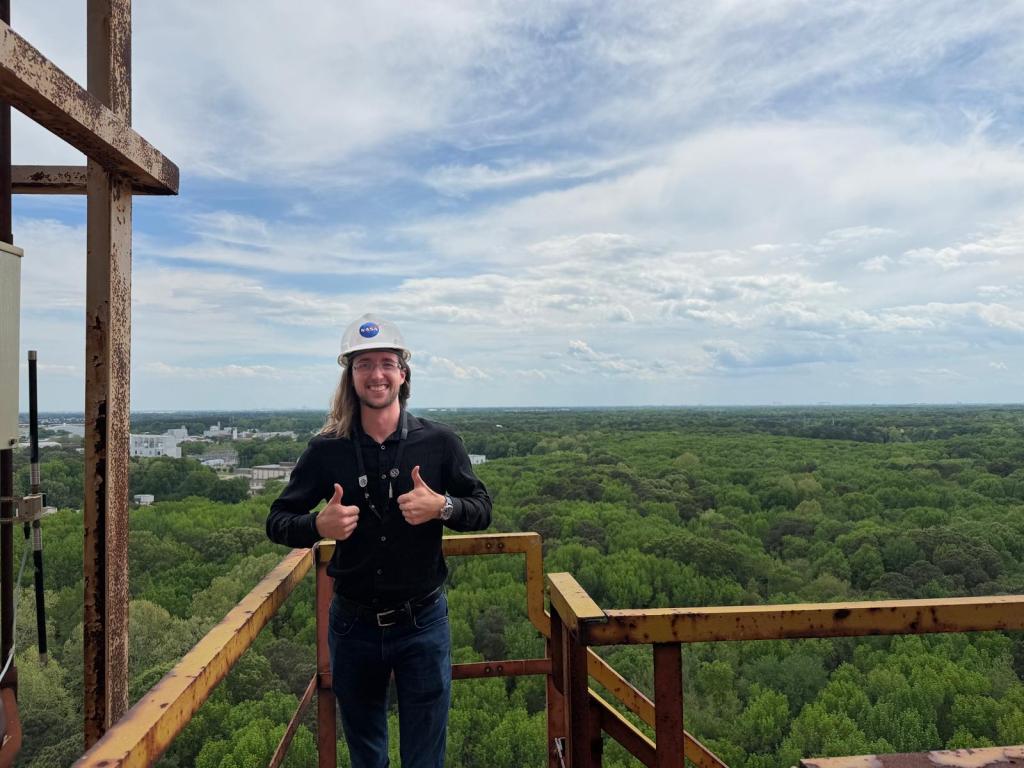
“It’s incredible to see how robustly everything is designed, how things hold up in extreme conditions,” Konitzer says. “Plus, being able to work in facilities with so much history, like where the lunar rover was once tested – it’s like standing on the shoulders of giants.”
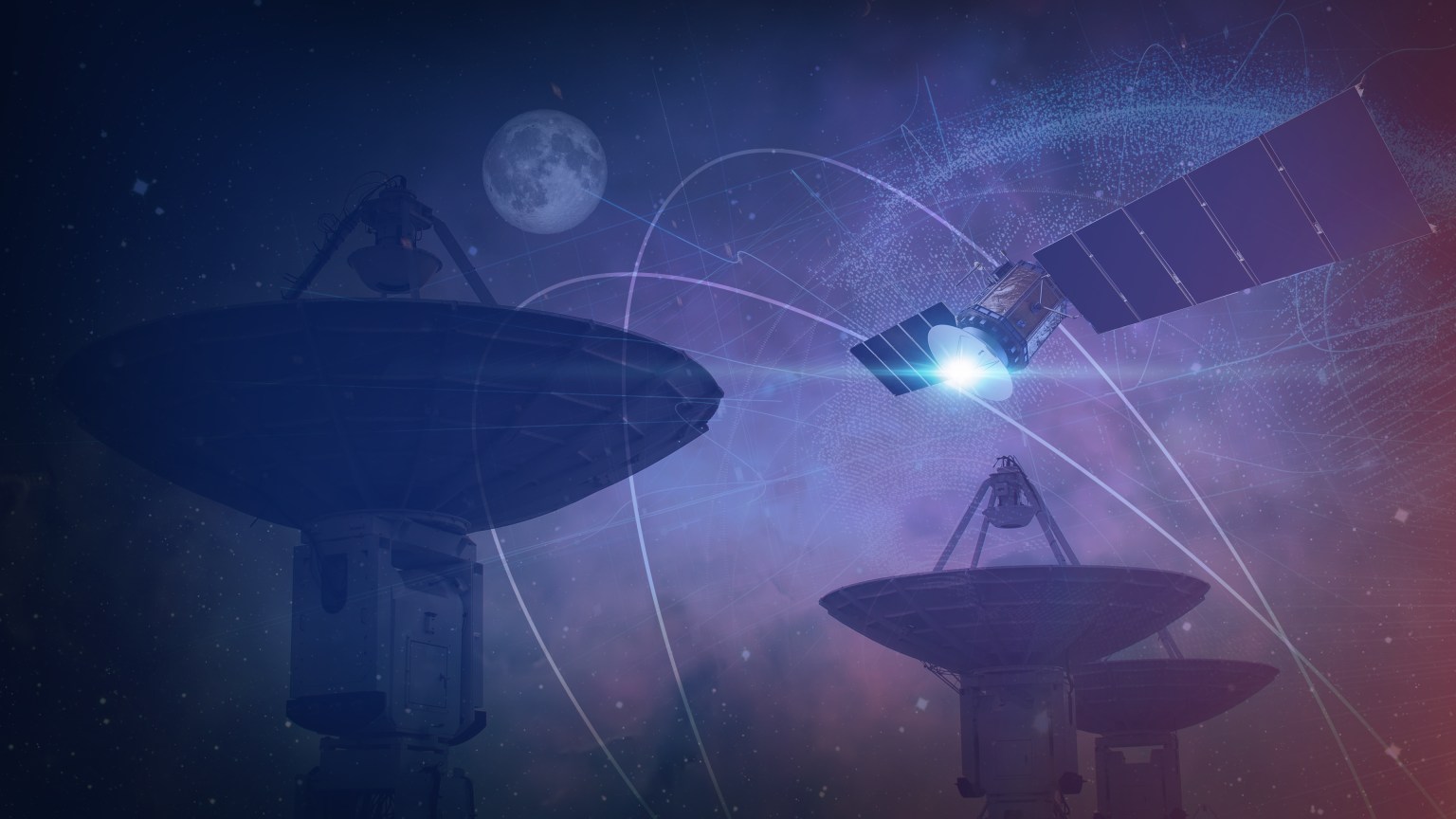
Konitzer has been part of several modern-day mission giants herself, including the upcoming Nancy Grace Roman Space Telescope. However, she sees her most recent work on the Lunar GNSS Receiver Experiment (LuGRE) payload – one of ten NASA payloads traveling to the lunar surface as part of NASA’s Commercial Lunar Payload Services (CLPS) program – as a special continuation of that history. The LuGRE payload explores opportunities to redefine how we navigate to the Moon. Its lunar navigation testing expands upon the communications infrastructure that was created for the Apollo missions, exploring new ways to keep Artemis astronauts safe with preexisting navigation systems.
“Everyone uses GPS and other GNSS constellations to navigate on their phones. These systems already exist, are very reliable, and we know how to use them. And we have data from past missions that shows us those signals can be seen very far out into space.” Konitzer explained. “LuGRE will help us test our hypothesis that you see and use those signals at the Moon for navigation.”
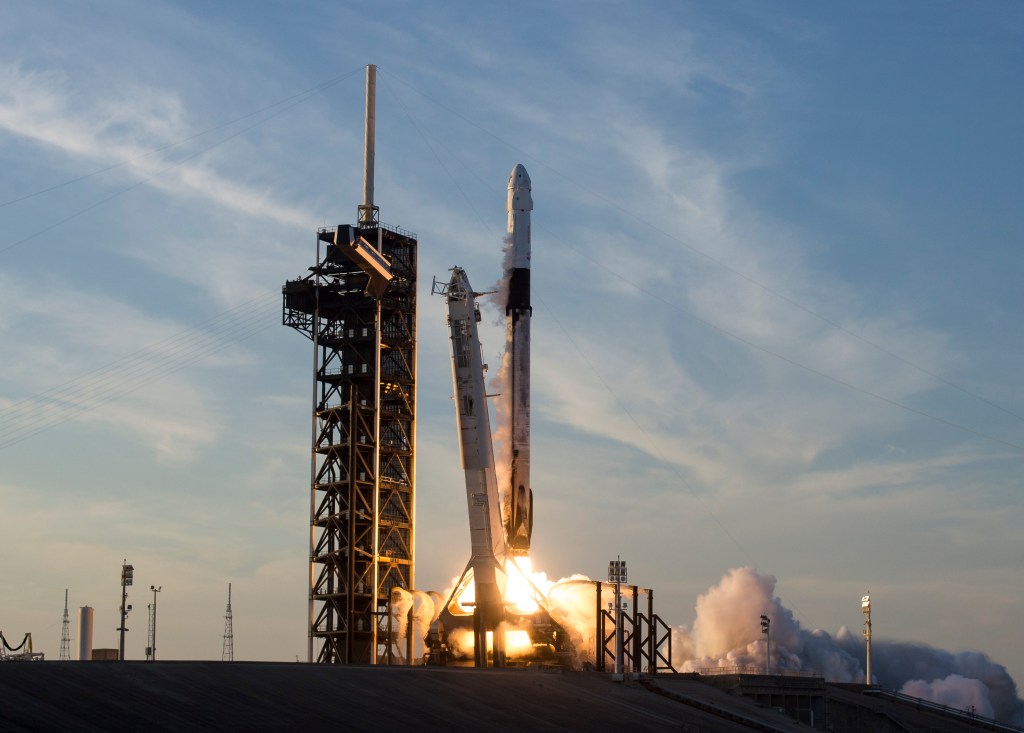
Konitzer continues to be moved by seeing payloads like LuGRE launch, where years of work come together to produce something that can leave the planet and report back its discoveries. As a payload built in partnership with the Italian Space Agency (ASI), LuGRE is a special example of a collaboration with broad impact.
It's an emotional, unforgettable moment. It's proof that there's value in finding a process that works for everyone; we're all aiming for the same success and hopefully get to see it with our own eyes.
Lauren Konitzer
Navigation and Mission Design Engineer, NASA Goddard Space Flight Center
When she’s not charting courses for spacecraft, Konitzer is found lifting weights in the gym as a competitive powerlifter. Powerlifting provides an escape from her day-to-day concerns, though she’s found that the physical strength she’d built from state-level competitions has a mental component that carries over to work.
Knowing her own strength gives her the confidence she needs to engineer new mission designs and ensure spacecraft successfully reach their destination.
“When I can squat 350 pounds, it reminds me I’m strong enough to handle whatever challenges come my way at NASA,” she says.
Konitzer’s journey from a kid fascinated by stars to a NASA engineer is a testament to a different kind of strength — the strength and talent to follow your passions and chart new paths.