






This post was written prior to a reorganization of ESC’s projects and networks in support of the agency’s commercialization effort. Though accurate at the time of publication, it is no longer being updated and may contain outdated information. For more information about the current projects, click here.
Employee Spotlight: Thomas Montano

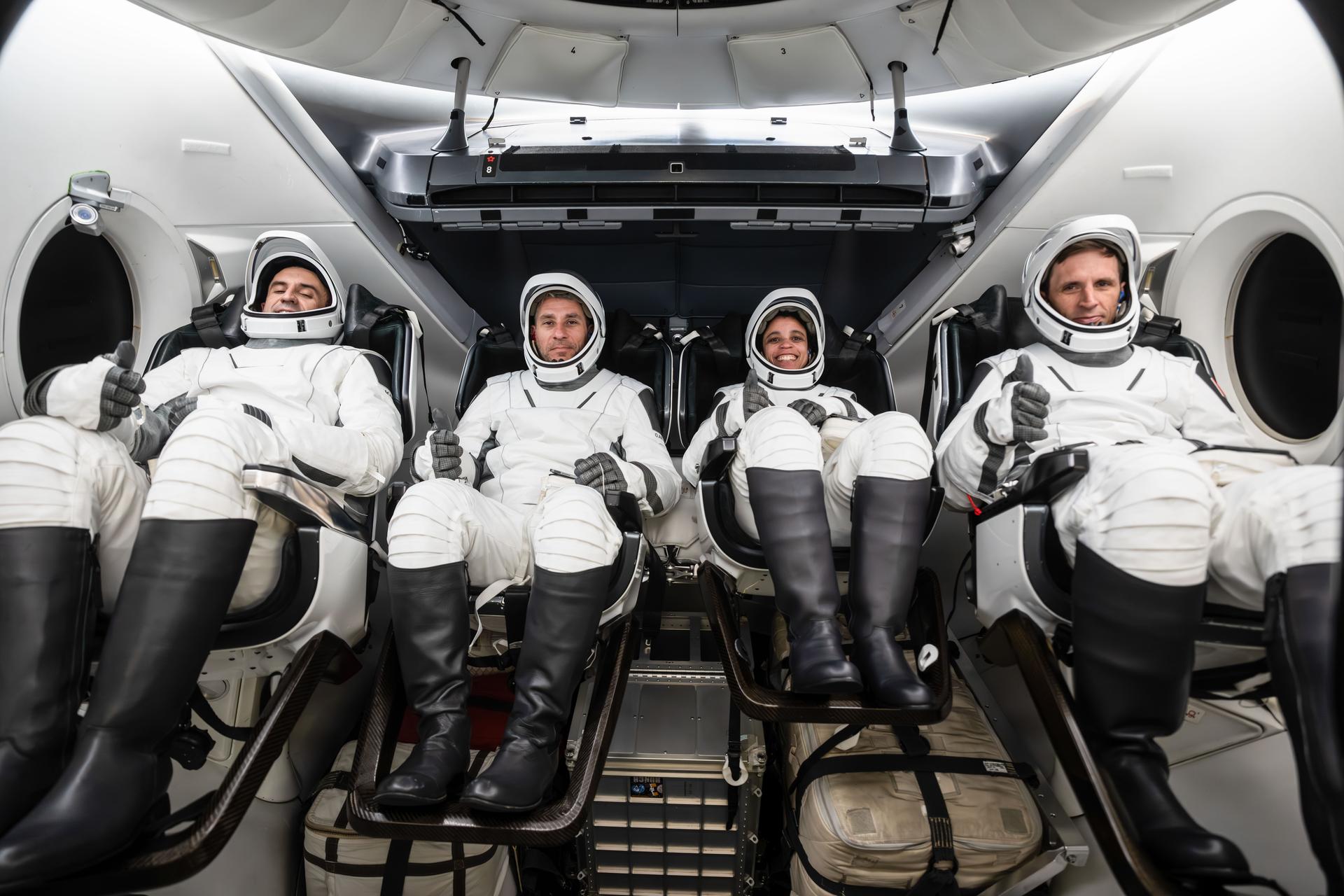
Earlier this year, NASA partnered with the Department of Defense to practice Artemis II recovery procedures during Underway Recovery Test 11 (URT-11) on a naval ship off the coast of San Diego, California. These tests allow NASA and its partners to practice their safety procedures for capsule and crew recovery after the astronauts’ 10-day mission around the Moon. In late 2025, Artemis II astronauts Reid Wiseman, Victor Glover, Christina Koch, and Canadian Space Agency (CSA) astronaut Jeremy Hansen will journey to the Moon and back, bringing humans to the lunar region for the first time since the Apollo era.
A key part of URT-11 was testing the search and rescue location beacons going on Orion and each astronaut’s suit. NASA’s Search and Rescue (SAR) office, located at Goddard Space Flight Center in Greenbelt, Maryland, has a long legacy of Earth-based beacon development and is now applying that expertise to support NASA’s Artemis missions. For Artemis II, the agency is including second-generation beacons called Advanced Next-Generation Emergency Locators (ANGEL) on the astronauts’ suits and installing another location beacon onto the Orion spacecraft capsule. In the event Artemis II’s crew members need to exit from Orion in the Pacific Ocean, NASA will be able to locate them immediately using the ANGEL beacon locations. Testing the ANGEL beacon was one among many activities performed during URT-10 and 11.
During one of the URT-10 tests, the Navy team was unable to locate the crew module test article (CMTA) in the vastness of the Pacific Ocean due to its smaller size. Radar systems on Navy vessels can easily spot boats and larger ships but are not used to tracking an eight- to ten-foot-tall capsule located in the same area.
Thomas Montano, research and development engineer for Goddard’s SAR office, was aboard the USS John P. Murtha and had a solution for this issue. He utilized the newly developed SAR Intelligent Terminal (SAINT) application, which tracks the ANGEL beacons’ locations in real-time, to locate the CMTA. To do this, Montano threw his personal cell phone into developer mode to gather GPS coordinates for both the ship and the capsule’s positions and guided the Navy vessel and its crew to the CMTA for a successful recovery.
During URT-10, I was up in the bridge of the USS John P. Murtha using a hacked Android phone and my laptop to steer a Navy ship to recover the CMTA. For URT-11, we used these lessons learned to test a beacon that was designed to be controlled over a radio, solidifying the system's reliability.
Thomas montano
Research and Development Engineer, NASA Goddard Space Flight Center
You’d think Montano would be well into his career based on his story. However, he started with the agency as an intern within the Space Communications and Navigation (SCaN) Internship Project in 2019.
In 2022, after Montano received his bachelor’s degree in electrical engineering from the Missouri University of Science and Technology, he began working for NASA full-time with the SAR office. Now, as a research and development engineer, he heavily assists with Artemis mission activities like URT-10 and URT-11 and leverages his background in amateur radio to work on terrestrial and lunar search and rescue.
“No one in the search and rescue field is afraid to get their hands dirty to complete crucial tasks, like the support we provided for URT-10 and -11,” said Montano. “I’ve gained experience based on the tools and guidance others on my team give me, like Dr. Lisa Mazzuca, Dave Watson, and Cody Kelly. They have been a huge help in my success, along with the chance to participate in boots on the ground engineering.”
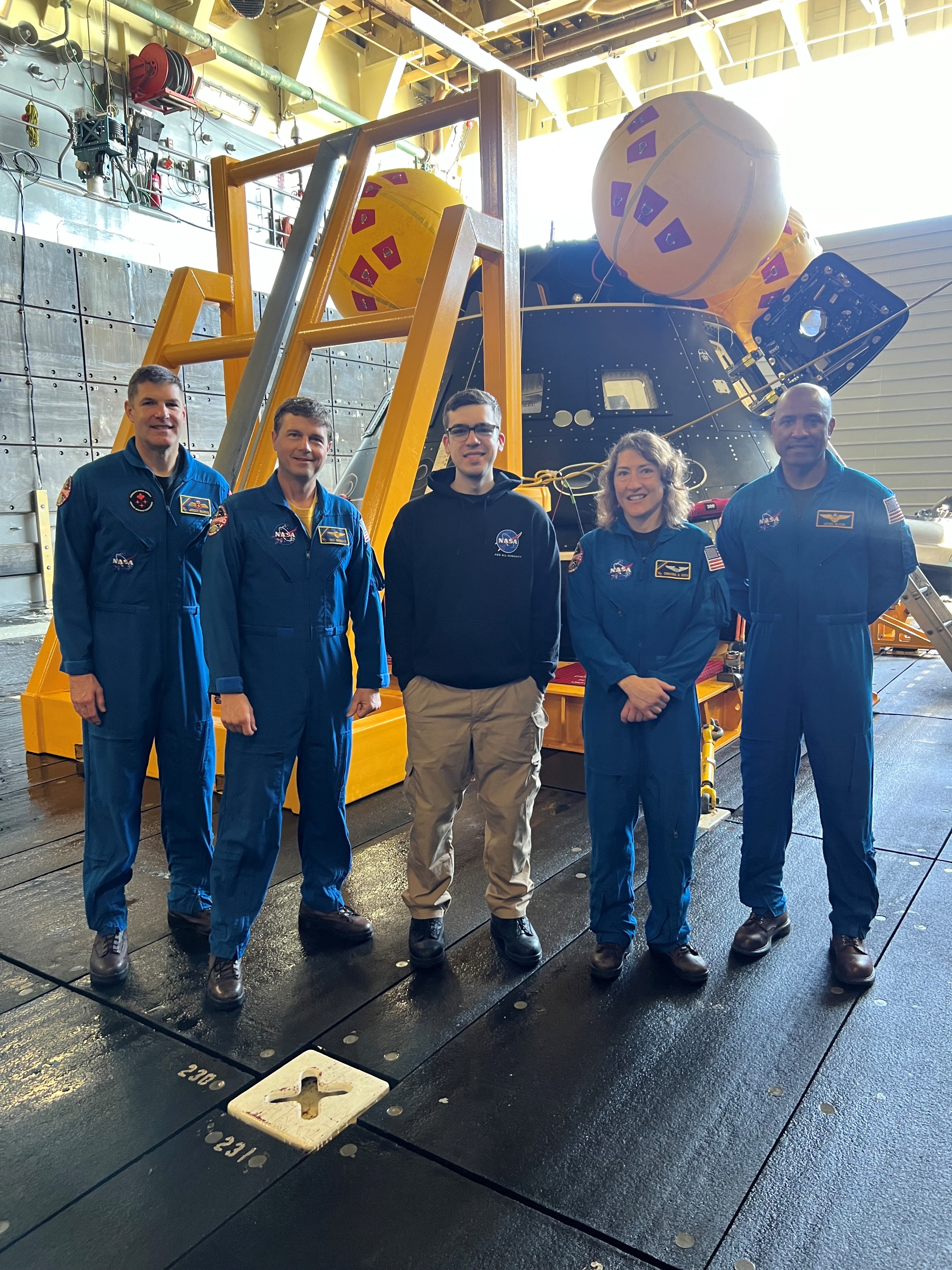
Outside of work, Montano is working toward an electrical engineering PhD with a focus in electro physics at the University of Maryland and hopes to graduate in 2026.
The Search and Rescue office is a part of the Space Communications and Navigation (SCaN) Program office and is essential for NASA’s endeavors to the Moon and Mars. The office has a unique portfolio that advances NASA’s exploration capabilities while enabling the life-saving technology used by Earth-based adventurers. The SCaN program at NASA Headquarters in Washington provides strategic oversight to the Search and Rescue office.