

















What is a DiskSat?
Thinking Outside the CubeSat Box:
DiskSat – A New Circular Small Spacecraft Design
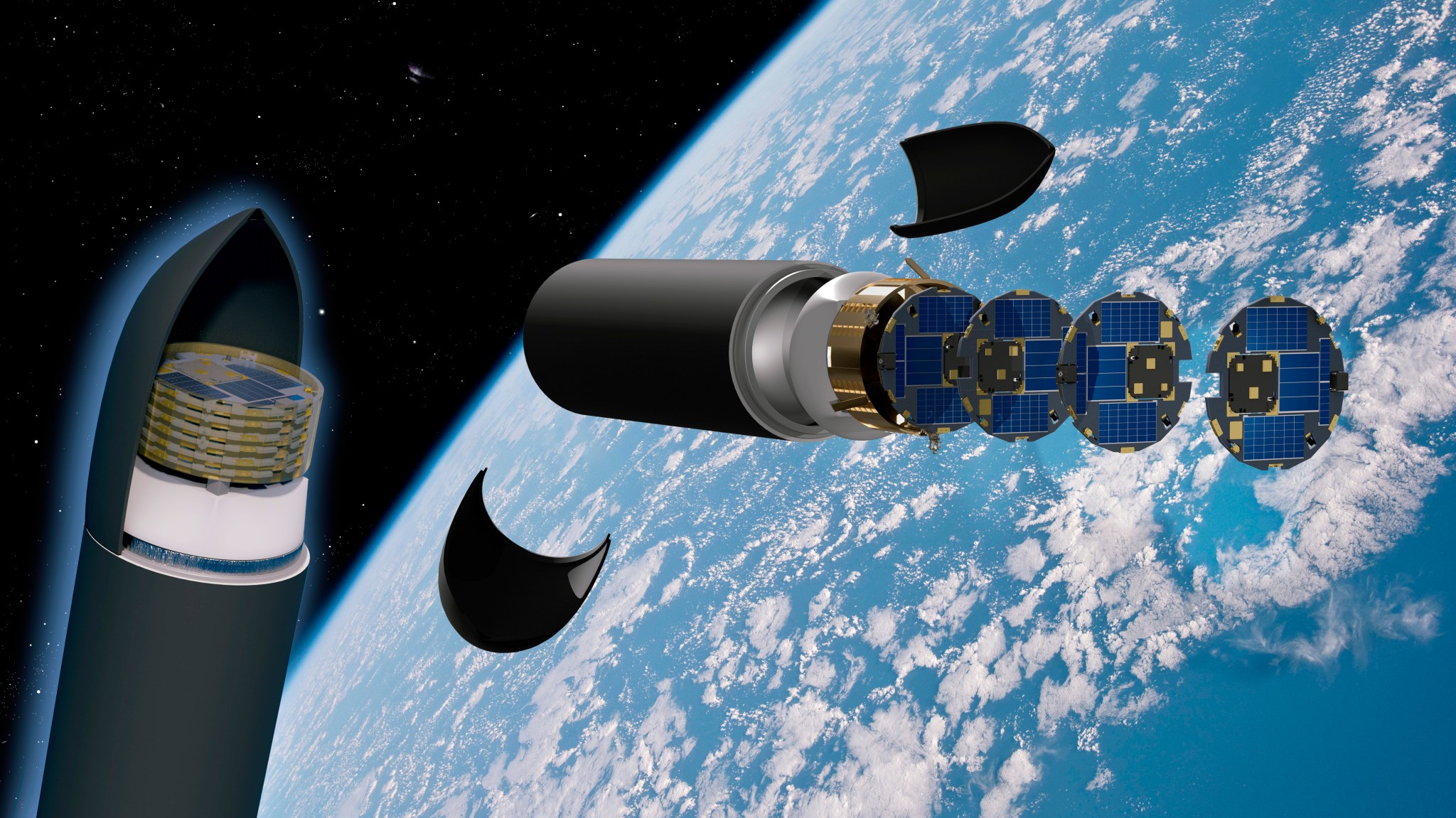
DiskSat is a plate-shaped spacecraft that could offer more power and surface area for instruments and provide more opportunities for NASA to expand mission objectives for small spacecraft. Funded by NASA, small spacecraft designers at The Aerospace Corporation in El Segundo, California, developed the DiskSat technology demonstration to create an alternative to standard CubeSats, maintaining the benefits of the platform while overcoming key limitations.
CubeSats are popular with organizations interested in developing and flying cost-effective and launch-friendly small spacecraft due to their standardized shape, volume, and design. Because CubeSats ride to space in a standard box, referred to as containerization, the simplified interfaces between the CubeSat and launch vehicle readily lend themselves to inexpensive rideshares with frequent and flexible launch opportunities.
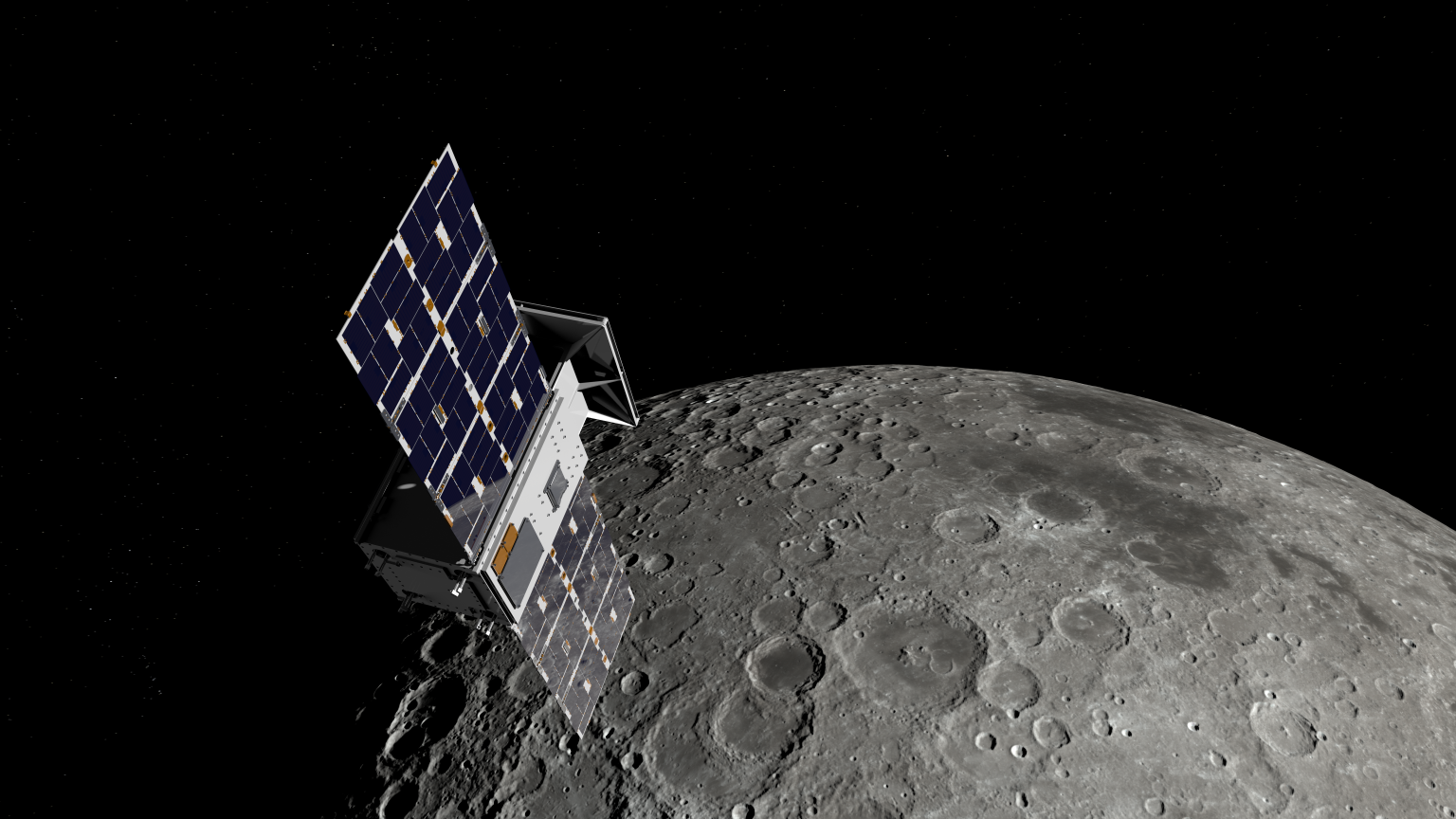
Driven by commercial interests, many CubeSat subsystems, such as communication and navigation components, are mass-produced and readily available as off-the-shelf solutions. However, the compact, box-like design of CubeSats can create constraints. Their small form limits available surface area, restricts power generation capacity, and reduces aperture space for large antennas or scientific instruments requiring exposure to space. These physical limitations can constrain CubeSats’ ability to fulfill certain mission objectives that demand higher power or larger scientific instrument.
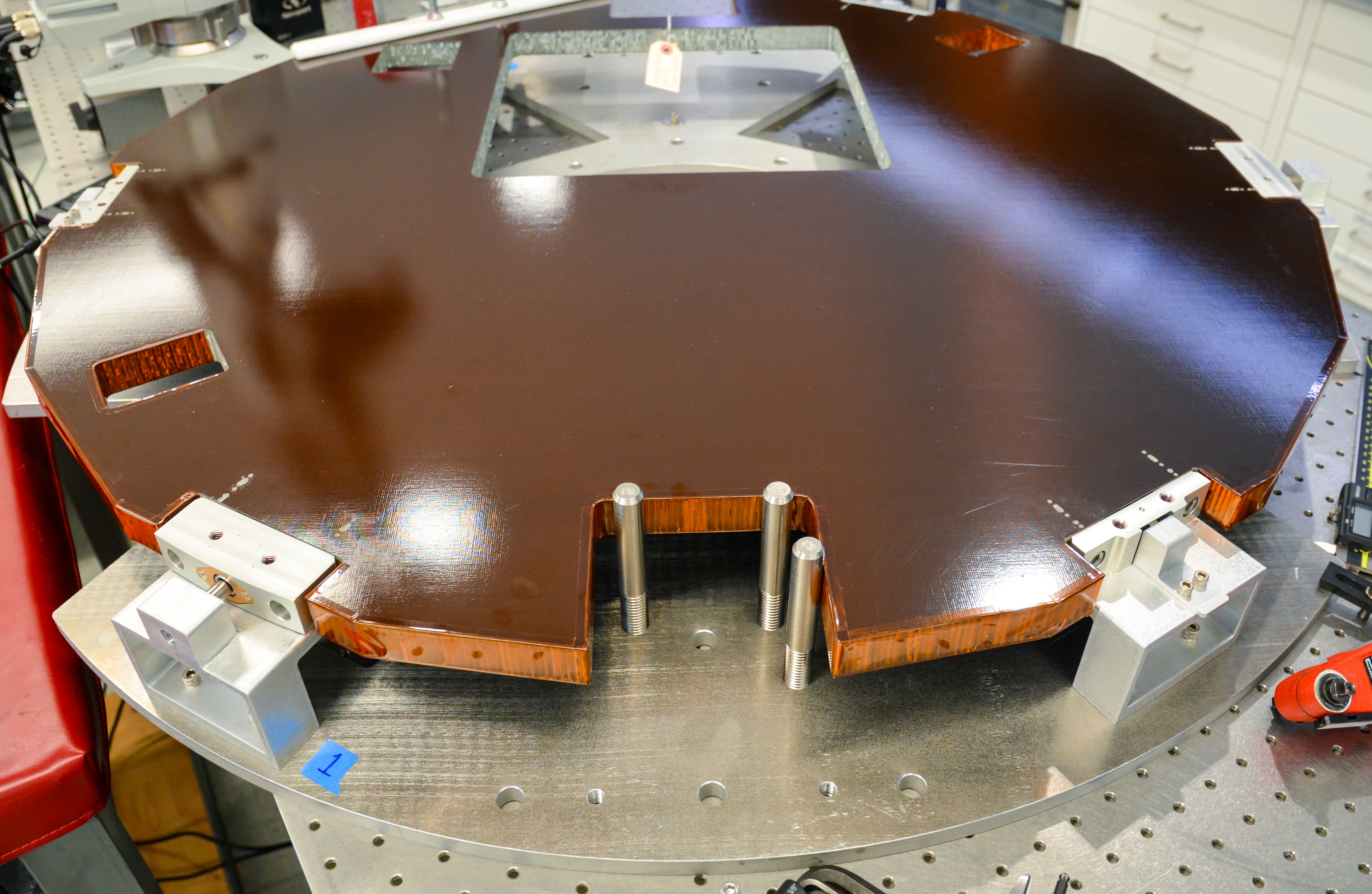
The DiskSat platform maintains the containerization of CubeSats (using a standard launch container) but uses an entirely new shape: a flat disk. For the first demonstration mission, the DiskSats are 40 inches (one meter) in diameter and one inch (two-and-a-half centimeters) thick. DiskSats use standard CubeSat subsystems, leveraging products of the CubeSat industry. For launch, many DiskSats can be stacked to fit within a launch vehicle’s fairing to quickly release a group of satellites in orbit.
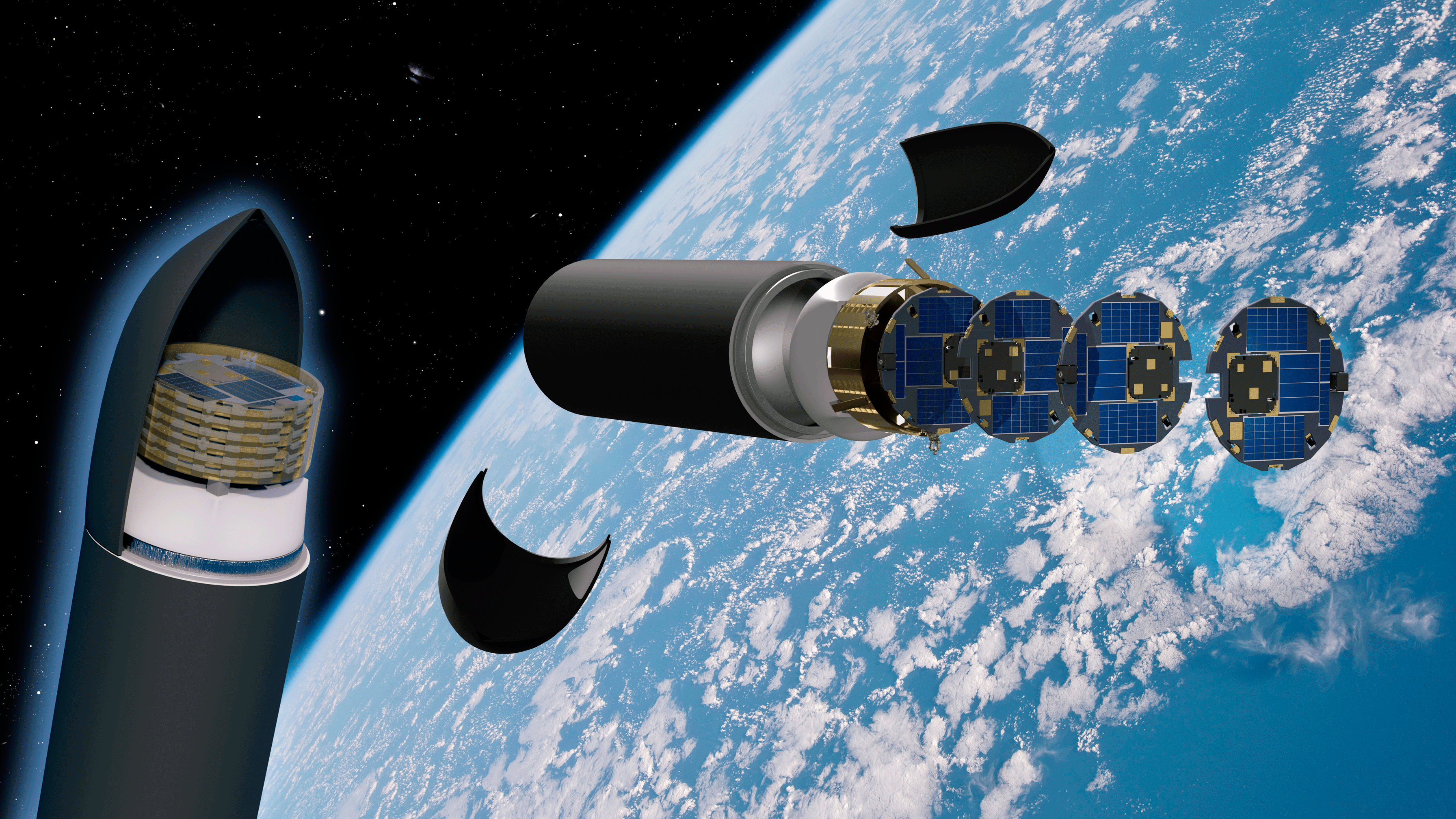
Like CubeSats, the DiskSat design is adaptable. The spacecraft’s dimensions can be increased or decreased to match the dimensions of a launch vehicle, without changing the deployment system. Although some oversize components may be allowed to protrude beyond the disk surface, in most DiskSat designs the electronics and other subsystems that comprise a typical small spacecraft are arranged within the internal volume of the spacecraft. This is similar to a CubeSat, but with the larger volume of the DiskSat platform more payload volume is available, and the flat layout makes internal components more easily accessible, simplifying the build and test process.
Because of the large surface area, DiskSats offer high-power and high-aperture capabilities not possible with CubeSats. Additionally, DiskSats maintain the benefits of CubeSat design, such as a standardized launch interface, low-launch costs, and simple mechanical design.
Mission Applications for DiskSats
There are several mission applications well suited to the DiskSat concept. With the increase in small spacecraft subsystems capabilities, constellations of small spacecraft are becoming the focus of many science investigations as well as technology demonstrations. For example, satellite constellations with high-power, large-aperture, and low-mass are ideal for missions requiring communications and radar. DiskSat’s large surface area is conducive to missions involving signaling, such as those requiring multiple radio frequencies or high-gain antennas.
Adding electric propulsion to the DiskSat platform allows for precise orbit maneuvering. Missions needing continuous thrust for precise orbit maintenance, orbit raising or lowering, de-orbiting at mission end-of-life, and/or the ability to propel themselves from Earth orbit to lunar orbit are all good candidates for DiskSat missions.
With its ability to fly continuously with one face pointing at the Earth, the DiskSat spacecraft can also have a very low drag, making them capable of low altitude missions, less than 185 miles (300 kilometers), such as those necessary for precise Earth observation.
DiskSat Demonstration Mission
NASA’s Small Spacecraft & Distributed Systems (SSDS) program is funding the design and development of a DiskSat technology demonstration mission composed of four DiskSats to verify the performance of this new small spacecraft platform and demonstrate the launch dispenser mechanism.
The demonstration will showcase DiskSat’s maneuverability. The DiskSats in this technology demonstration have electric propulsion for orbit changing and orbit maintenance. After initially deploying all four satellites at the same altitude, one or more satellites will maneuver to lower altitudes. Part of the demonstration mission will test the DiskSat platform’s maneuverability to include flying in the very low Earth orbit environment. This first DiskSat demonstration is anticipated to launch no earlier than December 2025.
Partners:
- NASA’s Small Spacecraft & Distributed Systems program within the agency’s Space Technology Mission Directorate funds and manages the DiskSat technology demonstration.The program is based at NASA’s Ames Research Center in California’s Silicon Valley.
- The Aerospace Corporation, headquartered in Chantilly, Virginia, is leading the design and development of the DiskSat concept as well as the DiskSat spacecraft.
- The DiskSat launch and ground operations are funded by the U.S. Space Force’s Rocket Systems Launch Program and Department of War Space Test Program, respectively.
- Rocket Lab USA, Inc., of Long Beach, California is providing launch services.
Learn more:
- What are SmallSats and CubeSats?
- NASA’s DiskSat Technology Demo Launches to Low Earth Orbit (Dec. 2025)
For investigators:
Investigators interested in funding opportunities with the Small Spacecraft & Distributed Systems program, please visit here.
For technical inquiries about DiskSat, contact: arc-sst@mail.nasa.gov
For news media:
- Members of the news media interested in covering this topic should reach out to the NASA Ames newsroom.