










This post was written prior to a reorganization of ESC’s projects and networks in support of the agency’s commercialization effort. Though accurate at the time of publication, it is no longer being updated and may contain outdated information. For more information about the current projects, click here.
Employee Spotlight: Mike Bay
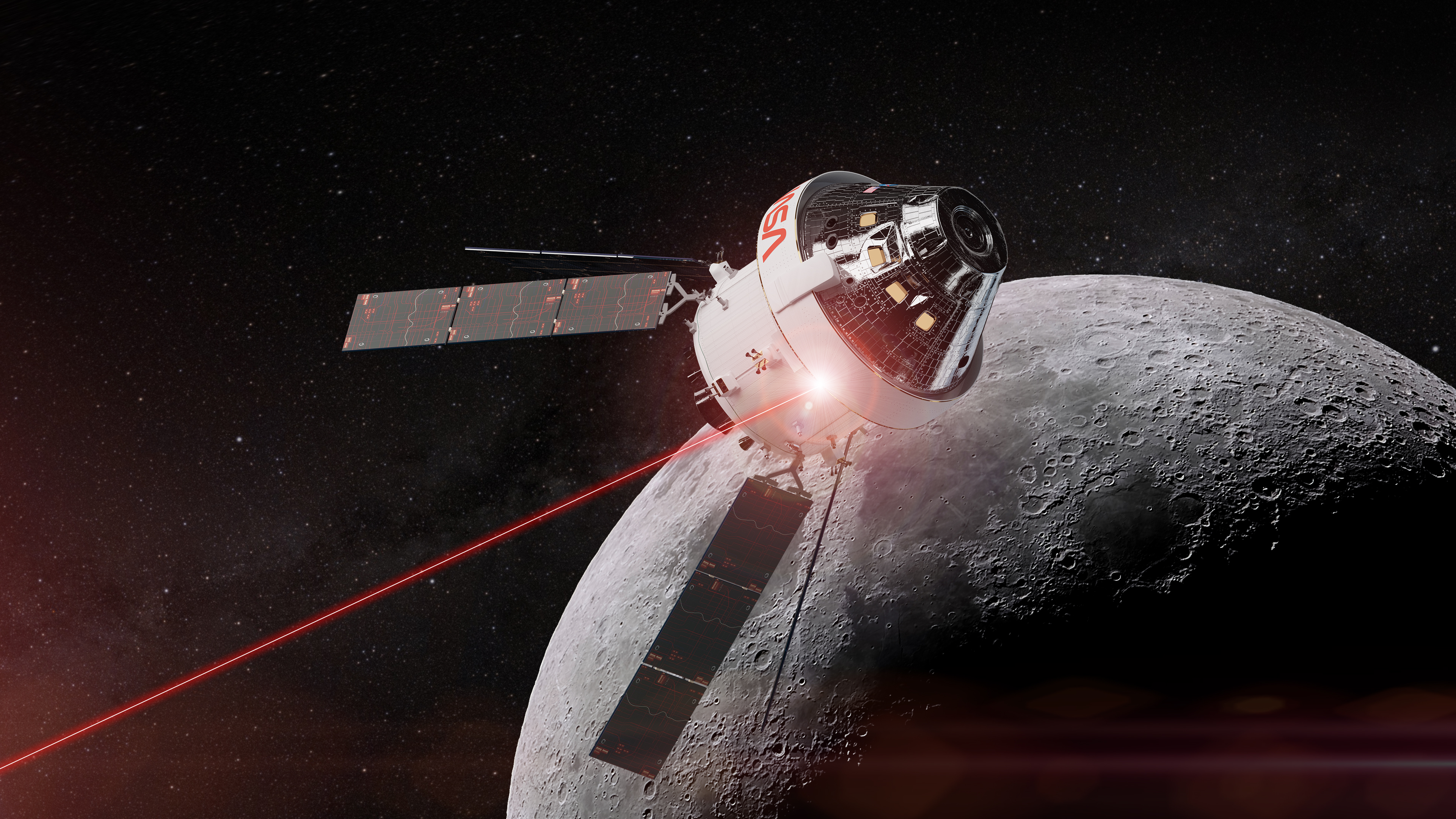
This fall, the laser communications system for the Artemis II mission was delivered and integrated into the Orion capsule at NASA’s Kennedy Space Center in Florida.
With the success of the Artemis I mission in 2022, NASA is charging ahead with Artemis II, the first crewed mission back to the Moon since the Apollo era. Artemis II’s journey will prepare NASA for establishing a long-term human presence on the Moon and test the Orion spacecraft’s many intricate systems needed for human spaceflight.
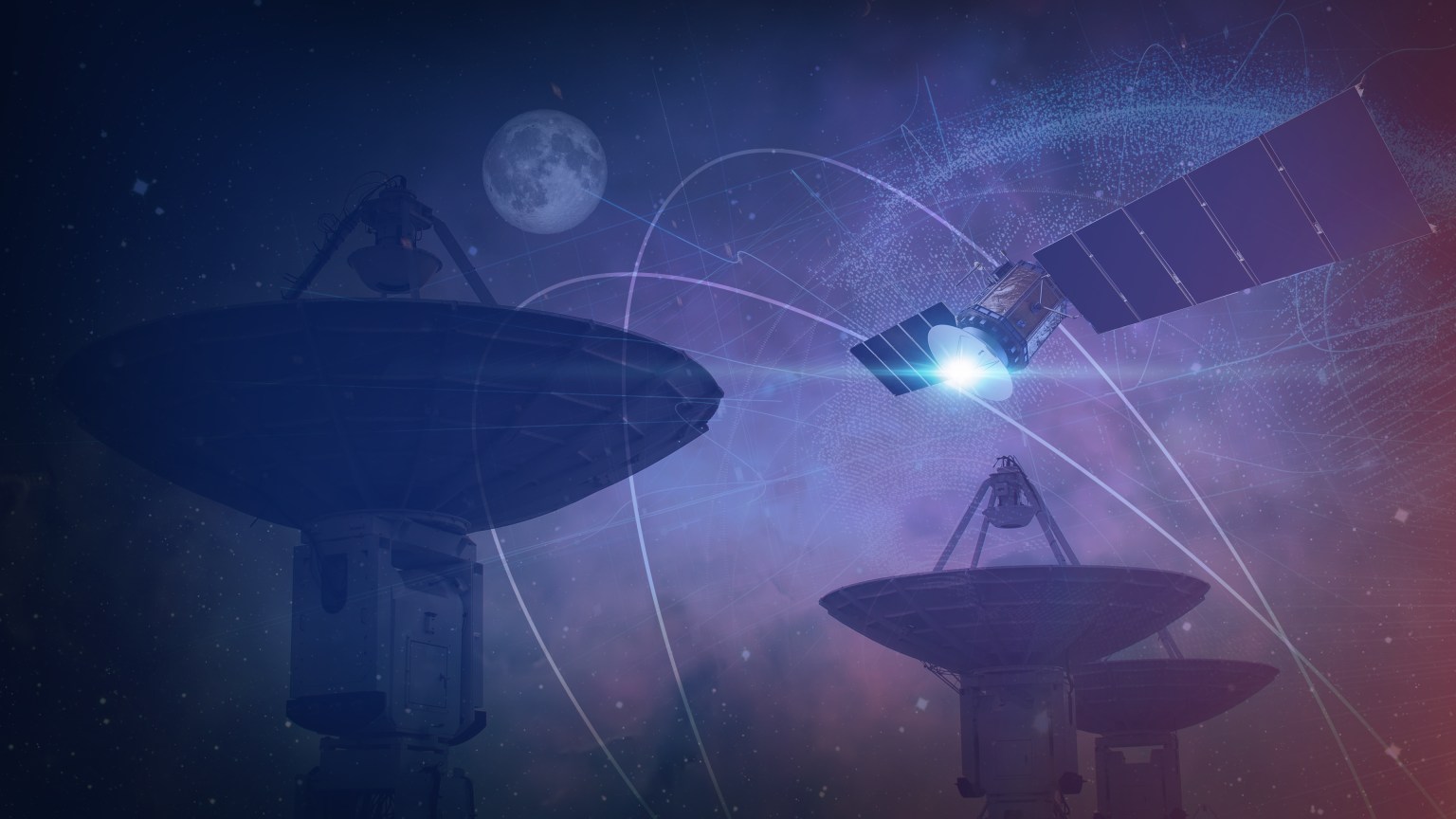
The Artemis II mission will also demonstrate the power of laser communications, which offers missions higher data rates over traditional radio wave systems. Higher data rates mean more information can be beamed to and from Earth in a single transmission.
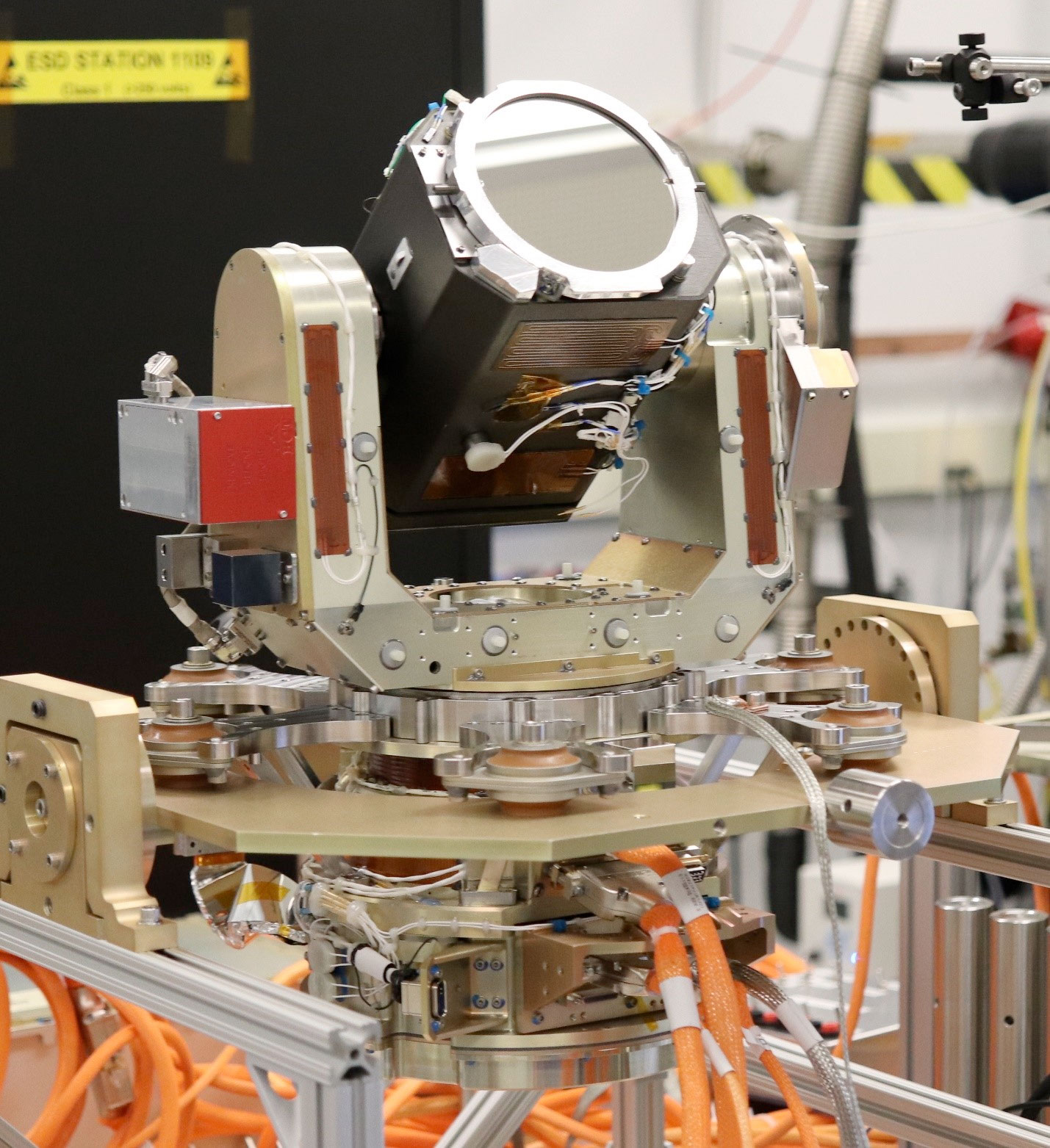
In April 2023, NASA announced astronauts Reid Wiseman, Victor Glover, Christina Koch, and Jeremy Hansen as Artemis II’s crew. These space pioneers will be the first astronauts to use laser communications at the Moon and send back 4K video and high-resolution photos of their journey. The Orion Artemis II Optical Communications System, or O2O, is the laser communications terminal that will enable this new, high-definition experience.
One of the leaders behind O2O’s development and integration with Orion is mission systems engineer Mike Bay. He leverages his computer science and electrical engineering experience to lead a top-notch team implementing laser communications technology on Orion.
In 1979, Bay received a bachelor’s degree in computer science from Loyola University in Maryland and joined Fairchild Space and Electronics Company. Following 14 years at Fairchild, Bay accepted a full-time position with Jackson and Tull, an engineering services and advanced technology company. This began Bay’s career in private industry, where he contributed to many technology projects.
With a passion for both business and engineering, Bay started an engineering company in 2005, Bay Engineering Innovations, where he serves as the president and chief engineer. In 2016, Bay Engineering Innovations began its formal partnership with Goddard, specializing in laser communications and working with NASA engineers on a conceptual study for the O2O terminal.
O2O is a collaborative effort between many organizations inside and outside of NASA. Bay works with the Massachusetts Institute of Technology Lincoln Laboratory in Lexington, Massachusetts, who developed the O2O space terminal; Lockheed Martin in Denver, who designed and built the Orion vehicle and crew module; NASA’s Johnson Space Center in Houston, home of the Artemis Mission Control Center; and NASA’s Jet Propulsion Laboratory and Goddard teams developing and fielding the O2O Ground Segment.
Our collective objective is to ensure everything works together and properly as well as on time for Artemis II's launch and ten-day mission. O2O will further NASA's laser communications efforts on the Moon, and eventually to Mars and beyond.

Mike Bay
O2O Mission Systems Engineer, NASA Goddard Space Flight Center
Bay works with teams from each organization to gather and understand incremental progress, leads multi-team reviews, and coordinates technical interfaces ensuring O2O is on schedule and operating properly. As the main point of contact for the integrated team, Bay has his finger on the pulse of these elements, which are all essential to Orion and O2O’s development and integration.
O2O is one of many terminals demonstrating the power of laser communications. Engineers at Goddard help realize the Space Communications and Navigation (SCaN) program office’s optical infusion effort with multiple missions.
In 2013, Lunar Laser Communications Demonstration (LLCD) showcased 622 Megabits per second high-rate downlinks from the Moon. In 2021, NASA launched its first-ever laser relay – the Laser Communications Relay Demonstration (LCRD), which is currently conducting experiments to refine the technology. In 2023, the TeraByte InfraRed Delivery (TBIRD) achieved NASA’s fastest space to ground laser communications link at 200 gigabits per second. And finally, the Integrated LCRD Low Earth Orbit User Modem and Amplifier Terminal (ILLUMA-T), which will launch to the International Space Station and be LCRD’s first in-space user.
It is a system engineer's dream to go through the entire sequence from engineering design to integration and testing and then launching of the project into space. There are so many moving parts and large pieces that must come together to work properly, and I am grateful to be a part of the Artemis II mission and am excited for its launch.
Mike bay
O2O Mission Systems Engineer, NASA Goddard Space Flight Center
In September 2023, O2O was successfully integrated with the Orion capsule and went through performance testing to ensure O2O can receive the data gathered by Orion’s other instruments. Next, Orion will go through full integration, mission readiness, and environmental testing. These tests will ensure the spacecraft is ready for its first crewed launch and its journey around the Moon.
Outside of work, Bay enjoys woodworking and building anything from furniture to tools.
O2O is funded by the Space Communications and Navigation (SCaN) program at NASA Headquarters in Washington. The O2O terminal is managed by NASA’s Goddard Space Flight Center in Greenbelt, Maryland. Partners include NASA’s Johnson Space Center in Houston, Lockheed Martin in Maryland, and the Massachusetts Institute of Technology Lincoln Laboratory.