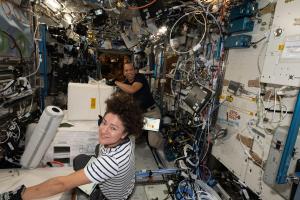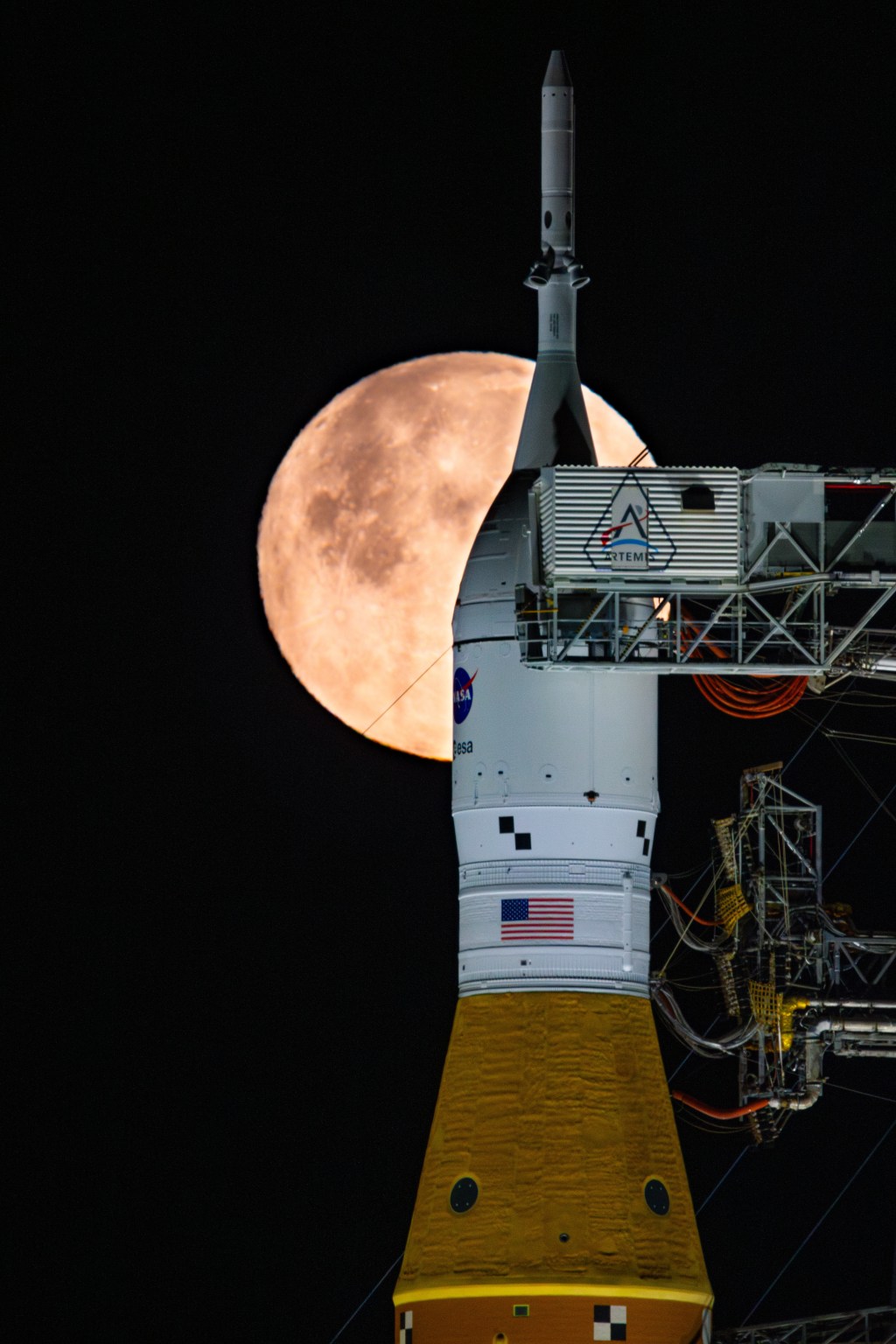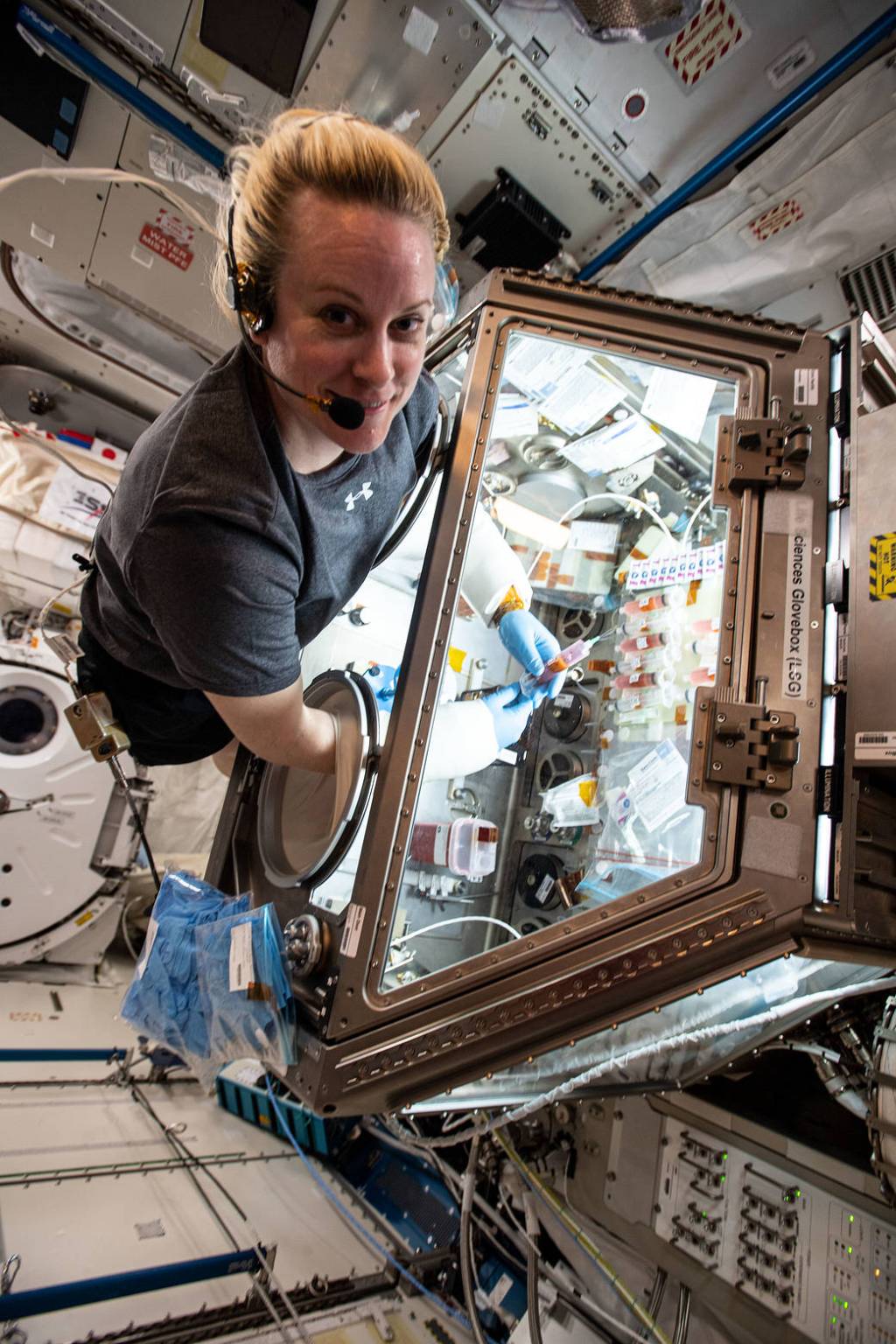


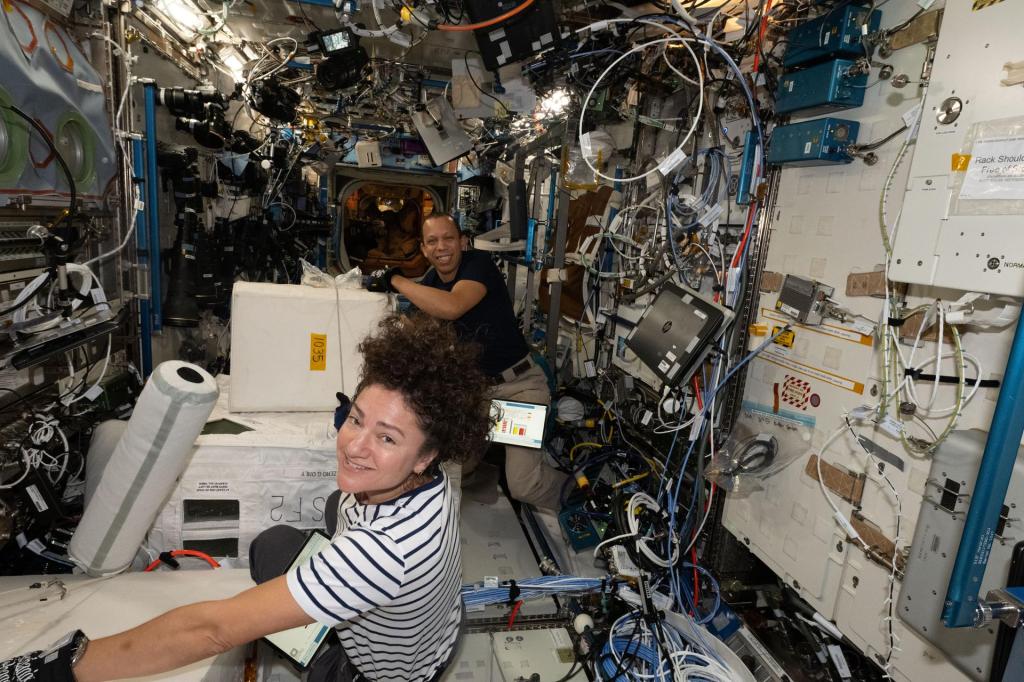
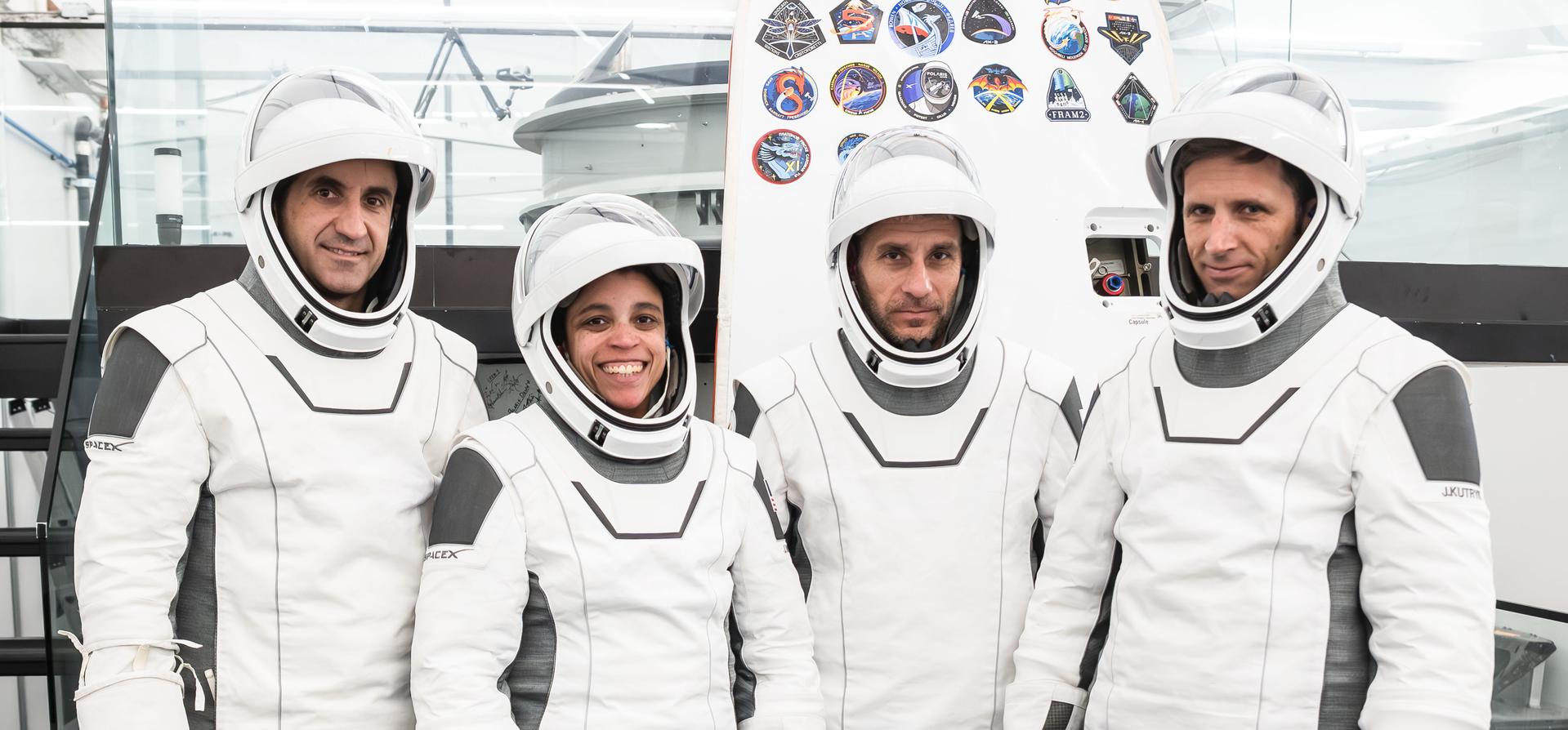










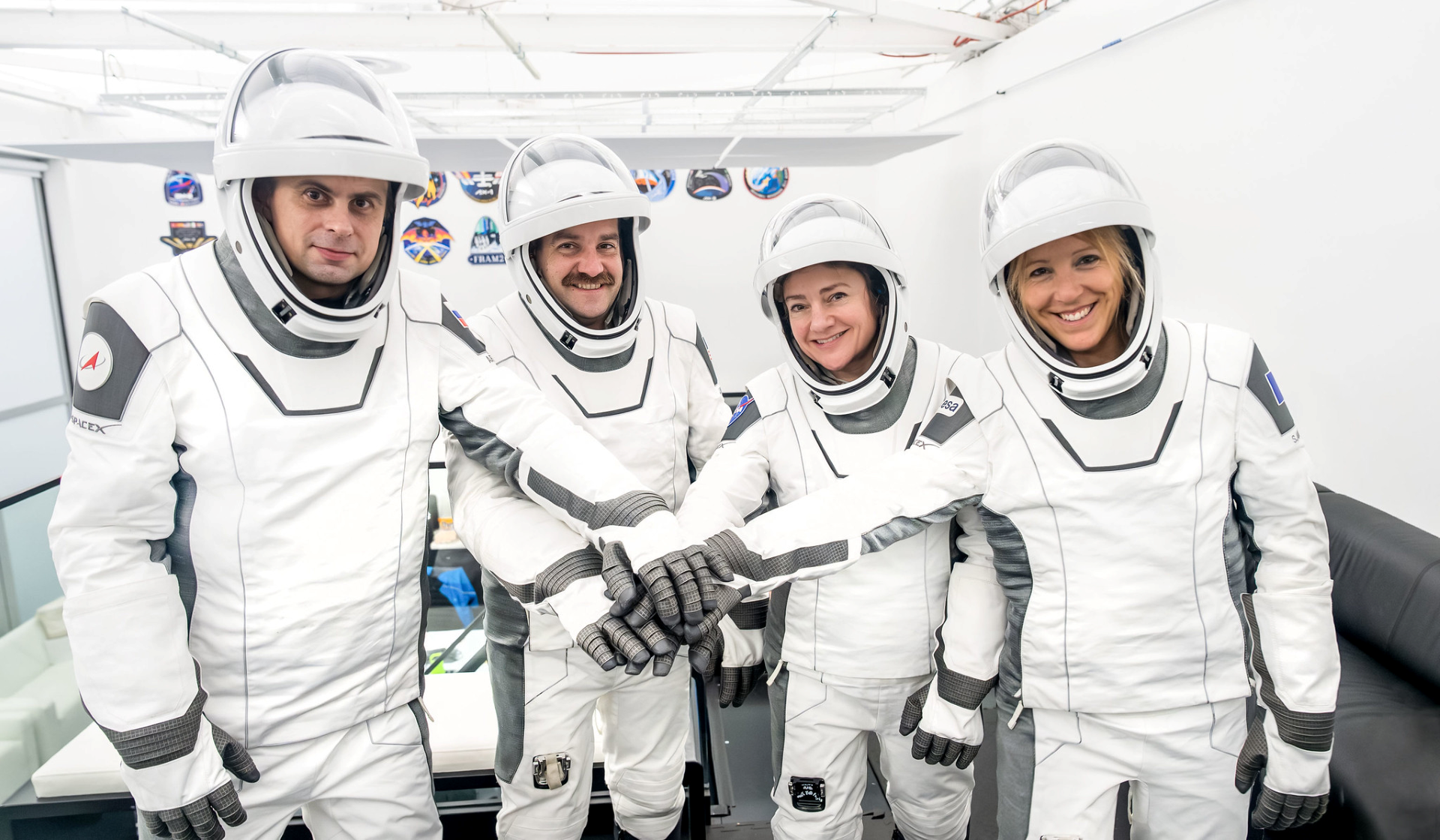
NASA’s SpaceX Crew-12 mission is preparing to launch for a long-duration science mission aboard the International Space Station. During the mission, select crew members will participate in human health studies focused on understanding how astronauts’ bodies adapt to the low-gravity environment of space, including a new study examining subtle changes in blood flow.
The experiments, led by NASA’s Human Research Program, include astronauts performing ultrasounds of their blood vessels to study altered circulation and completing simulated lunar landings to assess disorientation during gravitational transitions, among other tasks. The results will help NASA plan for extended stays in space and future exploration missions.
The new study, called Venous Flow, will examine whether time aboard the space station increases the chance of crew members developing blood clots. In weightlessness, blood and other bodily fluids can move toward the head, potentially altering circulation. Any resulting blood clots could pose serious health risks, including strokes.
“Our goal is to use this information to better understand how fluid shifts affect clotting risk, so that when astronauts go on long-duration missions to the Moon and Mars, we can build the best strategies to keep them safe,” said Dr. Jason Lytle, a physiologist at NASA’s Johnson Space Center in Houston who is leading the study.
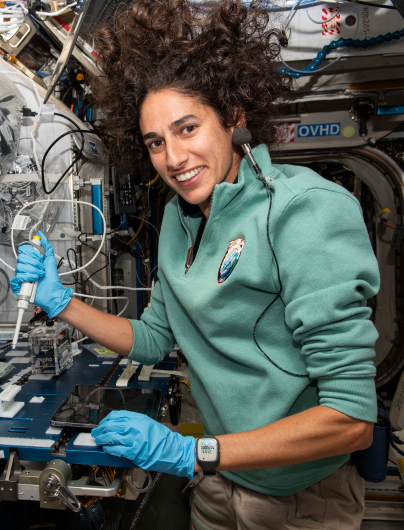
To learn more, crew members in this study will undergo preflight and postflight MRIs, ultrasound scans, blood draws, and blood pressure checks. During the flight, crew members also will capture their own jugular vein ultrasounds, take blood pressure readings, and draw blood samples for scientists to analyze after their return to Earth.
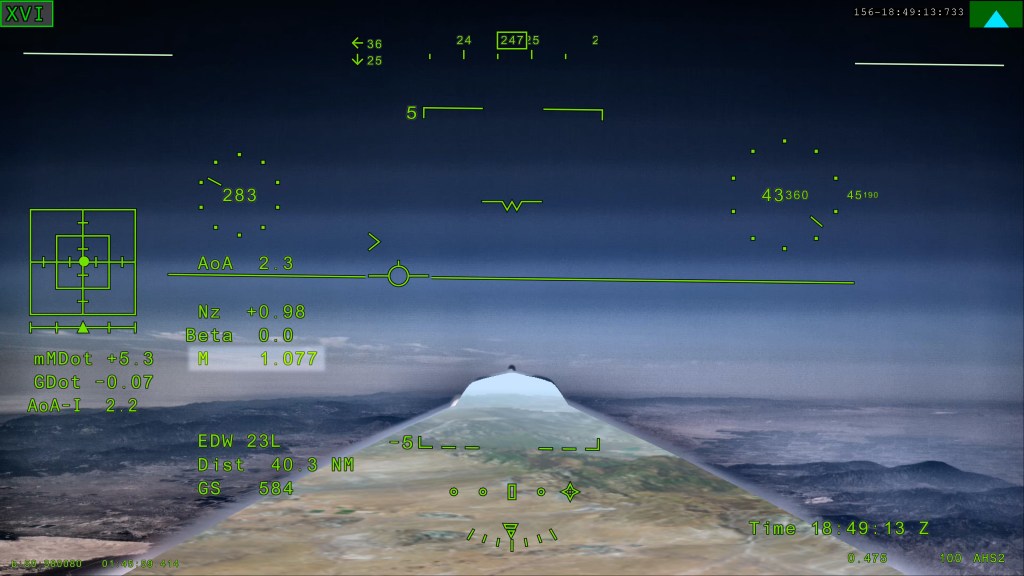
In another study, called Manual Piloting, select crew members will perform multiple simulated Moon landings before, during, and after the mission. Designed to assess their piloting and decision-making skills, participants attempt to fly a virtual spacecraft toward the lunar South Pole region — the same area future Artemis crews plan to explore.
“Astronauts may experience disorientation during gravitational transitions, which can make tasks like landing a spacecraft challenging,” said Dr. Scott Wood, a neuroscientist at NASA Johnson who is coordinating the investigation.
While spacecraft landings on the Moon and Mars are expected to be automated, crews must be prepared to take over and pilot the vehicle if necessary.
“This study will help us examine astronauts’ ability to operate a spacecraft after adapting from one gravity environment to another, and whether training near the end of their spaceflight can help prepare crews for landing,” said Wood. “We’ll monitor their ability to manually override, redirect, and control a vehicle, which will guide our strategy for training Artemis crews for future Moon missions.”
The risk of astronauts experiencing disorientation from gravitational transitions increases the longer they’re in space. For this study, which debuted during the agency’s SpaceX Crew-11 mission, researchers plan to recruit seven astronauts for short-term private missions lasting up to 30 days and 14 astronauts for long-duration missions lasting at least 106 days. A control group performing the same tasks as the astronauts will provide a basis of comparison.
A different study will investigate potential treatments for spaceflight associated neuro-ocular syndrome, or SANS, which causes vision and eye changes. Researchers will examine whether taking a daily B vitamin supplement can help relieve SANS symptoms.
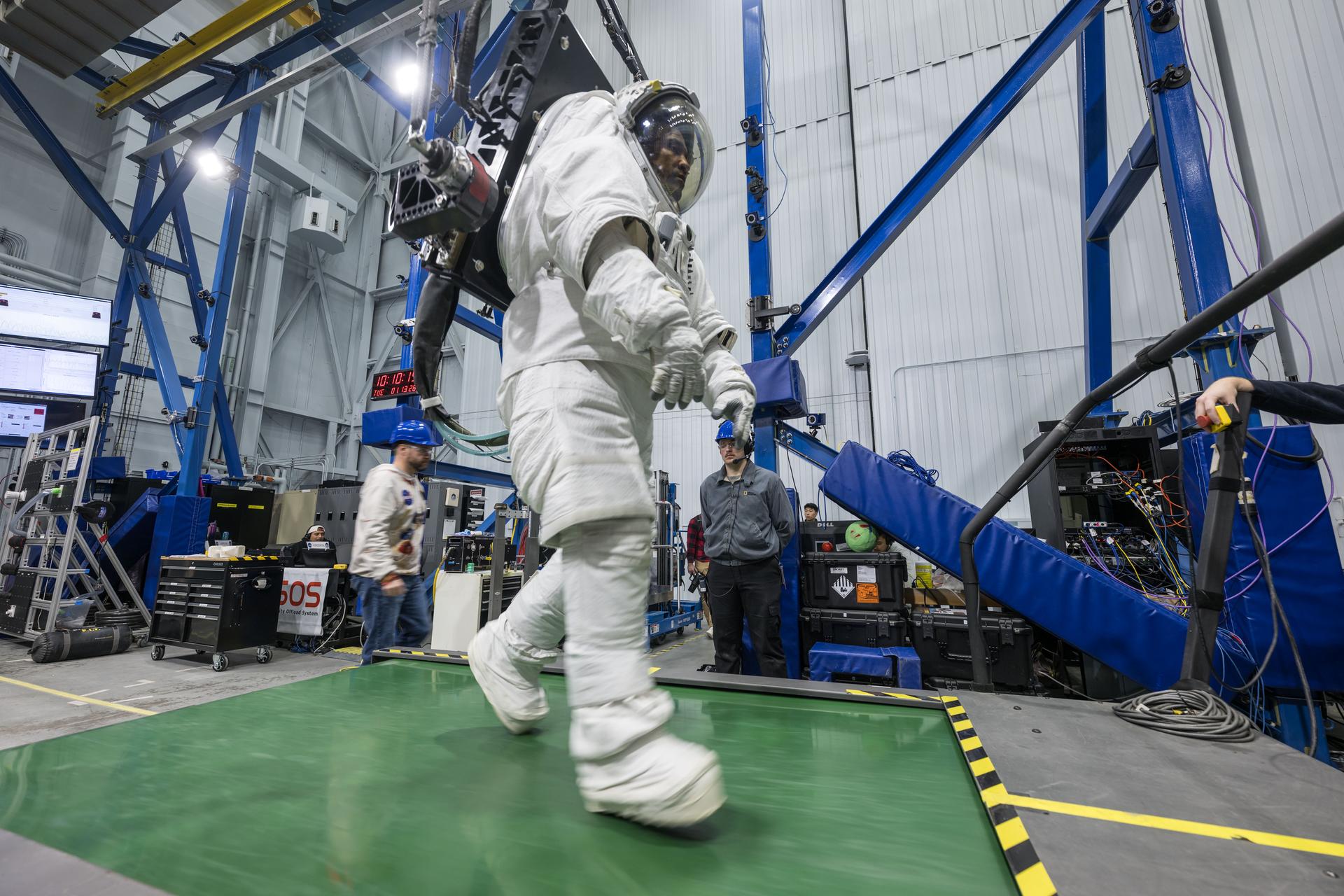
After returning to Earth, select crew members will participate in a study that documents any injuries, such as scrapes or bruises that may occur during landing. Transitioning from weightlessness to Earth’s gravity can increase the injury risk without proper safeguards. The data will help researchers improve spacecraft design to better protect crews from landing forces.
____
NASA’s Human Research Program
NASA’s Human Research Program pursues methods and technologies to support safe, productive human space travel. Through science conducted in laboratories, ground-based analogs, commercial missions, the International Space Station and Artemis missions, the program scrutinizes how spaceflight affects human bodies and behaviors. Such research drives the program’s quest to innovate ways that keep astronauts healthy and mission ready as human space exploration expands to the Moon, Mars, and beyond.