


















NASA Awards Four Early-Stage Planetary Instrument Technology Development Grants
NASA has made four new awards through the Planetary Instrument Concepts for the Advancement of Solar System Observations (PICASSO) program.
The PICASSO portfolio focuses on early-stage ideas — defined as concepts at a Technology Readiness Level (TRL) of 1 to 3 on a nine-point scale — that would support the development of instrument hardware which would enhance or enable the scientific return on future planetary missions to other worlds within our solar system.
The four projects awarded from the first round of selections for the solicitation for PICASSO24 will expand NASA’s portfolio of technology available for the development of missions exploring a wide range of environments. These technologies will help answer key questions about the origins of our solar system, the search for life, and the study of our planetary neighborhood.
Goutam Chattopadhyay/Jet Propulsion Laboratory
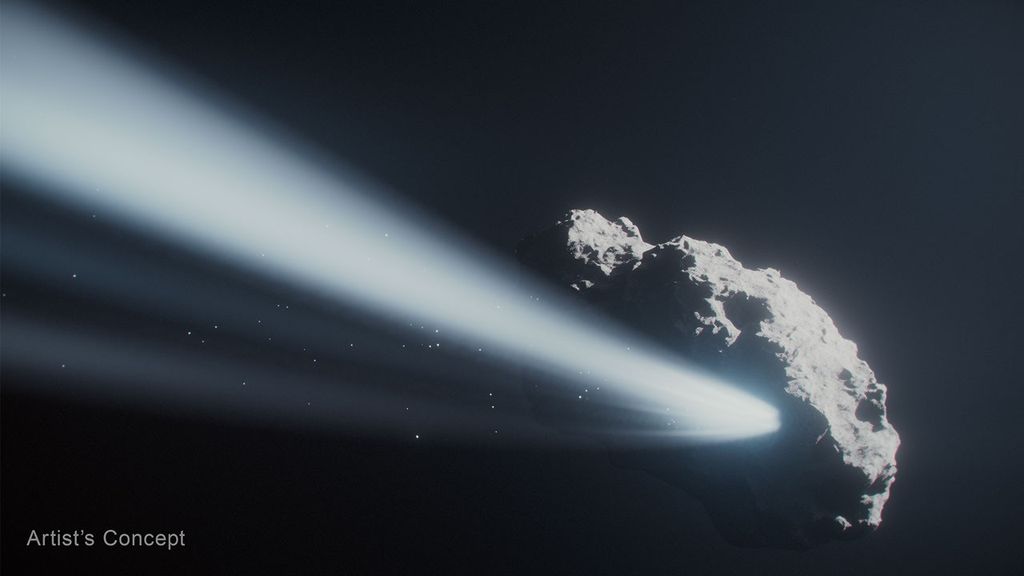
Meta-Optically Steered Antenna Instrument for Cometary Sensing
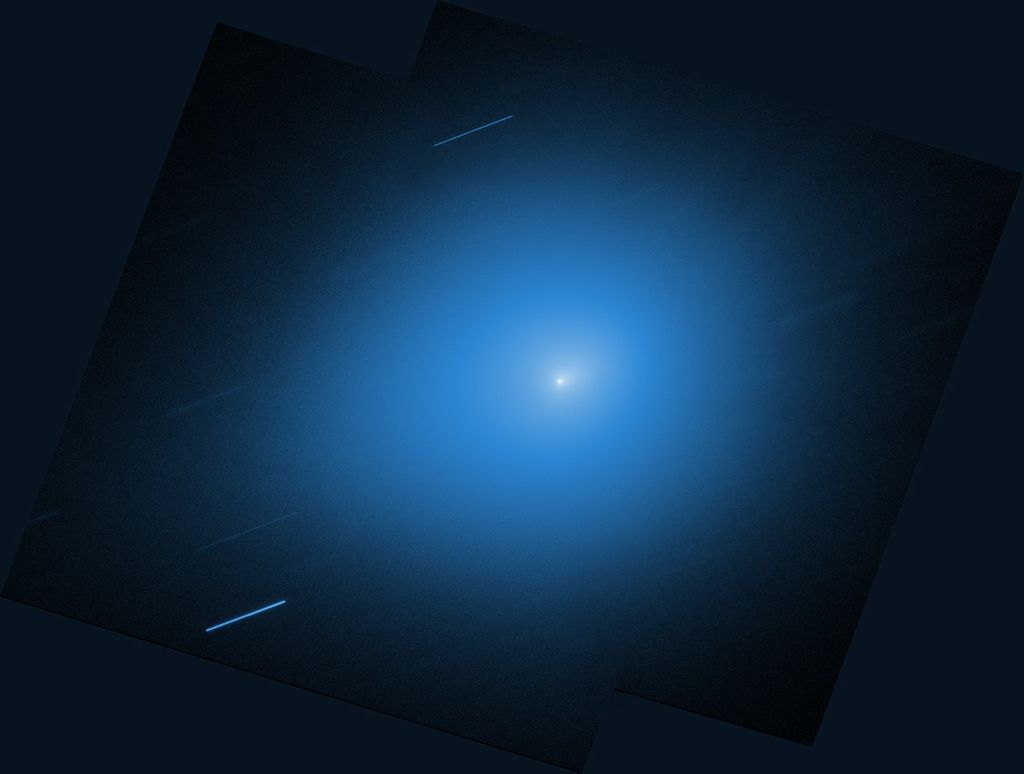
 Meta-Optically Steered Antenna Instrument for Cometary Sensing (MOSAICS) is a highly compact instrument designed to enhance our understanding of the origins of water in the Solar System. Equipped with a low-mass, low-power 500-600 GHz spectrometer and a 20-cm diameter scanning antenna, MOSAICS is capable of remotely measuring water isotopes on comets by detecting their unique rotational molecular spectra at submillimeter wavelengths.
The primary scientific goal of MOSAICS is to explore the origin of water vapor in the Solar System and on Earth by acquiring high-accuracy (~3.5%) measurements of the isotopic ratios of water (H217O/H218O) and the relative abundances of other volatiles, which will enable investigation of the processes involved in the formation of cometary water and its D/H isotopic signatures. The technology developed for MOSAICS could be applied to future submillimeter-wave radiometers/spectrometers for planetary and cometary missions, including those to Mars, Europa, Enceladus, Uranus, Venus, and Titan.
Chris Curwen/Jet Propulsion Laboratory
Cavity-enhanced laser absorption spectroscopy for high sensitivity in-situ trace gas detection
 Dr. Curwen and team will develop a novel cavity-enhanced laser absorption spectrometer (CEAS) for in situ detection of trace hydrocarbons in the Martian atmosphere. Existing instruments have detected methane but do not have the sensitivity to detect isotope ratios or higher hydrocarbons, which are needed to discern possible thermogenic or biotic origins. The proposed CEAS instrument will have increased sensitivity, will be simple and compact, and will be adaptable to a variety of targets that are of interest for planetary science.
Mool Gupta/University of Virginia
Multiwavelength Surface Enhanced Raman Spectroscopy Instrument for Planetary Materials Chemical Analysis (SERSICA)
 The NASA PICASSO project award for developing the scientific instrument SERSICA (Surface Enhanced Raman Spectroscopy Instrument for Chemical Analysis) will allow the team to enhance the detection of trace chemicals, minerals, and potential signs of life on planetary surfaces with unprecedented sensitivity. The instrument is intended for use on Mars, the Moon, and icy worlds like Enceladus and will significantly improve NASA’s ability to analyze planetary materials. Unlike conventional methods, SERSICA will leverage nanotechnology, artificial intelligence (AI), and innovative laser-based photonics techniques to reach high detection sensitivity levels. The principal investigator, Professor Mool C. Gupta, will lead the project at the University of Virginia with collaborators from NASA Goddard Center (GSFC), NASA Langley Research Center (LaRC), University of Maryland, Hampton University, and an industrial member, Laser and Plasma Technologies. The project will train future scientists and students and enhance their interest in space technology. An interdisciplinary team with expertise in optics, lasers, planetary science, photonics, NASA future science and mission requirements, and technology development will work together to develop the SERSICA instrument, which will revolutionize how we study planetary surfaces and search for evidence of the presence of life.
Tamer Refaat/NASA Langley Research Center
 Hyperspectral Planetary Imaging Explorer (HyperPIX): A Diffractive Multi-Object Imaging Spectrograph for Planetary Observations in Visible and IR Wavelengths
The Hyperspectral Planetary Imaging Explorer (HyperPIX) instrument will capture a hyperspectral snapshot image covering a broad spectral range from an investigation scene offering high spectral and spatial resolutions. HyperPIX will combine the functions of a mapping spectrometer to an imaging instrument without increasing the design complexity of the imaging instrument. This work targets the notional instrument requirements for an orbiting planetary science platform, but the technique can be adapted to surface measurements.