















Water flowing out. Data flowing in.
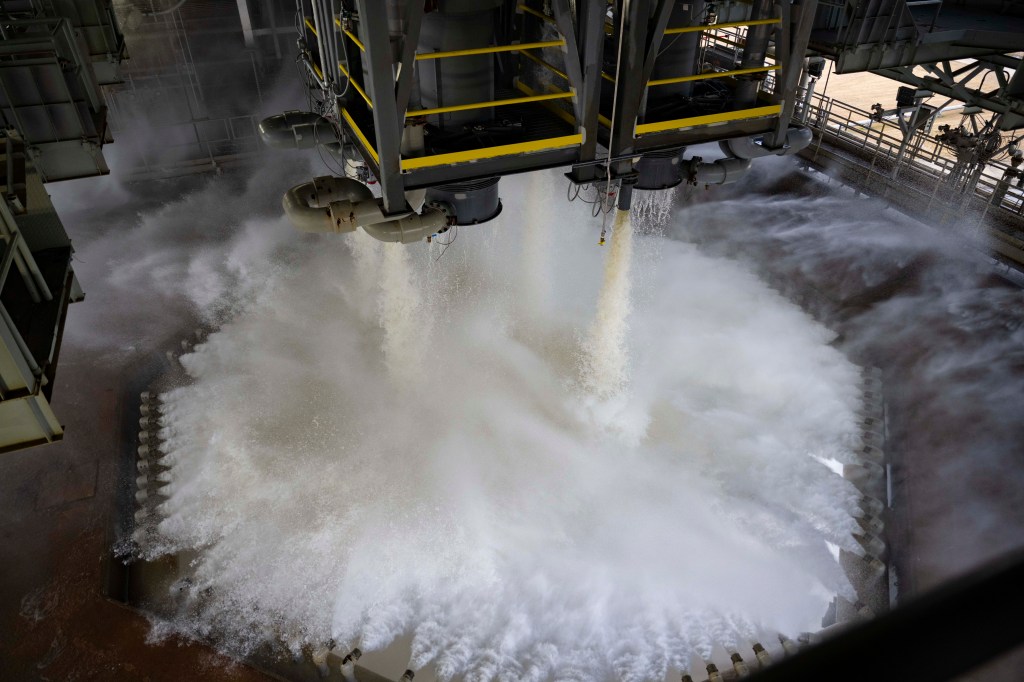
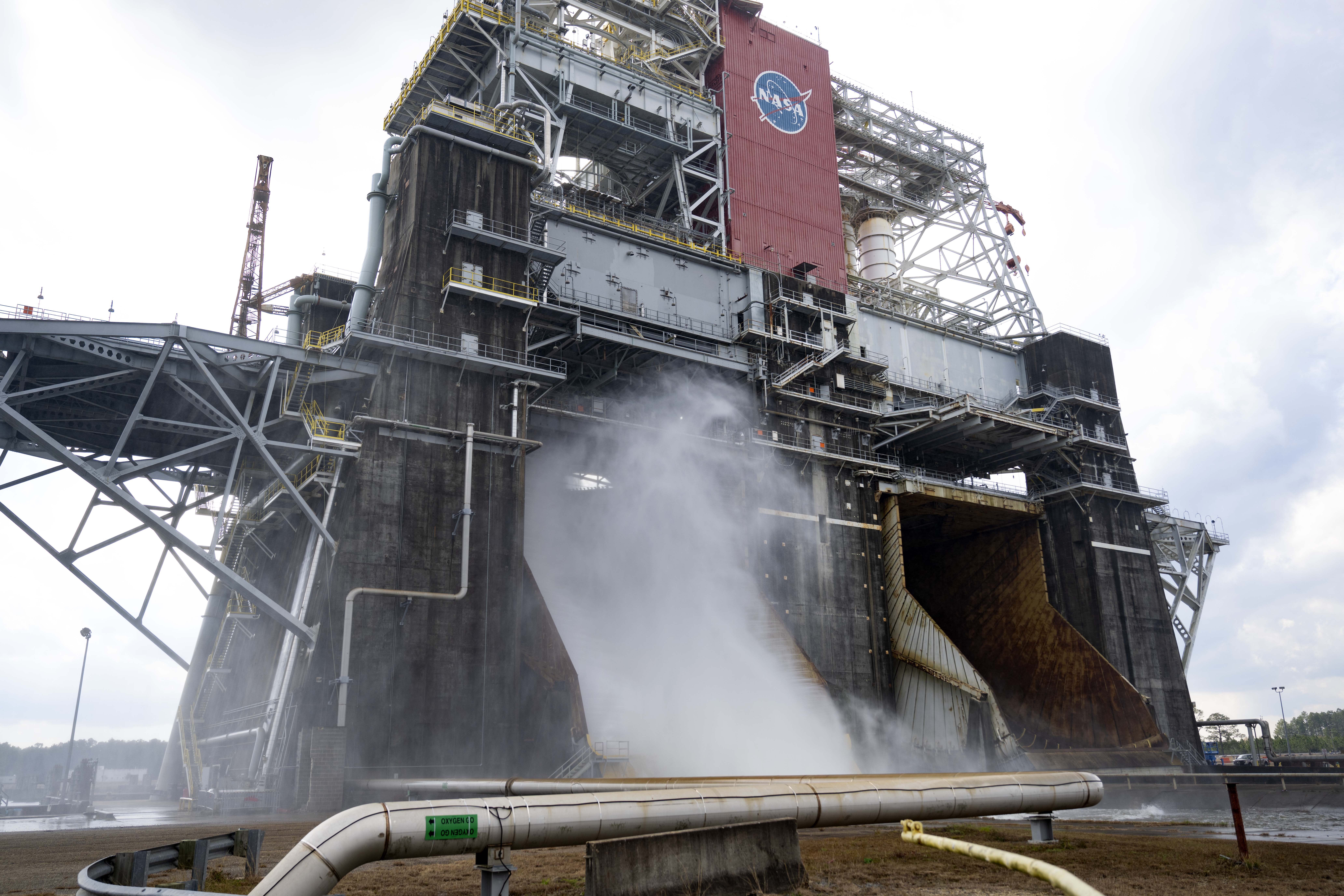
A water system activation at the Thad Cochran Test Stand (B-2) on Jan. 30 at NASA’s Stennis Space Center near Bay St. Louis, Mississippi, helped capture critical data to support testing a new SLS (Space Launch System) stage expected to fly on the Artemis IV mission.
The activation milestone tested new cooling systems that were added for the future Green Run test series of NASA’s exploration upper stage (EUS). The more powerful upper stage is a four-engine liquid hydrogen/liquid oxygen in-space stage for the evolved Block 1B version of SLS.
For Green Run, teams at NASA Stennis will activate and test all systems to ensure the stage is ready to fly. It will culminate with a hot fire of the stage’s four RL10 engines, just as during an actual mission.
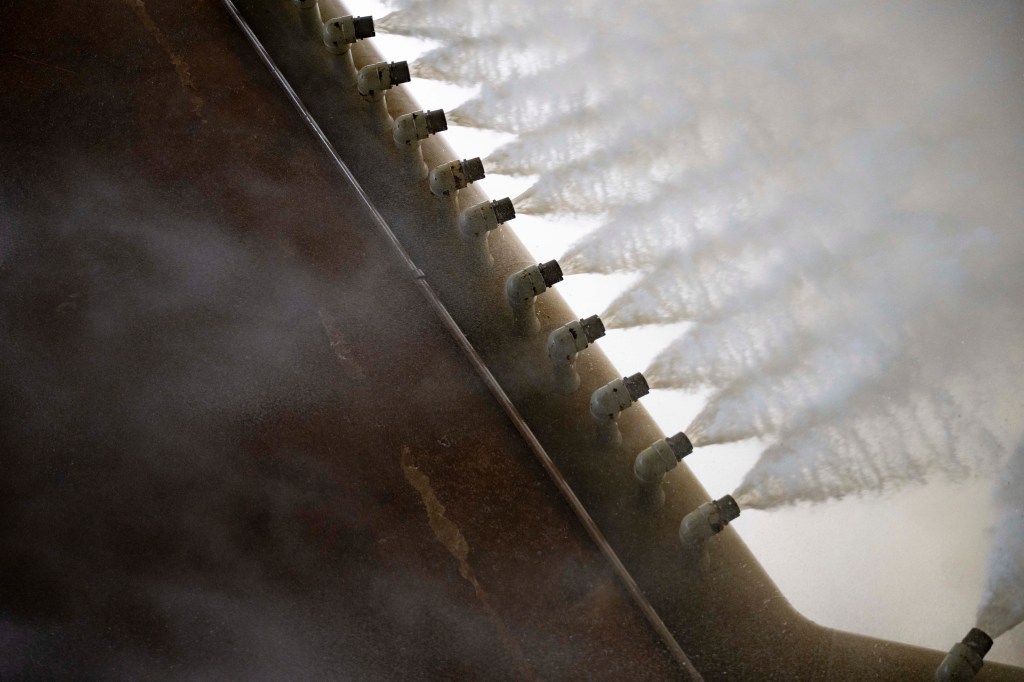
As part of the test stand modification, crews have added water-cooled diffusers to act as a heat shield to manage the super-hot exhaust from all four RL10 engines; water-cooled fairings to direct engine exhaust to align with the diffuser walls; and a purge ring that supplies cooling water and gaseous nitrogen to protect a flexible seal that allows the engines to move, or gimbal, during testing.
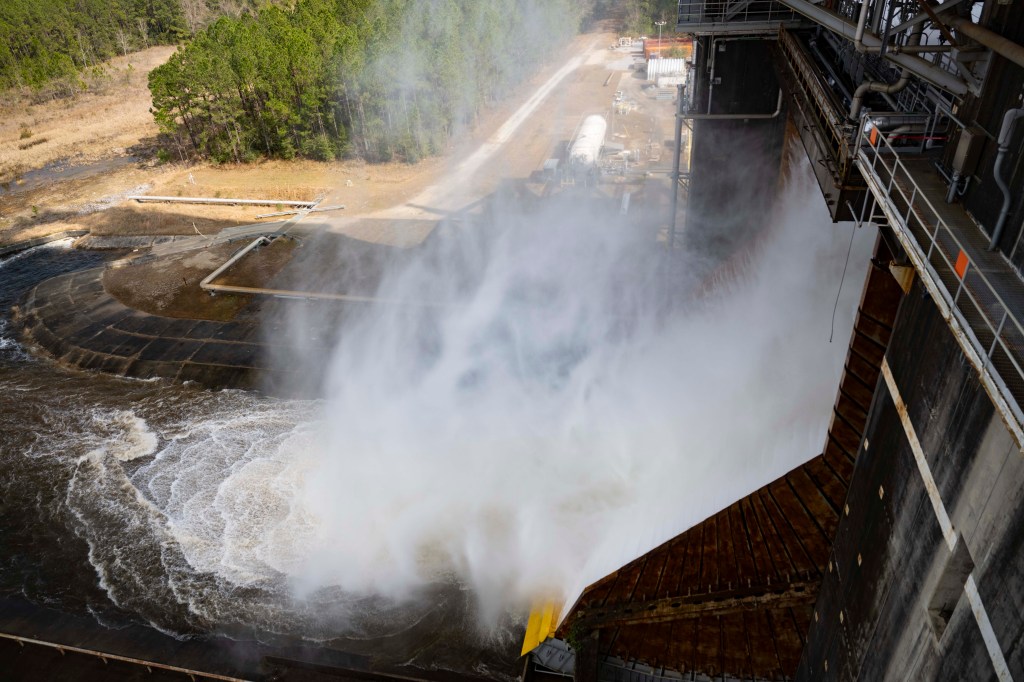
These three systems all were integrated by the NASA Stennis team with the existing flame deflector and acoustic suppression equipment used during previous core stage testing for NASA’s SLS rocket ahead of the successful Artemis I launch.
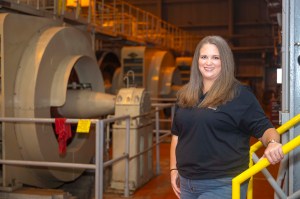
The exercise also pushed the high pressure industrial water system to maximum capacity. While a typical RS-25 engine test at NASA Stennis runs a subset of the 10 diesel pumps and one electric pump, testing the exploration upper stage will require all eleven pumps running simultaneously.
The 14-million gallons of water used during the exercise on Jan. 30 was recycled throughout the test complex. A 66-million-gallon reservoir feeds water to the test stand through an underground 96-inch diameter pipe, with water distributed to various cooling components. The water ultimately flows into the flame deflector, then through a concrete flume to the stand’s catch pond. When the catch pond fills up, the excess water drains back to the canal through a drainage ditch, ready to be recycled for future use.
“We will use the data gathered to set the final timing of when valves are cycled, determine our redline pressures, and select the operating pressure,” said Nick Nugent, NASA Stennis project engineer. “This exercise also put the water system under a full load prior to the final stress test. It is always good to give the system a good shake down run prior.”
The exploration upper stage is being built by Boeing at NASA’s Michoud Assembly Facility in New Orleans. The four RL10 engines for the upper stage are manufactured by L3Harris Technologies. Before it all arrives at NASA Stennis, crews will perform a final 24-hour check, or stress test, across all test complex facilities to demonstrate readiness for the test series.