



Suggested Searches

Blogs

    Webb’s Second Mid-Course Correction Burn

    At 7:20 pm EST – 60 hours after liftoff — Webb’s second mid-course correction burn began. It lasted 9 minutes and 27 seconds and is now complete. This burn is one of three planned course corrections to put the telescope precisely in orbit around the second Lagrange point, commonly known as L2.

    Read Full Post

    More Details on Webb’s Launch

    While the team continues to work on unfolding Webb, we take a moment to learn more about the launch from two European Space Agency (ESA) representatives, Daniel de Chambure, Acting Head Ariane 5 Adaptation & Future Missions for ESA and Maurice Te Plate, JWST NIRSpec Systems and AIV Engineer for ESA. They provide details about …

    Read Full Post

    ISS Daily Summary Report – 12/27/2021

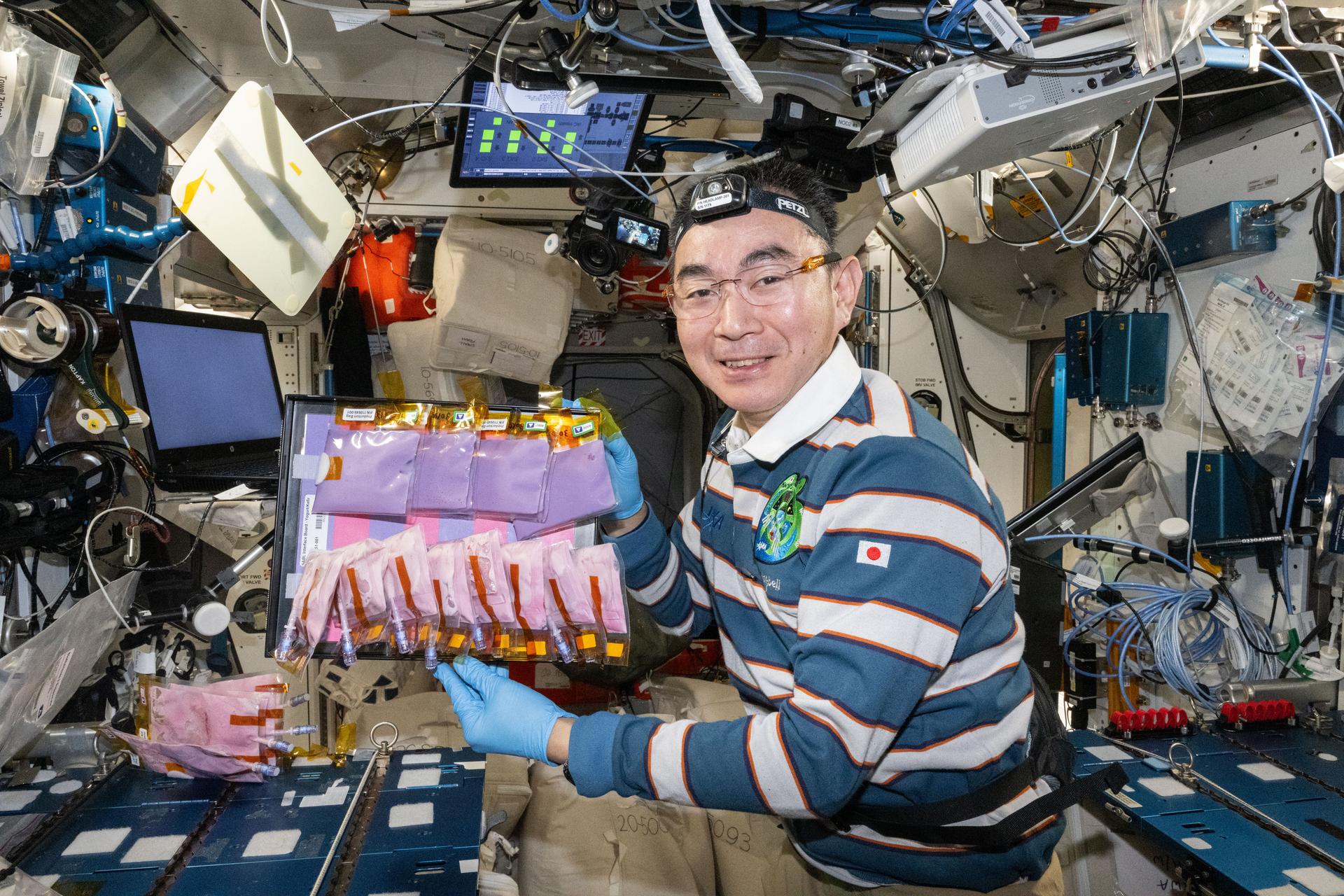
    Payloads: Advanced Plant EXperiment-07 (APEX-07): Procedures for the APEX-07 Petri Plate insertions was reviewed.  APEX-07 examines how changes in gravity and other environmental factors associated with spaceflight affect plants at the level of gene expression.  Previous research shows that microgravity conditions during spaceflight affects which genes turn on or off, which proteins are present and …

    Read Full Post

    Last Week of 2021 Sees New Space Research Kick Off

    The Soyuz MS-19 crew ship is pictured docked to the Rassvet module as the International Space Station orbited 260 miles above southeast Asia.

    The seven-member Expedition 66 crew is going into the final week of 2021 with a host of science experiments exploring numerous space phenomena benefitting astronauts in space and humans on Earth. NASA Flight Engineers Mark Vande Hei and Kayla Barron worked on a pair of space farming studies during Monday afternoon exploring a variety of …

    Read Full Post

    More Than You Wanted to Know About Webb’s Mid-Course Corrections!

    On Dec. 25, the Webb team successfully executed the first of three planned orbit corrections to get Webb into its halo orbit around the second Lagrange point, L2. To hear more about these important maneuvers, here is Randy Kimble, the Webb Integration, Test, and Commissioning Project Scientist, at NASA Goddard: In sending the Webb Observatory …

    Read Full Post

    Webb Antenna Released and Tested

    Shortly after 10 am EST on Dec. 26, the Webb team began the process of releasing the gimbaled antenna assembly, or GAA, which includes Webb’s high-data-rate dish antenna. This antenna will be used to send at least 28.6 Gbytes of science data down from the observatory, twice a day. The team has now released and …

    Read Full Post

    The First Mid-Course Correction Burn 

    At 7:50 pm EST, Webb’s first mid-course correction burn began. It lasted 65 minutes and is now complete. This burn is one of two milestones that are time critical — the first was the solar array deployment, which happened shortly after launch. This burn adjusts Webb’s trajectory toward the second Lagrange point, commonly known as L2. After launch, Webb needs to make its own mid-course thrust correction maneuvers to get to its orbit. …

    Read Full Post

    What it felt like at Mission Ops Control when we launched JWST

    The James Webb Space Telescope is on its way! The mission launched on an Ariane 5 rocket at 7:20 a.m. EST on Saturday, Dec. 25. Jane Rigby, the operations project scientist for Webb at NASA’s Goddard Space Flight Center in Greenbelt, Maryland, told us what it was like to be supporting the launch from the …

    Read Full Post

    Webb Is On Its Way!

    The James Webb Space Telescope is safely in space, powered on and communicating with ground controllers. Webb continues in coast phase, and is now oriented correctly with respect to the Sun. The six reaction wheels of the spacecraft’s attitude control system have been powered on, and they are now responsible for keeping the spacecraft pointing …

    Read Full Post

    Solar Array Deployed

    At approximately 30 minutes after launch, Webb’s solar array began to open up. It is now fully deployed and we have confirmed that the spacecraft is power positive.

    Read Full Post