
















Suggested Searches

1 min read

Shimmering Light in Egg Nebula

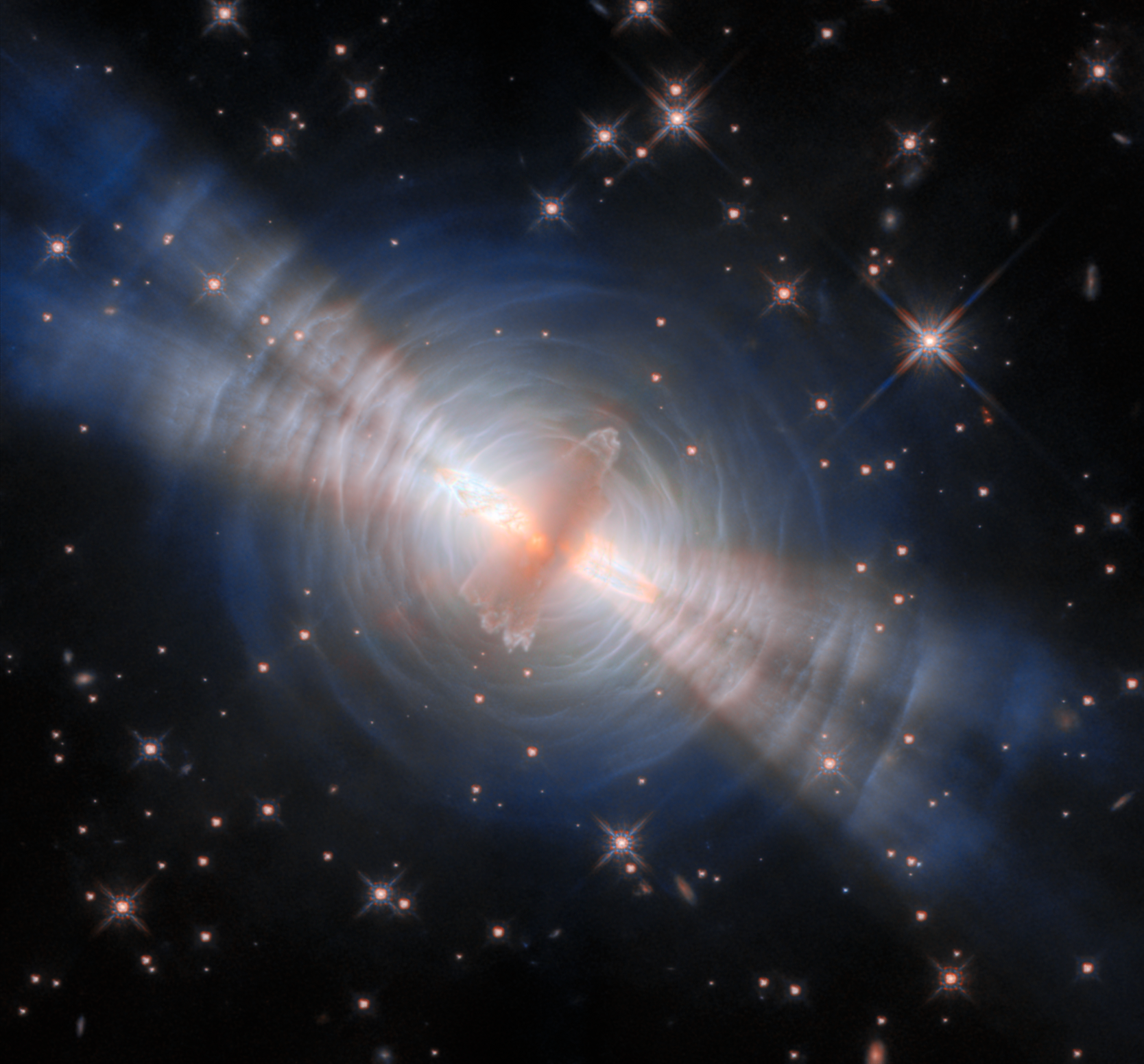
In the image center, an opaque oval cloud of gray gas aligned from 1 o’clock to 7 o’clock hides a star. Two strong beams of light from the star emerge from large holes in both sides of the cloud, forming narrow cones extending toward 10 o’clock and 4 o’clock. The central cloud is surrounded by concentric, wispy shells of gas illuminated by the star’s light. The shells reflect extra light where they’re hit by the twin beams. A crowd of smaller stars with cross-shaped spikes over them surrounds the nebula on a black background.
NASA’s Hubble Space Telescope reveals the clearest view yet of the Egg Nebula. This structure of gas and dust was created by a dying, Sun-like star. These newest observations were taken with Hubble’s Wide Field Camera 3.
NASA, ESA, Bruce Balick (UWashington)

This image from NASA’s Hubble Space Telescope released on Feb. 10, 2026, reveals a dramatic interplay of light and shadow in the Egg Nebula, sculpted by freshly ejected stardust. Located approximately 1,000 light-years away in the constellation Cygnus, the Egg Nebula features a central star obscured by a dense cloud of dust — like a “yolk” nestled within a dark, opaque “egg white.”

It is the first, youngest, and closest pre-planetary nebula ever discovered. (A pre-planetary nebula is a precursor stage of a planetary nebula, which is a structure of gas and dust formed from the ejected layers of a dying, Sun-like star. The term is a misnomer, as planetary nebulae are not related to planets.) 

Read more about the Egg Nebula.

Image credit: NASA, ESA, Bruce Balick (UWashington)