






Edison Demonstration of Smallsat Networks (EDSN)
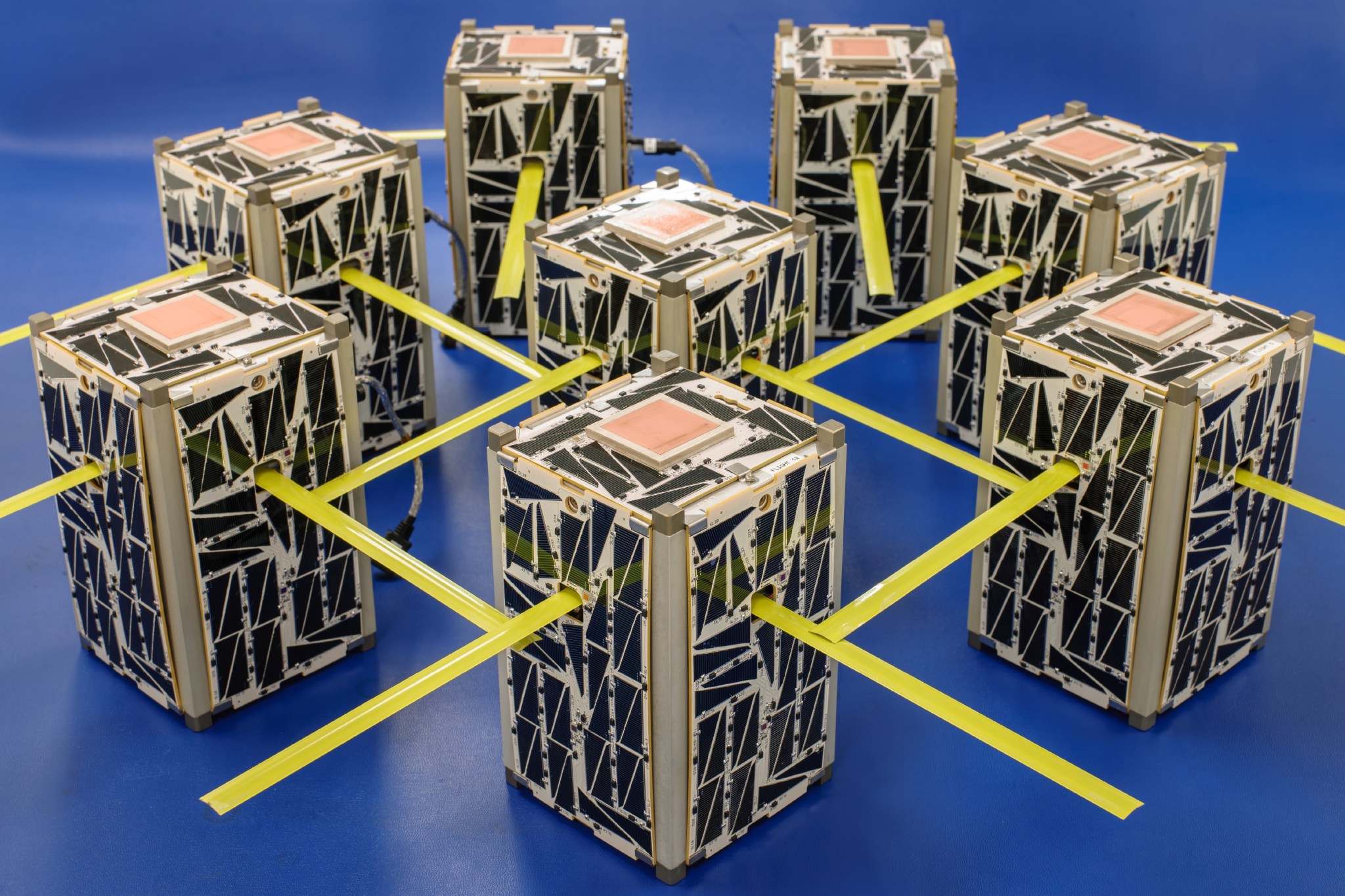
*** UPDATE: On November 3, 2015, the eight small satellites of the Edison Demonstration of Smallsat Networks (EDSN) mission were lost in the failure of the launch vehicle during the U.S. Air Force-led Operationally Responsive Space (ORS) Office’s ORS-4 mission that was carrying them to orbit as secondary payloads.
The launch provider issued the following statement yesterday: “The ORS-4 mission on an experimental Super Strypi launch vehicle failed in mid-flight shortly after liftoff at 5:45 p.m. Hawaii Standard Time (7:45 p.m. PST; 10:45 p.m. EST) today from the Pacific Missile Range Facility off Barking Sands, Kauai, Hawaii. Additional information will be released as it becomes available.”
The EDSN spacecraft were developed by an engineering team at the NASA Ames Research Center, and the project was sponsored by NASA’s Small Spacecraft Technology Program in the Space Technology Mission Directorate. The loss of these satellites is unfortunate, but the knowledge and experience gained by the project team in designing, building and testing the innovative EDSN satellites will not be lost and will benefit future spacecraft projects for years to come.
There will be an opportunity to complete some of the objectives of the EDSN mission in a follow-on mission called Nodes. The Nodes satellites were developed by the EDSN project team and have a similar design. Two Nodes satellites are scheduled for launch to the International Space Station in December for later deployment into orbit. The Nodes mission is intended to demonstrate some of the same capabilities as EDSN while incorporating some software enhancements for additional capability.
Swarming Space for Science
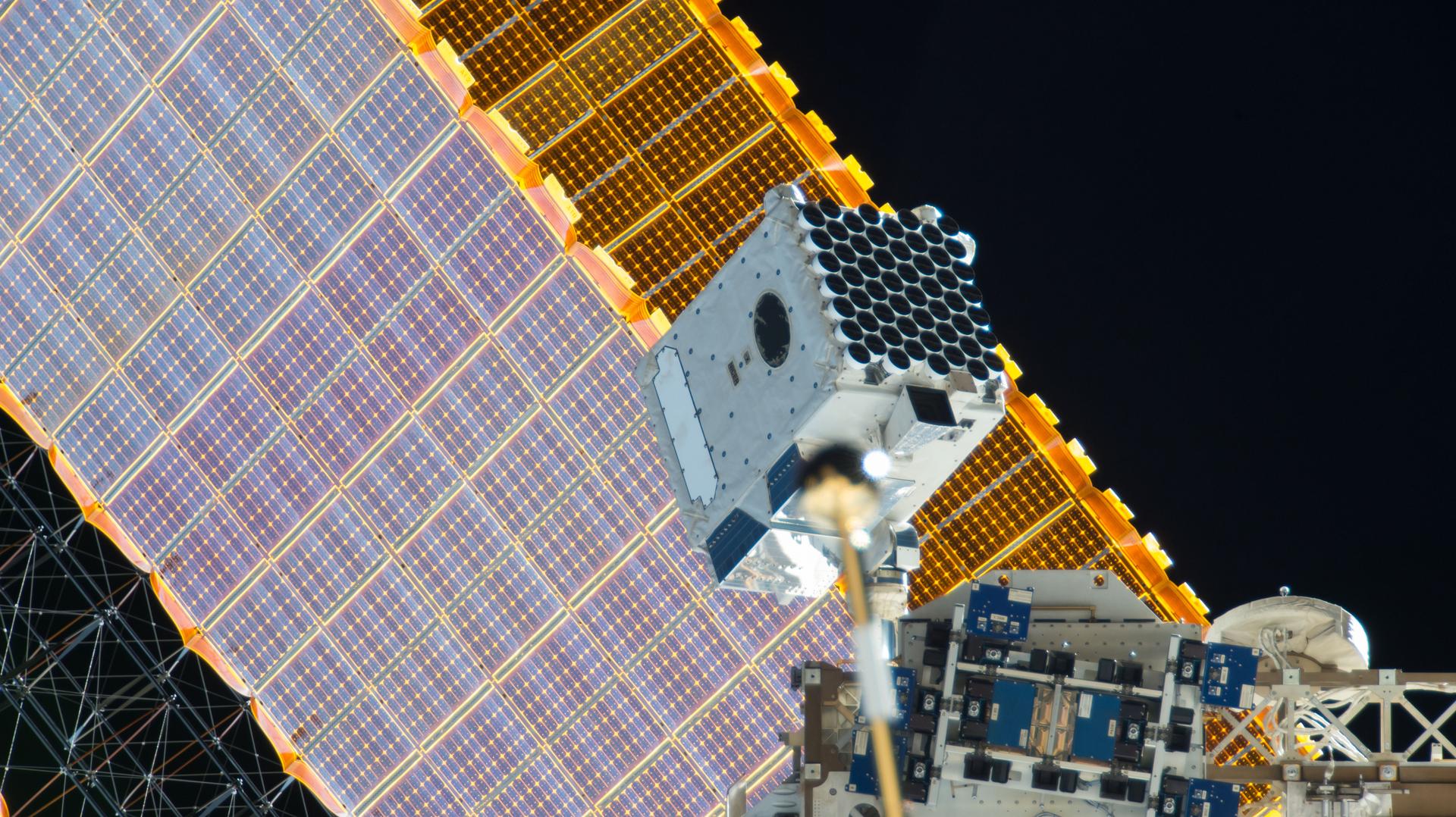
A cluster of small and low-cost satellites is ready for liftoff from Hawaii – an inventive effort called the Edison Demonstration of Smallsat Networks (EDSN) mission.
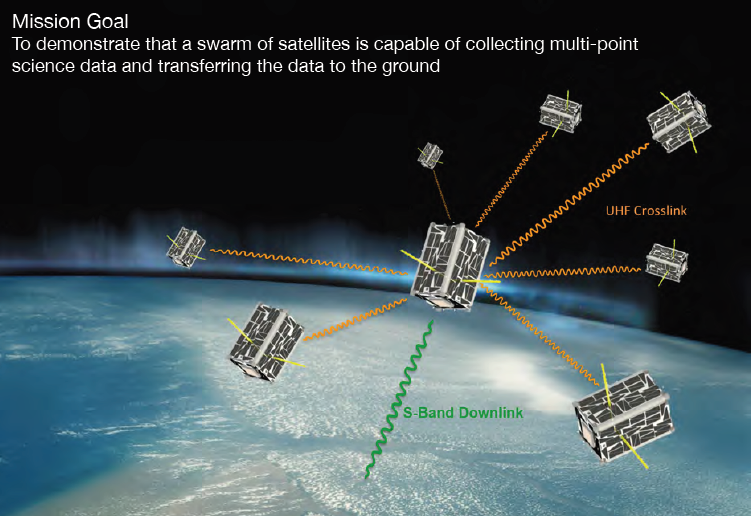
EDSN will showcase the ability to use multiple, advanced, yet affordable nanosatellites to perform a host of scientific, commercial, and academic research tasks in space.
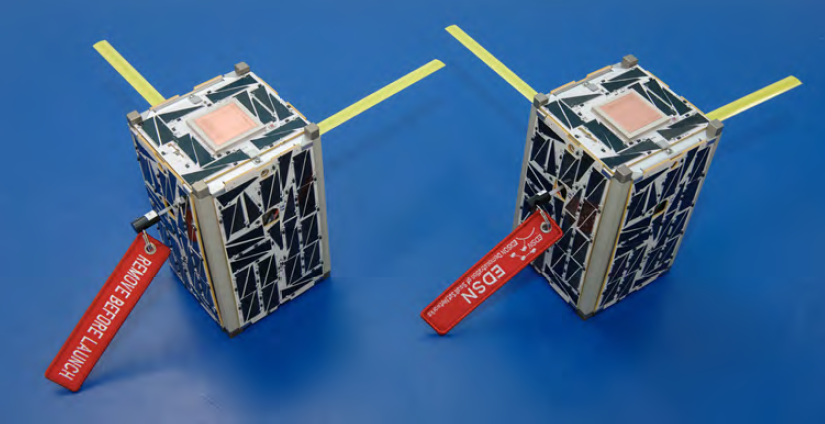
The flock of eight tissue box-sized satellites is set to ride into Earth orbit as secondary payloads on the U.S. Department of Defense Operationally Responsive Space-4 mission.
A Super Strypi launch vehicle will loft the EDSN mission and other payloads from the U.S. Navy’s Pacific Missile Range Facility on the Hawaiian island of Kauai.
Commercial, off-the-shelf technology
Each of the EDSN satellites carries a science payload: an Energetic Particle Integrating Space Environment Monitor (EPISEM) that counts charged particle events in low-Earth orbit. The EPISEM instrument was developed at Montana State University and provided under contract to NASA.
“The idea behind EDSN is to demonstrate the capability of using a swarm of low-cost satellites to do a science mission,” explains Andrew Petro, program executive for NASA’s Small Spacecraft Technology Program (SSTP) in the Space Technology Mission Directorate (STMD) at NASA Headquarters in Washington.
Akin to the NASA PhoneSat spacecraft that were orbited last year, Petro added: “We are once again using commercial, off-the-shelf electronics as the core of a satellite that has the ability to do a science mission.”
Get my drift?
Each satellite is a diminutive lightweight – just about 4 pounds (2 kilograms). Carrying no onboard propulsion, once in orbit they will drift apart naturally.
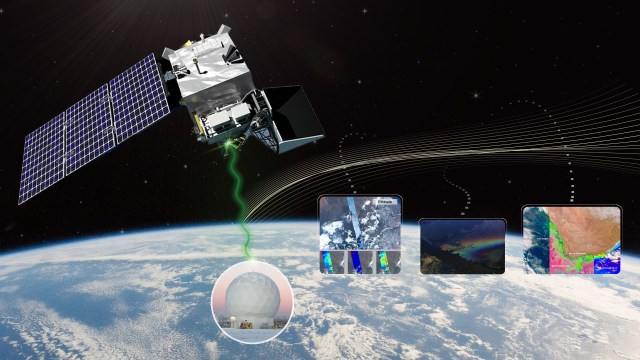
Petro points out that the satellites can talk to each other, share data between them and take turns in relaying science data to the ground. Only one satellite needs to contact the ground on each pass in order to transmit the data from all eight.
“We are using one tracking station to collect data from these eight satellites over their short-duration lifetime of a few months,” Petro notes, with the EDSN mission control center located in the School of Engineering at Santa Clara University in California.
In addition to enhancing small spacecraft technology, efforts such as EDSN will help strengthen our nation’s high-tech workforce.
Checkmark goal
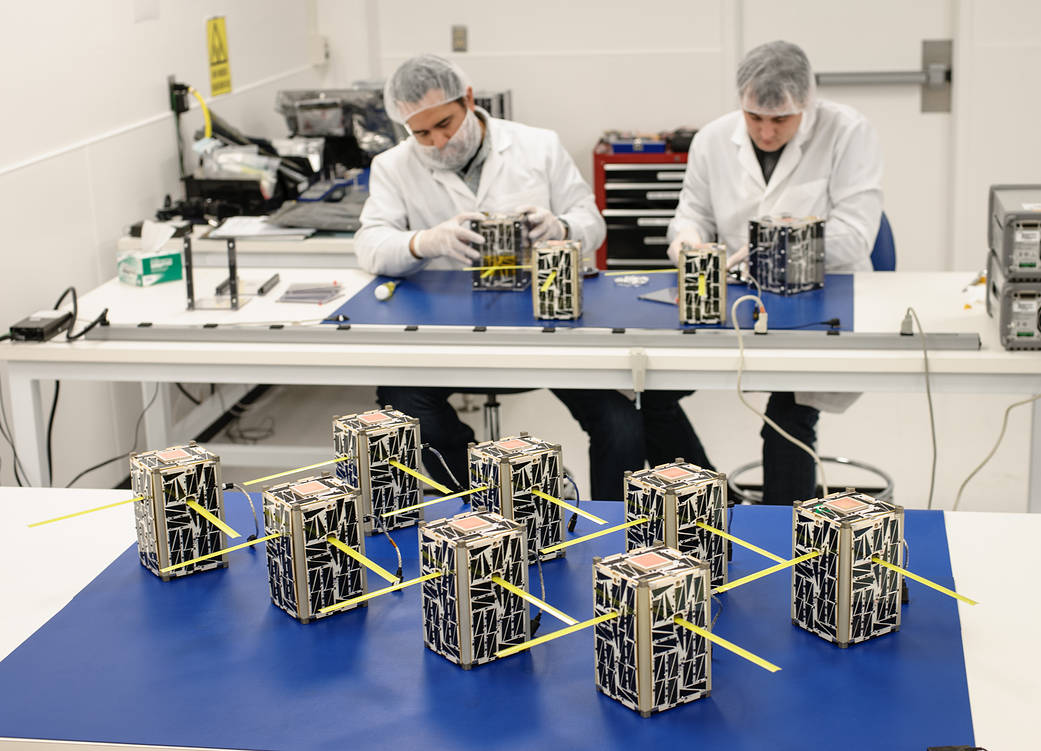
The EDSN project is based at NASA’s Ames Research Center, Moffett Field, California. Ames satellite specialists not only built the eight small EDSN spacecraft, but also two spares and four engineering units.
While the first few took longer to build, Petro says the Ames team was putting them together in short order by the end of production.
Doing so was another checkmark goal of the EDSN mission: lowering the cost and shortening the assembly time for future small spacecraft.
Explains Roger Hunter, the SSTP manager at Ames: “What we learn from EDSN will enable future NASA missions. This will be the first demonstration of a ‘swarm’ of networked nanosatellites.”
“We can easily envision constellations of nanosatellites in the future focused on various scientific missions in earth sciences, heliophysics, planetary sciences, and astrophysics,” Hunter advises.
Infusion
Indeed, a major thrust of NASA’s STMD is “infusion” – how best to use a new technology to help enable a future space agency project?
In the case of EDSN, there are a number of prospects.
For one, there is interest in the outcome of EDSN for use in NASA’s science objectives, Petro says, such as in heliophysics where there is a need to measure energetic fields of particles, taking simultaneous measurements from different points in space, he suggests.
“But what we learn on EDSN could be applied to Earth science missions too,” Petro adds, underscoring the possibility of simultaneously observing the Earth from multiple points above our planet, then correlating the data.
“You can imagine having an informal network of receivers collecting this information and then just sending packets of data to a common place. The Internet is perfect for that,” Petro observes. “Whatever the satellites collect, they share…so somebody can put the whole picture together.”
Similarly, the upcoming EDSN demonstration is expected to trial-run ways to perform astrophysics duties or for performing planetary science investigations, such as placing a network of satellites around an asteroid, Earth’s moon, or another planet.
According to Petro, the EDSN mission, with its freely drifting swarm, is just the beginning. “The next step is to add propulsion so that groups of small satellites can fly in controlled formations.”

For more information on the Small Spacecraft Technology Program:
https://www.nasa.gov/smallspacecraft
To view the EDSN Mission Dashboard, visit:
For more information about EDSN, please contact:
Deborah Westley
EDSN Project Manager
NASA Ames Research Center
Deborah.M.Westley@nasa.gov
Roger C. Hunter
Small Spacecraft Technology Program Manager
Space Technology Mission Directorate
NASA Ames Research Center
Roger.C.Hunter@nasa.gov
Andrew Petro
Small Spacecraft Technology Program Executive
Space Technology Mission Directorate
NASA Headquarters
Andrew.J.Petro@nasa.gov