









NASA NEURAL NETWORK PROJECT PASSES MILESTONE
September 2, 2003
Release: 03-49
NASA researchers have completed a milestone series of evaluation flights for a revolutionary flight control system that could enable future aircraft suffering major system failures or combat damage to be flown to a safe, controlled landing.
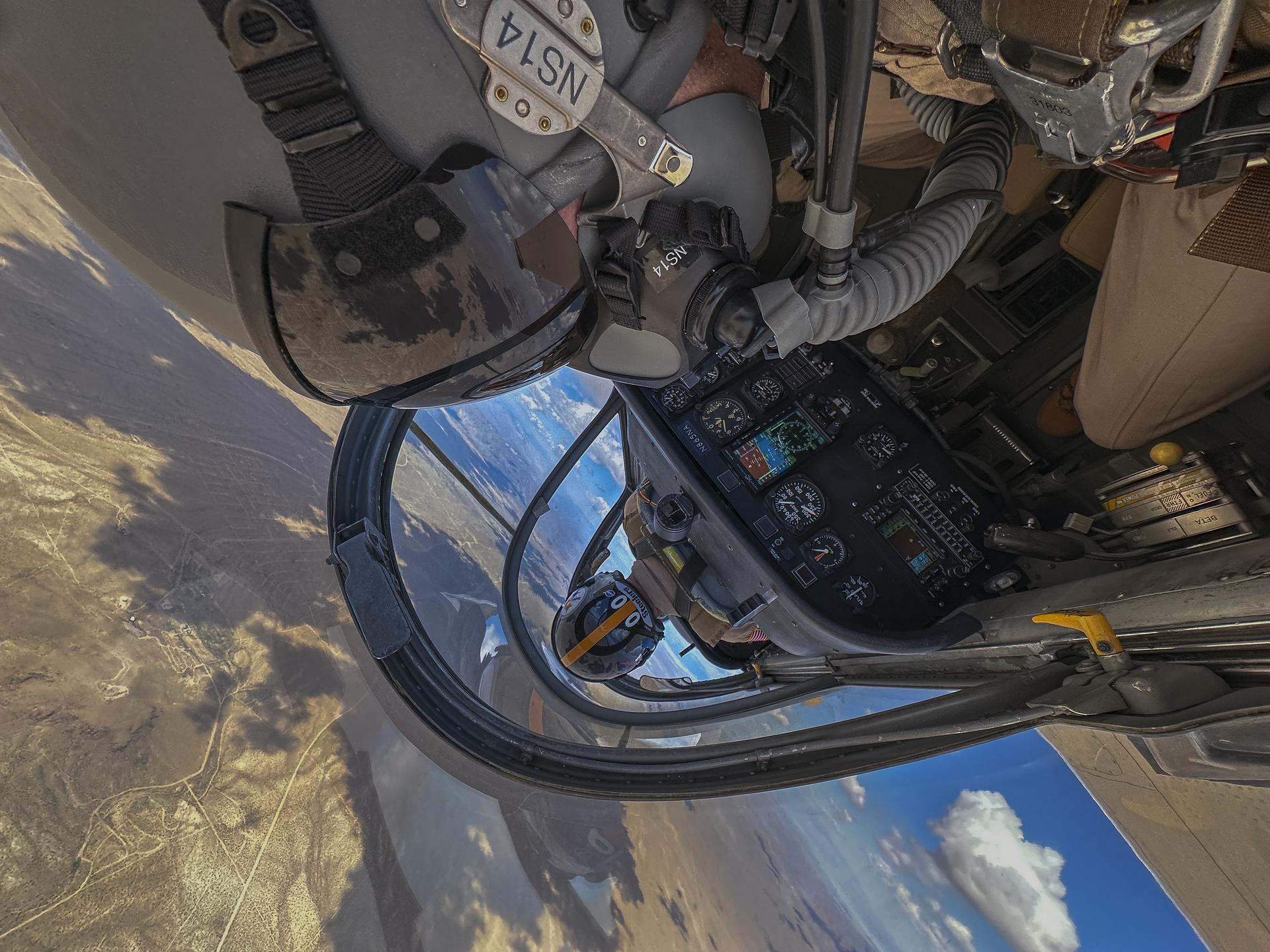
The Intelligent Flight Control System (IFCS) research, aboard a highly-modified NASA F-15B aircraft, focuses on development of “self-learning” neural network software for aircraft flight control computers. In its final form, the software would compare data from how the aircraft and its systems are operating with a database of how it would normally operate, and automatically adjust the flight controls to compensate for any damaged or inoperative control surfaces or systems.
The work was accomplished by a team of researchers at NASA Dryden Flight Research Center, Edwards, Calif., Ames Research Center, Moffett Field, Calif., NASA’s Langley Research Center, Hampton, Va., Boeing Phantom Works, St. Louis, Mo., and the Institute for Scientific Research (ISR) in Fairmont, W. Va.
The IFCS project team successfully met research objectives by evaluating in flight a passive online Parameter Identification (PID) algorithm, or software code, and an online learning Dynamic Cell Structure (DCS) neural network algorithm.
This is a significant step for real time PID and neural net technology, and serves as a significant proof of technology for the project’s direct adaptive (Generation I) flight control concept.
“This work marks a significant step toward learning, thinking, aircraft that will be safer, more autonomous, and more reliable than ever before,” says John Carter, Dryden’s IFCS project manager.
The team assessed the ability of the PID and DCS algorithms to efficiently identify aircraft stability and control characteristics, and map and retain this information as a function of flight condition.
The PID algorithm is an online function that determines the actual stability and control characteristics of the aircraft as it flies. When results from the PID algorithm differ from what is called the pre-trained neural network (PTNN), an update to the system is required.
The DCS provides the online learning of the system. It tracks the differences between the PTNN and PID and provides an organized map of updates to the stability and control derivatives of the aircraft.
The DCS software was developed by NASA Ames for Generation I application. The PID software was developed by ISR in conjunction with NASA Langley.
Included among important features of the DCS are the facts that it has long-term memory, critical for IFCS use, and the network has the ability to be enlarged by the addition of nodes.
IFCS software evaluations performed by the F-15B aircraft included handling qualities maneuvers, envelope boundary maneuvers, control surface excitations for real-time PID to include pitch, roll, and yaw doublets, and neural network performance.
-nasa-
Note to Editors: High resolution photos of the F-15B IFCS aircraft are available on-line at: /centers/dfrc/Gallery/Photo/F-15B_837/index.html
For more information, call Gray Creech at (661) 276-2662