


RELEASE: 03-01
NASA BEGINS NEW YEAR WITH INTERNATIONAL ARCTIC OZONE STUDY
NASA researchers, and more than 350 scientists from the United States, the European Union, Canada, Iceland, Japan, Norway, Poland, Russia and Switzerland, are working together this winter to measure ozone and other atmospheric gases. The scientists will use aircraft, large and small balloons, ground-based instruments and satellites. The study begins Jan. 8 and concludes in late March 2003.
This second SAGE III Ozone Loss and Validation Experiment (SOLVE II) campaign will be conducted in close collaboration with the European Commission. It is sponsored by the VINTERSOL (Validation of International Satellites and Study of Ozone Loss) campaign. (SAGE III stands for the third Stratospheric Aerosol and Gas Experiment.) SOLVE takes place in Kiruna, Sweden, the site of the first winter SOLVE 1 international effort in 1999 – 2000.
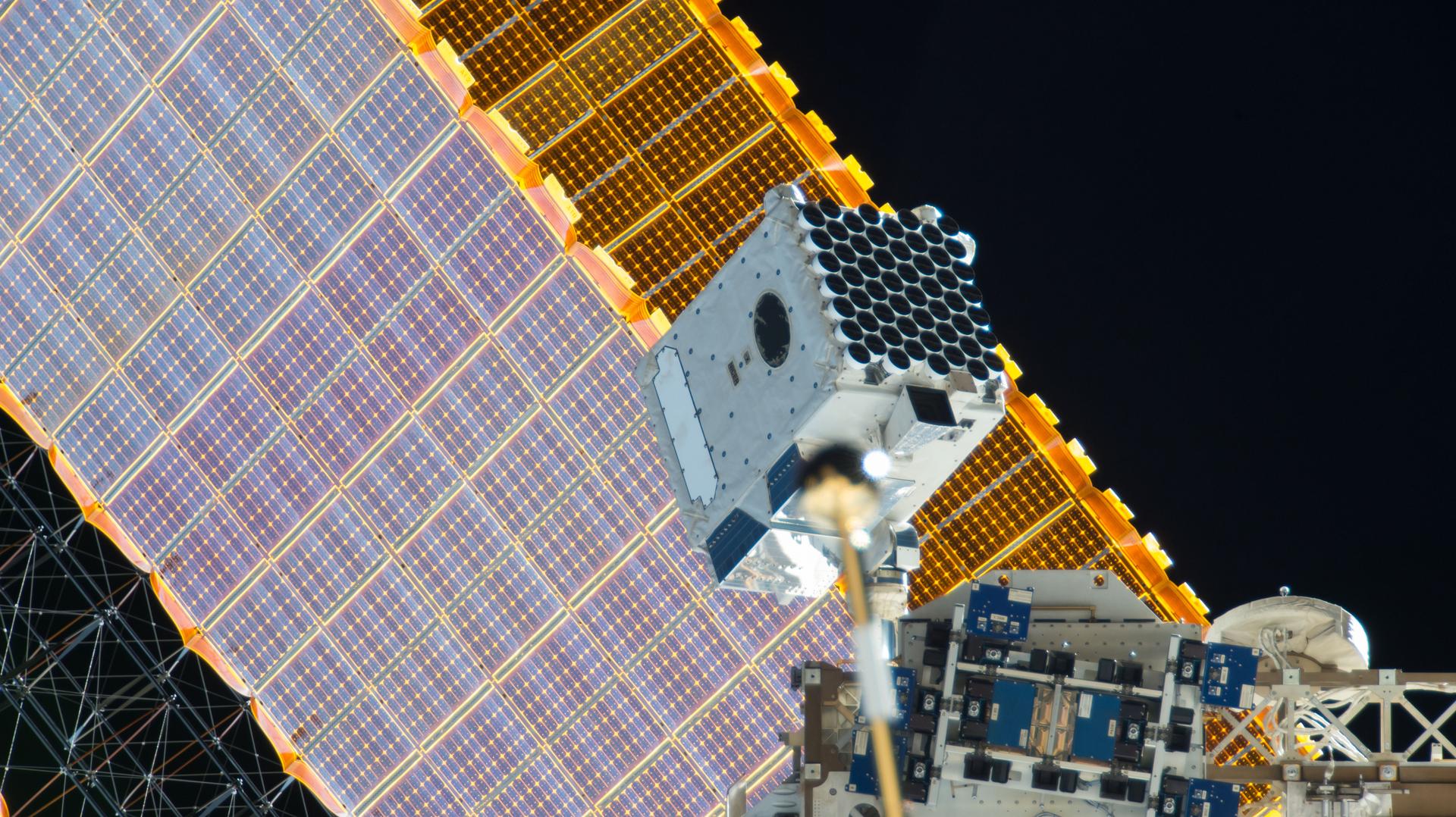
NASA’s SAGE III satellite instrument is being used to assess ozone loss in the higher latitudes. SAGE III was launched onboard a Russian Meteor-3M spacecraft on Dec. 10, 2001. The validation of the SAGE III observations is a principal goal of SOLVE II. SOLVE II is sponsored by NASA’s Earth Science Enterprise.
“The primary goals of the joint SOLVE II-VINTERSOL campaign are to further understanding of ozone loss processes in the Arctic, and provide coincident observations between the airborne and SAGE III measurements. This comparison will enable the satellite scientists to critically and quantitatively assess the in-space performance of their instruments to measure profiles of ozone, aerosols, and water vapor over the Earth,” said Michael Kurylo, SOLVE II co- Program Scientist at NASA Headquarters, Washington.
Ozone studies are important, because the ozone layer prevents the sun’s harmful ultraviolet radiation from reaching the Earth’s surface. Ultraviolet radiation is a primary cause of skin cancer. Without protective upper-level ozone, there would be no life on Earth.
During the campaign of 1999-2000, record ozone losses of 70 percent were observed at altitudes around 18 kilometers (11 miles), and a great deal was learned about the processes leading to the rapid ozone loss in the Arctic. The SOLVE II campaign will add to that body of knowledge.
During the coming winter, scientists in SOLVE II-VINTERSOL will work toward verifying the accuracy of measurements from current Earth observing satellites. Scientists will take measurements of the stratosphere using a large suite of instruments aboard NASA’s DC-8 aircraft, based at the Dryden Flight Research Center, Edwards, Calif. Additional aircraft participating in the study are a European M55 Geo-physica and a German DLR Falcon. The aircraft will be based in Kiruna.
Teams from the Centre National d’Etudes Spatiales (France’s National Center for Space Studies) and NASA will launch research balloons carrying payloads weighing up to several hundred pounds from Kiruna. A network of more than 30 stations with ground-based instruments will take atmospheric readings over a wide area to show how the chemical composition of Arctic stratosphere evolves through the whole winter.
VINTERSOL is a pan-European campaign involving researchers supported by the European Commission and national research agencies.
For more information and images see:
http://www.gsfc.nasa.gov/topstory/20020930solve.html
http://svs.gsfc.nasa.gov/stories/solve/br>
For information about the SOLVE II Mission see:
http://cloud1.arc.nasa.gov/solveII/index.html
For information about SAGE III see:
http://www-sage3.larc.nasa.gov/
For information about the VINTERSOL program see:
http://www.ozone-sec.ch.cam.ac.uk
For further information about NASA’s DC-8, contact Beth Hagenauer at (661) 276-7960.
3 min read
NASA Dryden Engineers Recognized by National Association