







Cardiac, Respiratory, and Exercise Research Wrap Week Aboard Station
The Expedition 74 crew wrapped up the week with cardiac and respiratory studies and conducting space exercise research to keep astronauts healthy off the Earth. The International Space Station residents also packed a SpaceX Dragon cargo spacecraft before its return to Earth and maintained science and life support hardware.
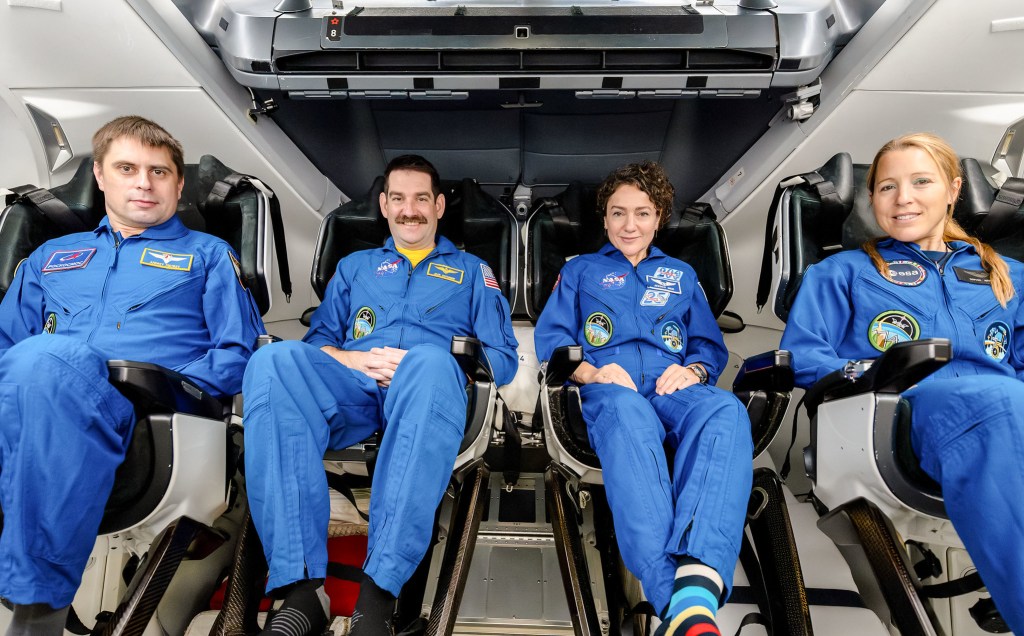
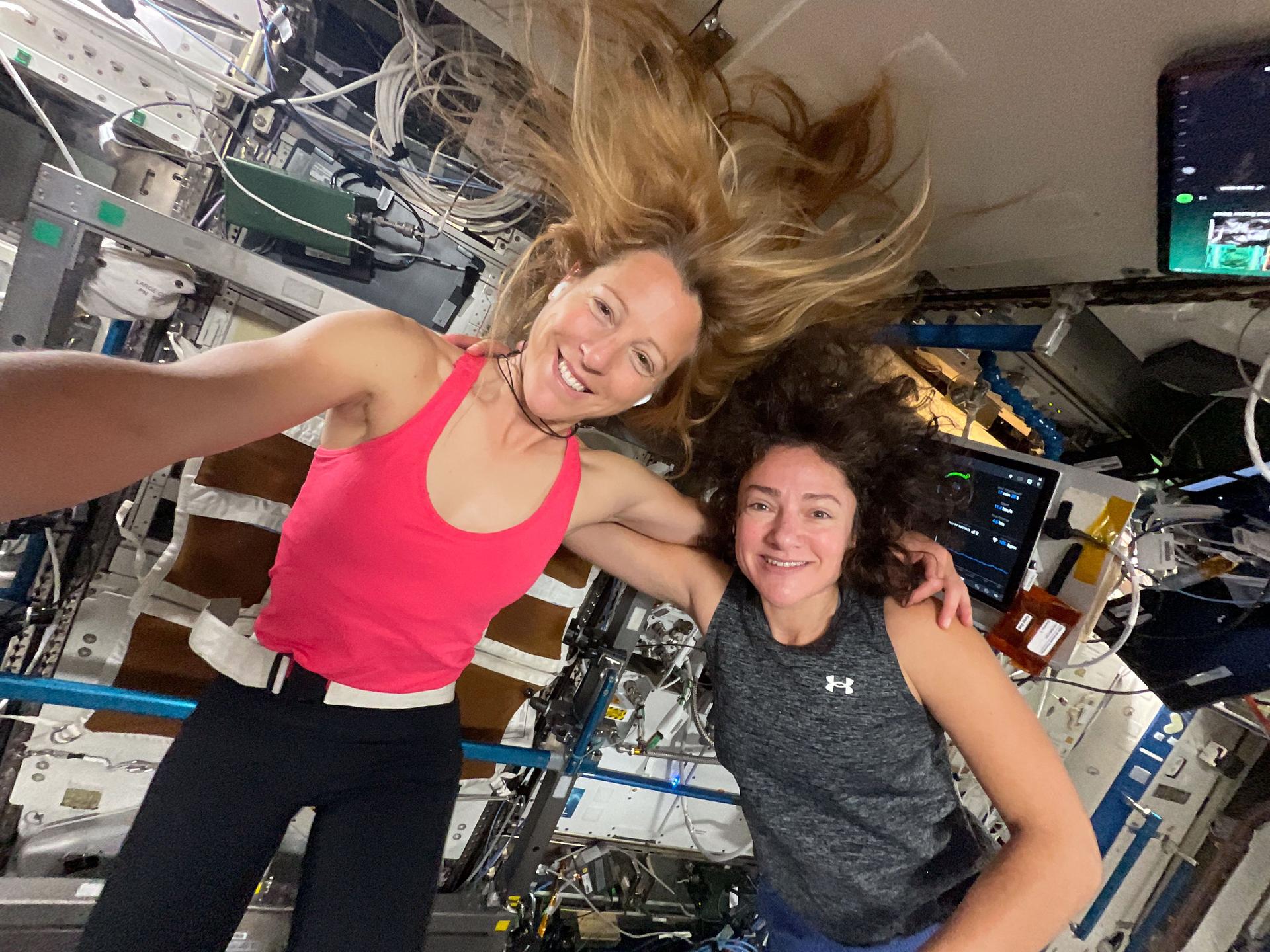
NASA Flight Engineers Jessica Meir and Jack Hathaway partnered together in the Columbus laboratory module at the beginning of their shift on Friday and processed their blood samples for analysis. Afterward, Meir operated the Ultrasound 3 device and scanned the neck, shoulder, and leg veins of Hathaway. Doctors are monitoring the astronaut’s blood markers to protect blood flow and prevent space-caused blood clots to promote healthy crews and ensure mission success.
ESA (European Space Agency) Flight Engineer Sophie Adenot worked out on the advanced resistive exercise device, that mimics free weights on Earth, while four specialized cameras installed in the Tranquility module observed her musculoskeletal system in motion. Doctors are exploring the forces an astronaut’s muscles and bones experience when exercising in weightlessness to maintain fitness and health during a long-term spaceflight.
NASA Flight Engineer Chris Williams spent the first half of his shift continuing to load science experiments and station hardware inside a SpaceX Dragon docked to the Harmony module’s forward port and scheduled to soon depart the station and return to Earth. Meir helped out with the Dragon cargo packing after her biomedical duties. Williams also joined Hathaway for an afternoon vein scan session once again using the new Ultrasound 3 device delivered on September aboard the Cygnus XL spacecraft.
Roscosmos Flight Engineer Andrey Fedyaev worked on a pair of human research experiments, the first one exploring how microgravity affects the respiratory system. He wore an acoustic sensor around his neck that recorded his rapid exhalation for the long-running Forced Expiration breathing study. Next, he wore electrodes on his chest and measured his blood pressure using arm, wrist, and thumb cuffs. Doctors will use the cardiac data to assess microgravity’s effect on blood flow regulation, clot prevention, and inflammation responses.
Flight Engineer Sergei Mikaev kicked off his shift inspecting modules throughout the station’s Roscosmos segment to determine areas that need rearranging for more efficient cargo stowage. Afterward, he assisted Fedyaev with his station familiarization activities then helped Meir stow food packs at the end of their shift.
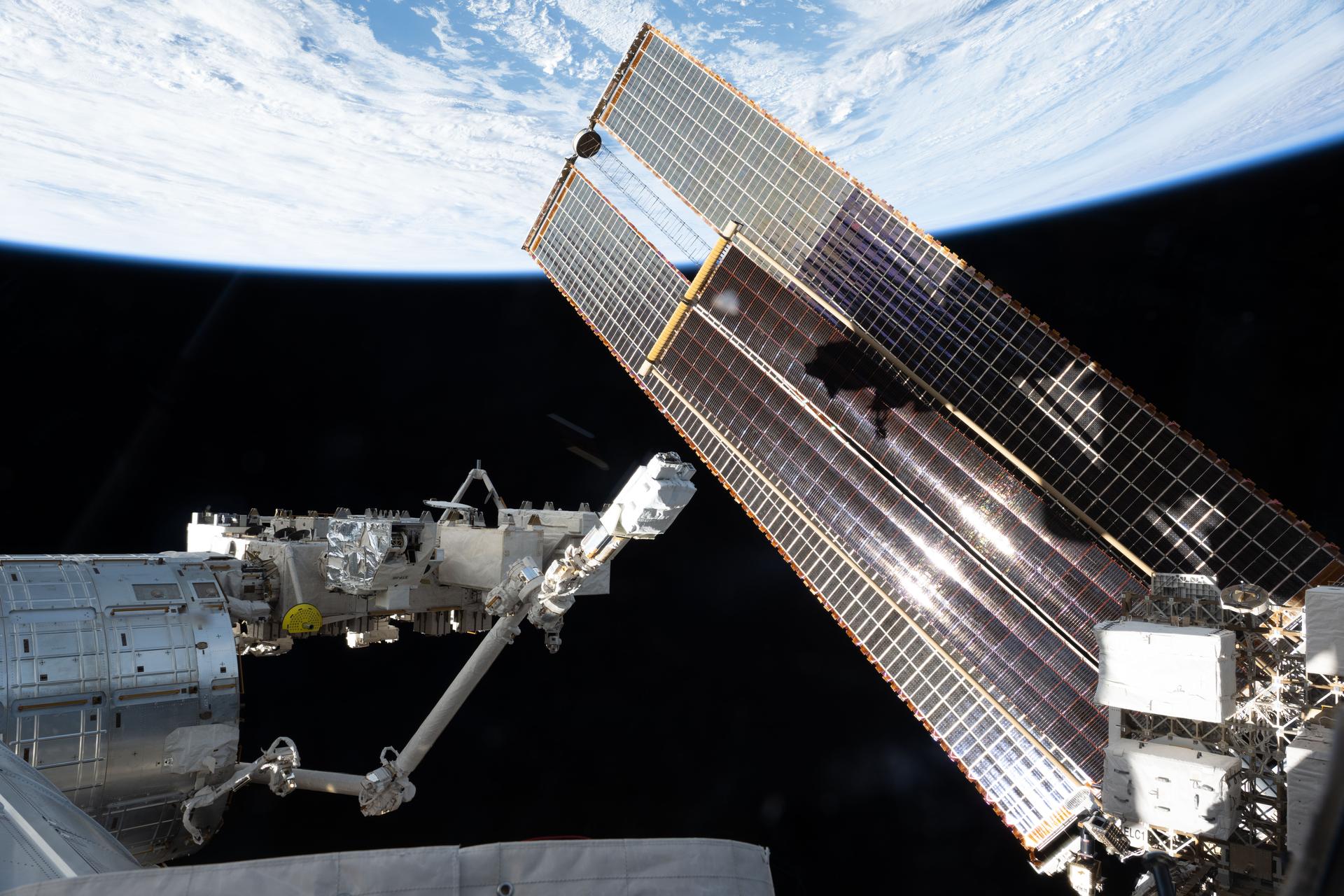
Station Commander Sergey Kud-Sverchkov of Roscosmos started his shift updating data files on tablet computers inside the Soyuz MS-28 spacecraft docked to the Rassvet module. The two-time station resident finished his shift photographing external station hardware then searching for hardware to update the orbital outpost’s inventory system.
Learn more about station activities by following the space station blog, @space_station on X, as well as the ISS Facebook and ISS Instagram accounts.
Get the latest from NASA delivered every week. Subscribe here.
