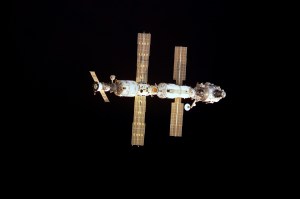







Between March 1995 and June 1998, NASA and Russian scientists conducted experiments and demonstrations in the Russian Space Station Mir, a science laboratory in space. NASA-Mir scientists sought to answer vital questions about how humans, animals and plants function in space, how our solar system originated and developed, how we can build better technology in space, and how we can build future space stations.
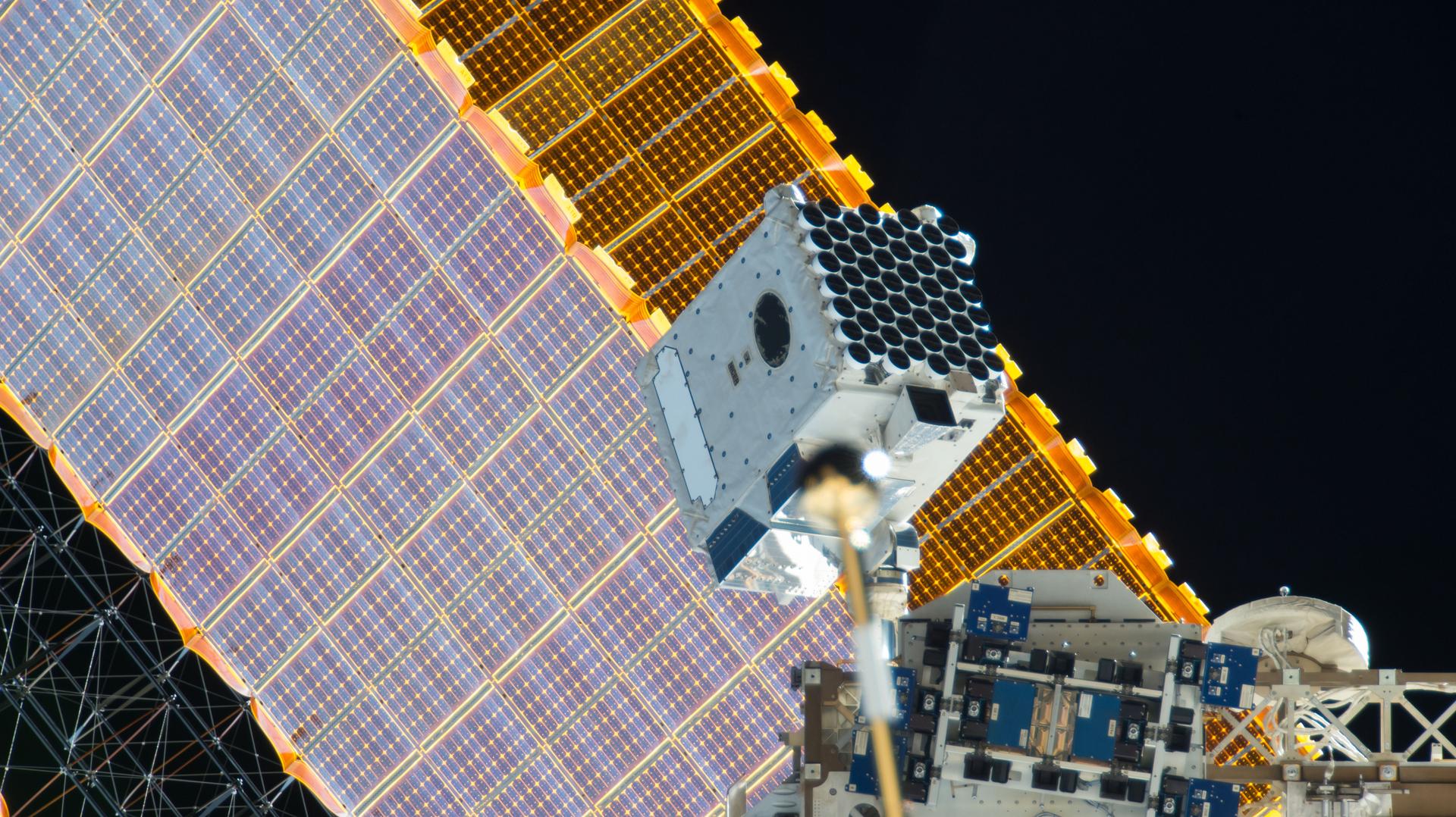
NASA’s Glenn Research Center managed the Mir Cooperative Solar Array, a photovoltaic electrical power system that extended Mir’s life and supported U.S. experiments. This cooperative venture combined the best technology of both countries: the United States provided high-efficiency, lightweight photovoltaic panel modules; and Russia provided the array structure and deployment mechanism.
The array was delivered to Mir by space shuttle Atlantis during STS-74 in November 1995. Russian cosmonauts Yuri Onufrienko and Yuri Usachev successfully moved the MCSA to the Kvant-1 module on May 20 and deployment was accomplished on May 25, 1996.
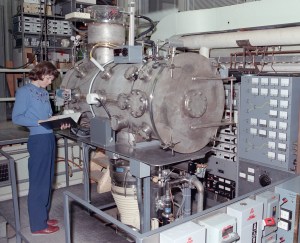
More than 12 Glenn experiments also were performed aboard Mir. Glenns’ Electro-Physics Branch contributed six samples to the Optical Properties Monitor (OPM) experiment. It was launched aboard STS-81 Atlantis in January 1997 and deployed during the first joint American-Russian spacewalk outside of Mir on April 29, 1997. An experiment that fit in a suitcase, the OPM provided a unique, comprehensive space research capability to study the effects of the space environment- both natural and induced – on optical, thermal, and other properties of spacecraft materials.
OPM was mounted to the Mir Docking Module where it collected data about the space station’s environment for almost a year. OPM was returned to Earth aboard Endeavour as part of the STS-89 mission in January 1998.
2 min read
Glenn Participation in Shuttle-Mir Missions